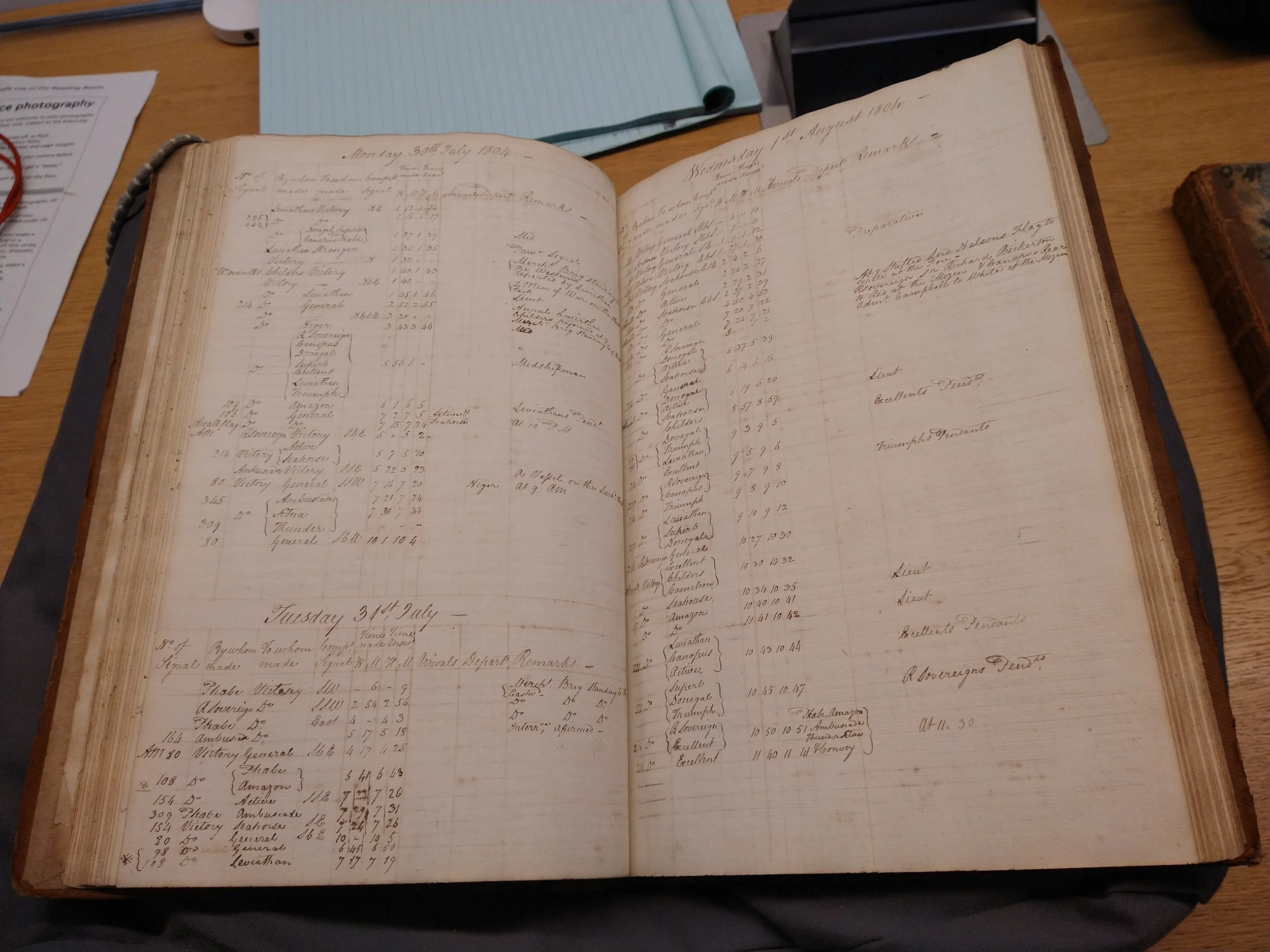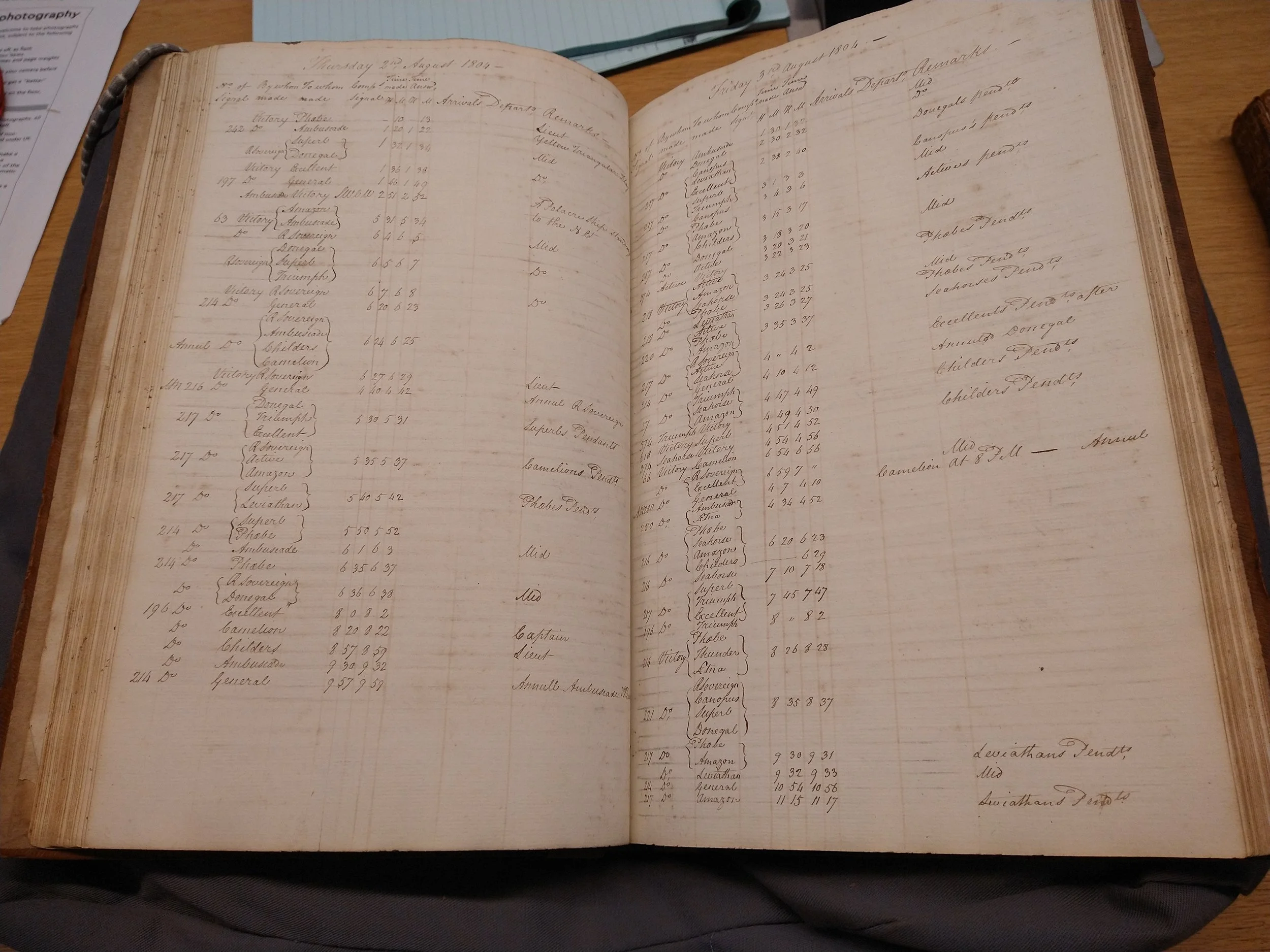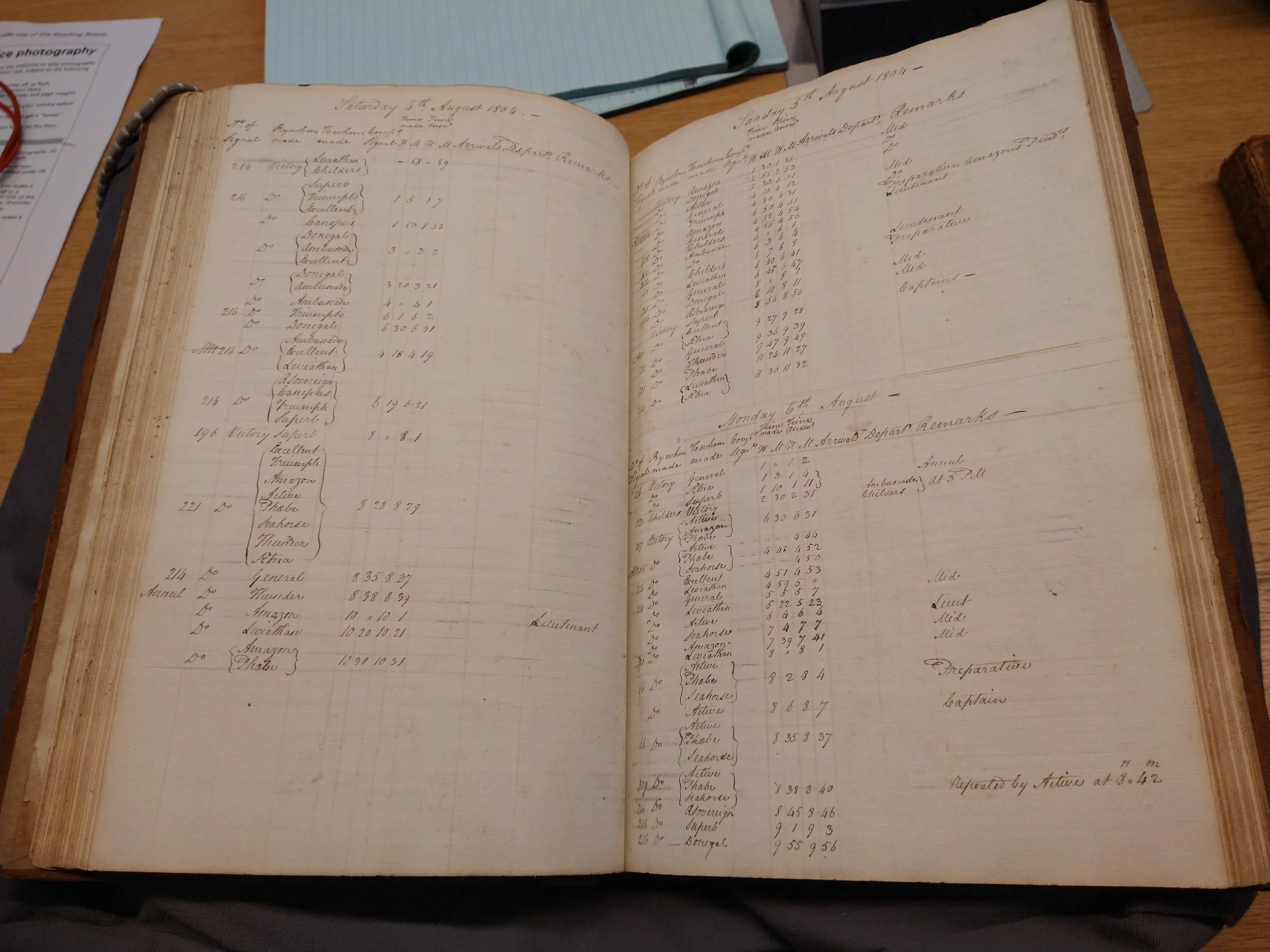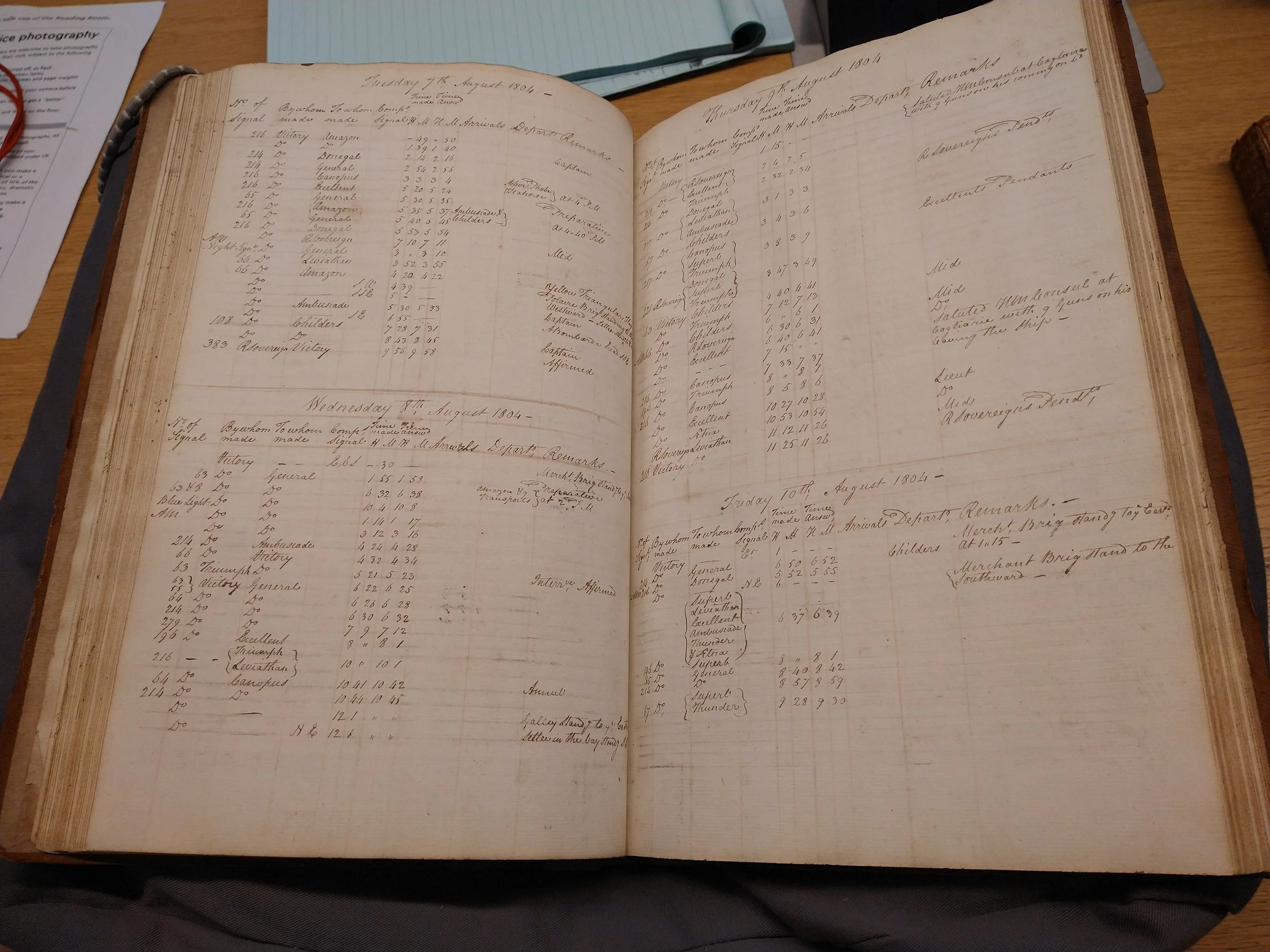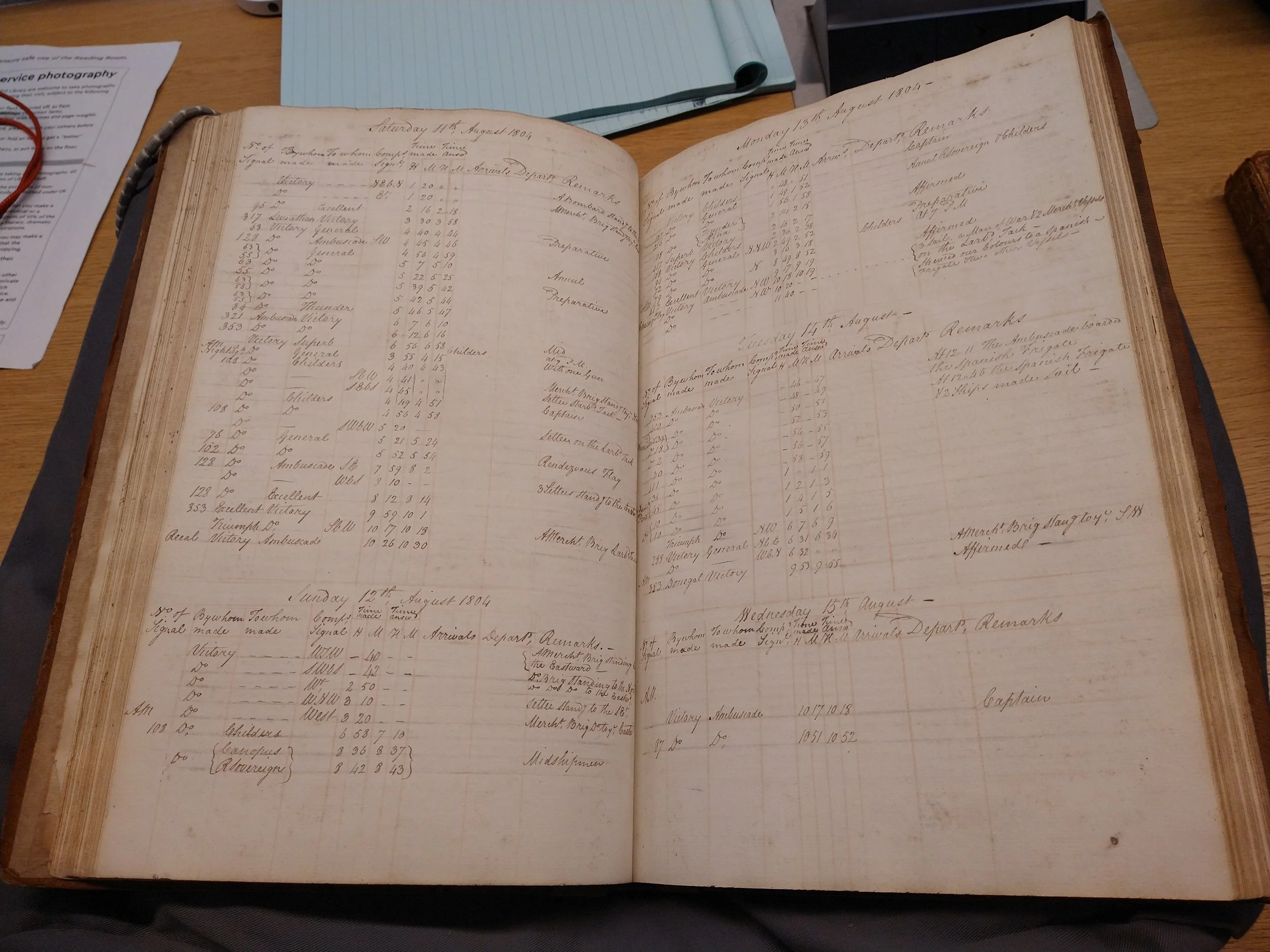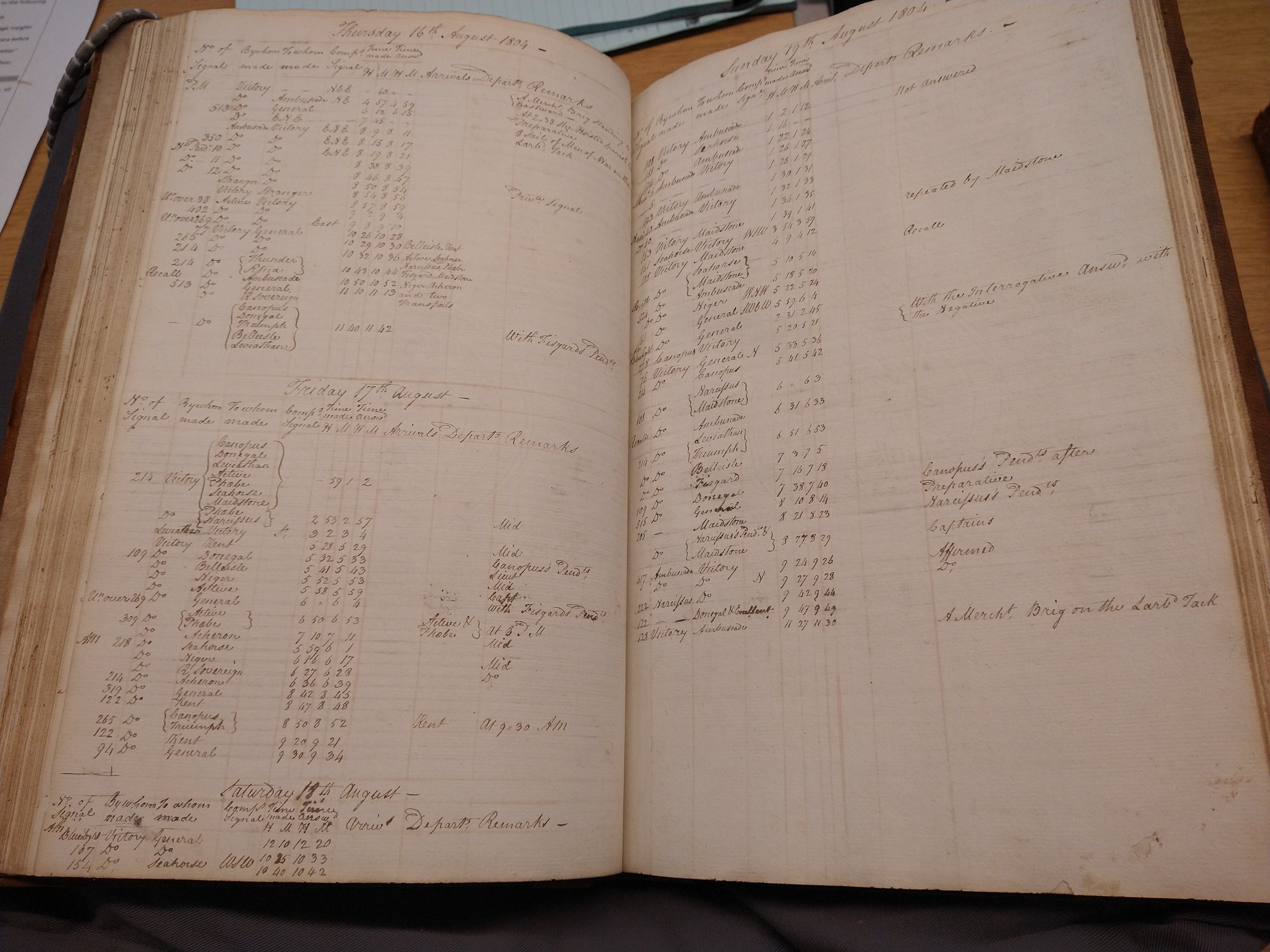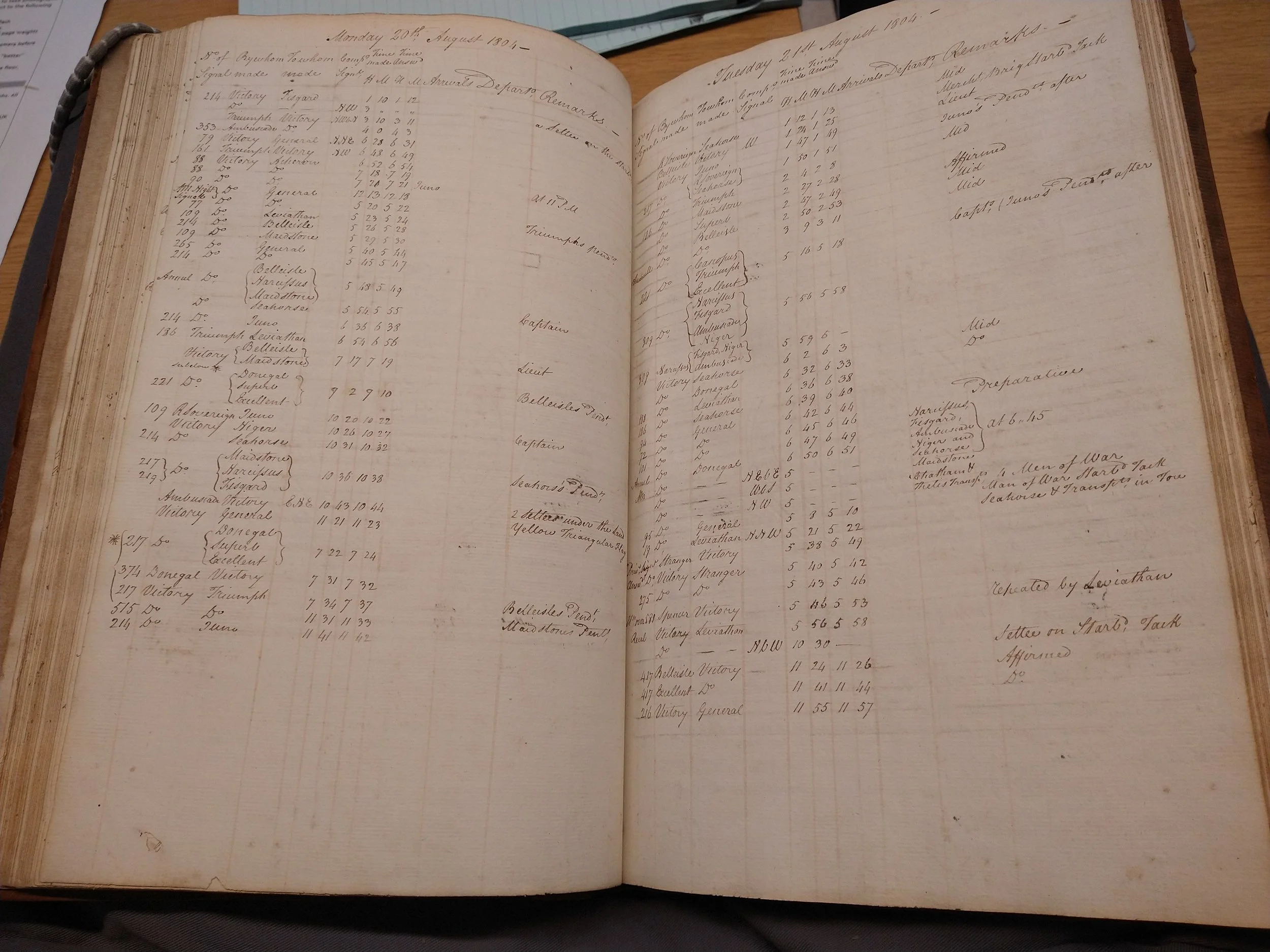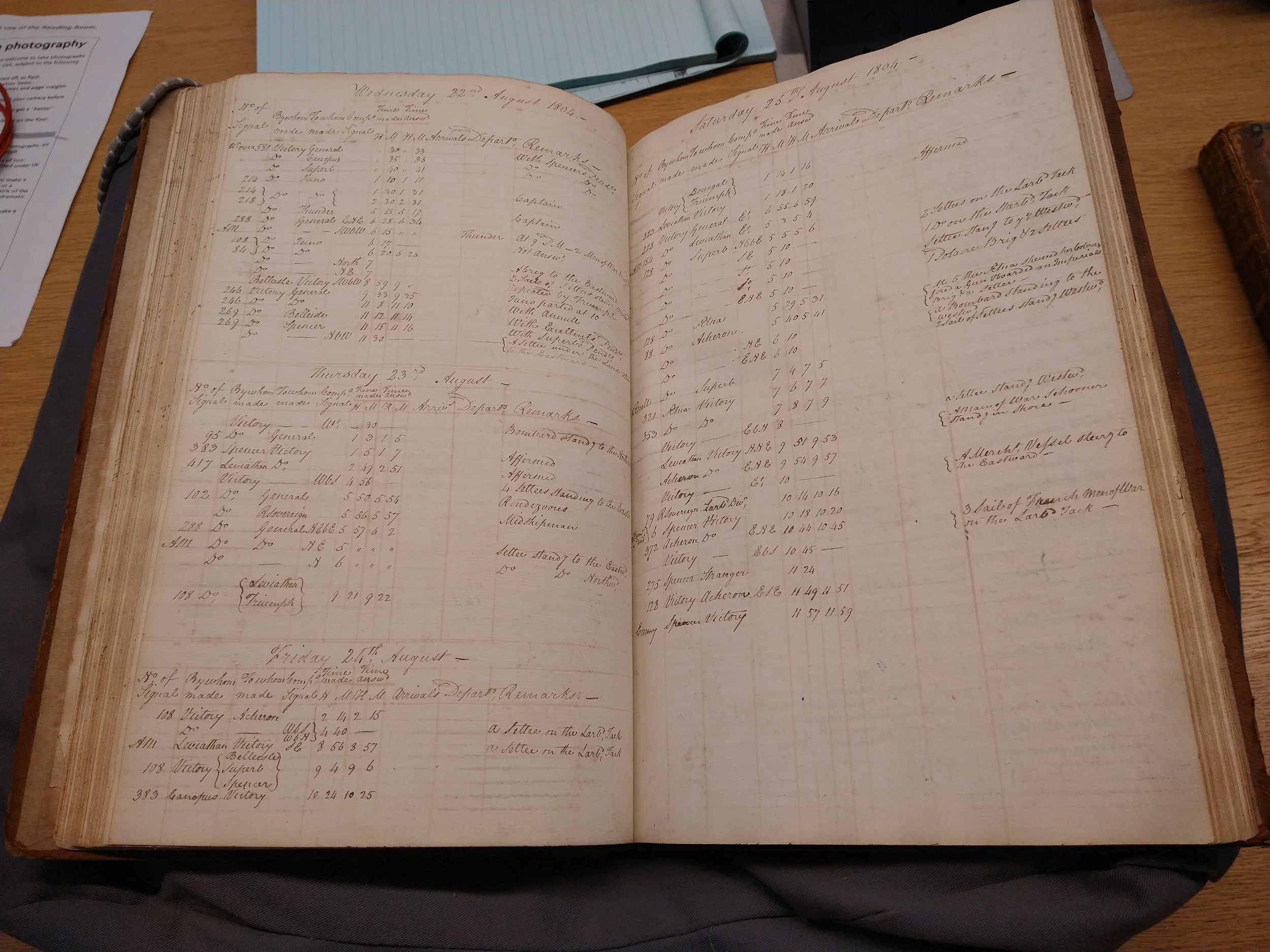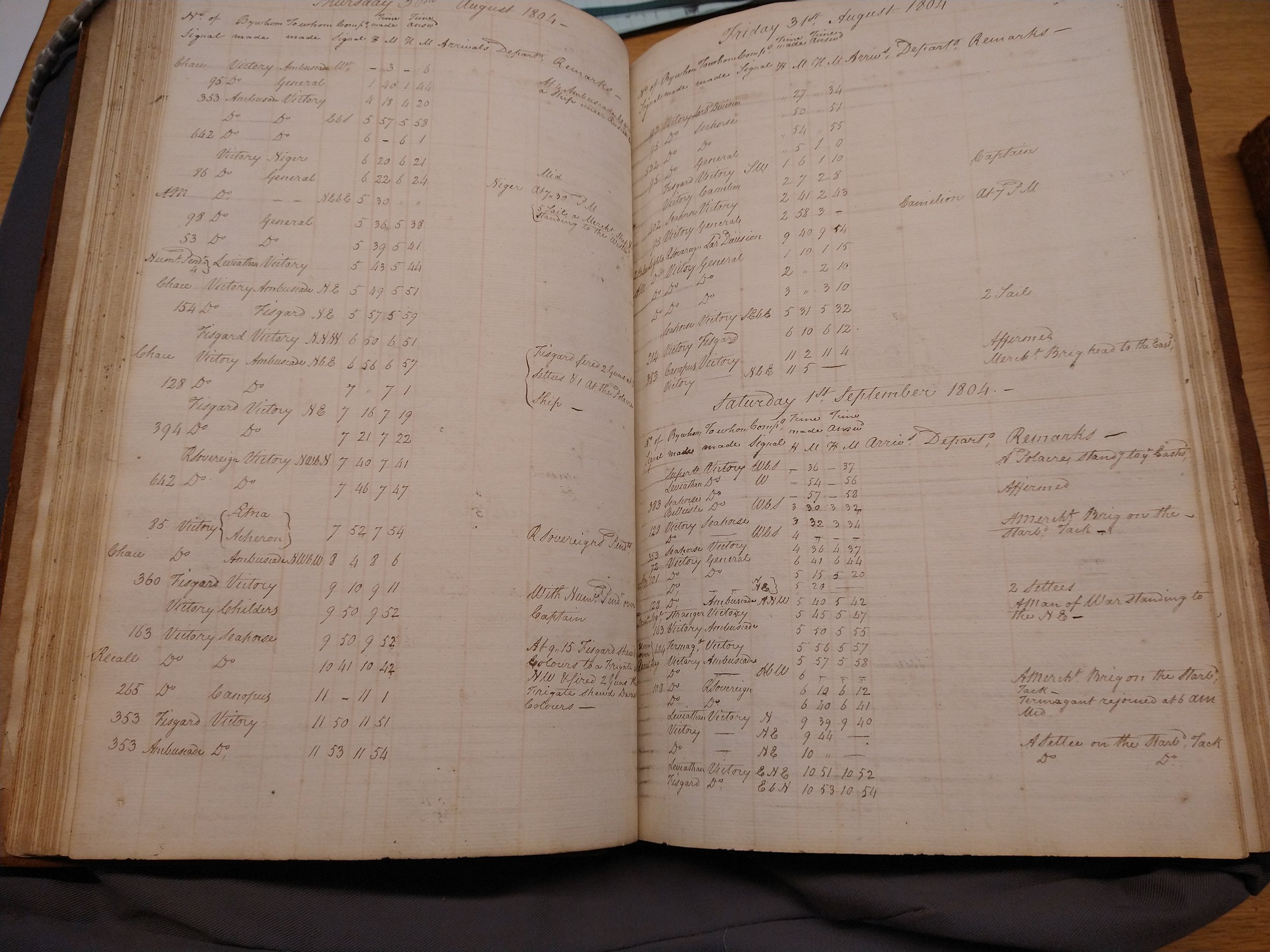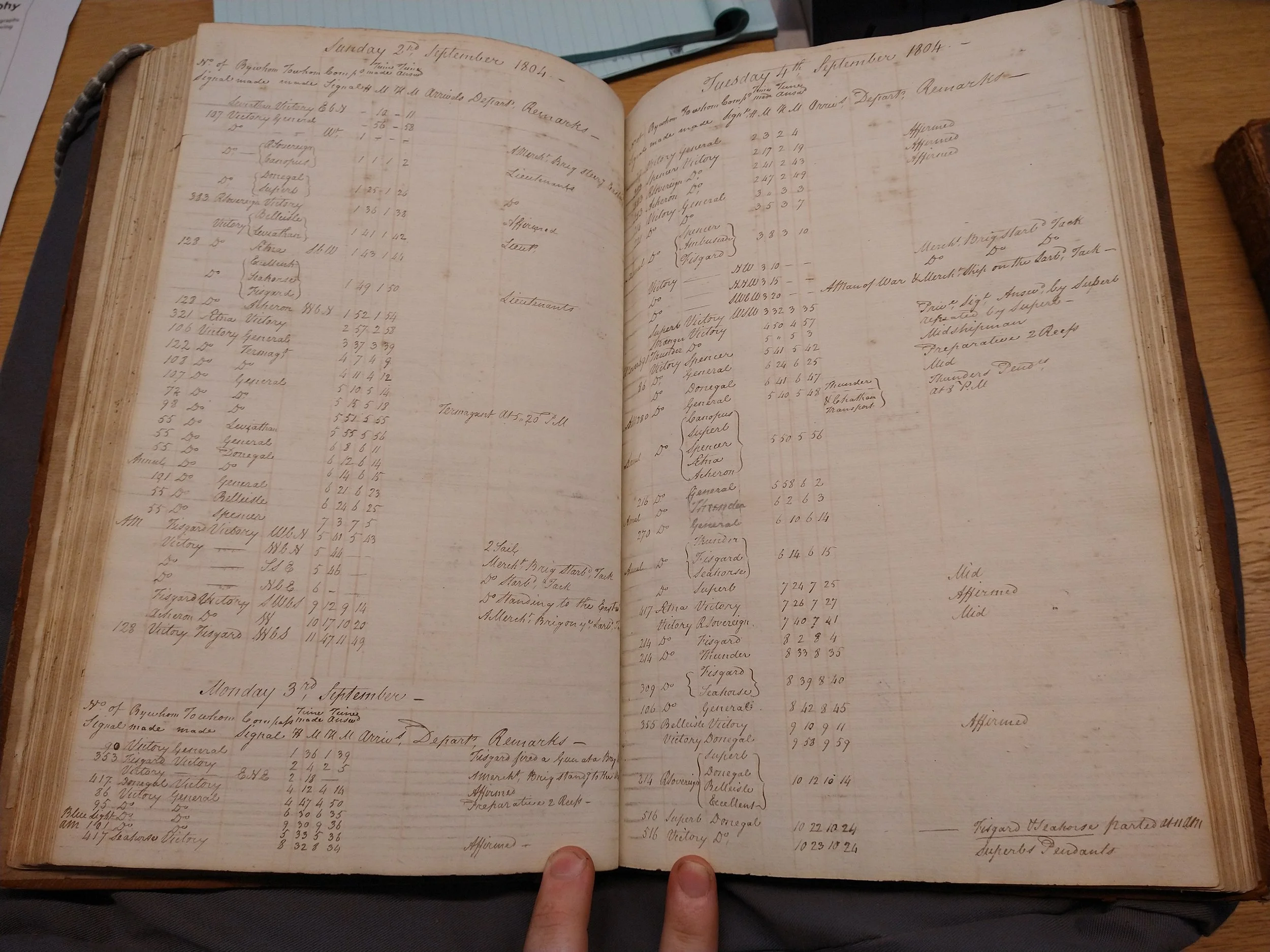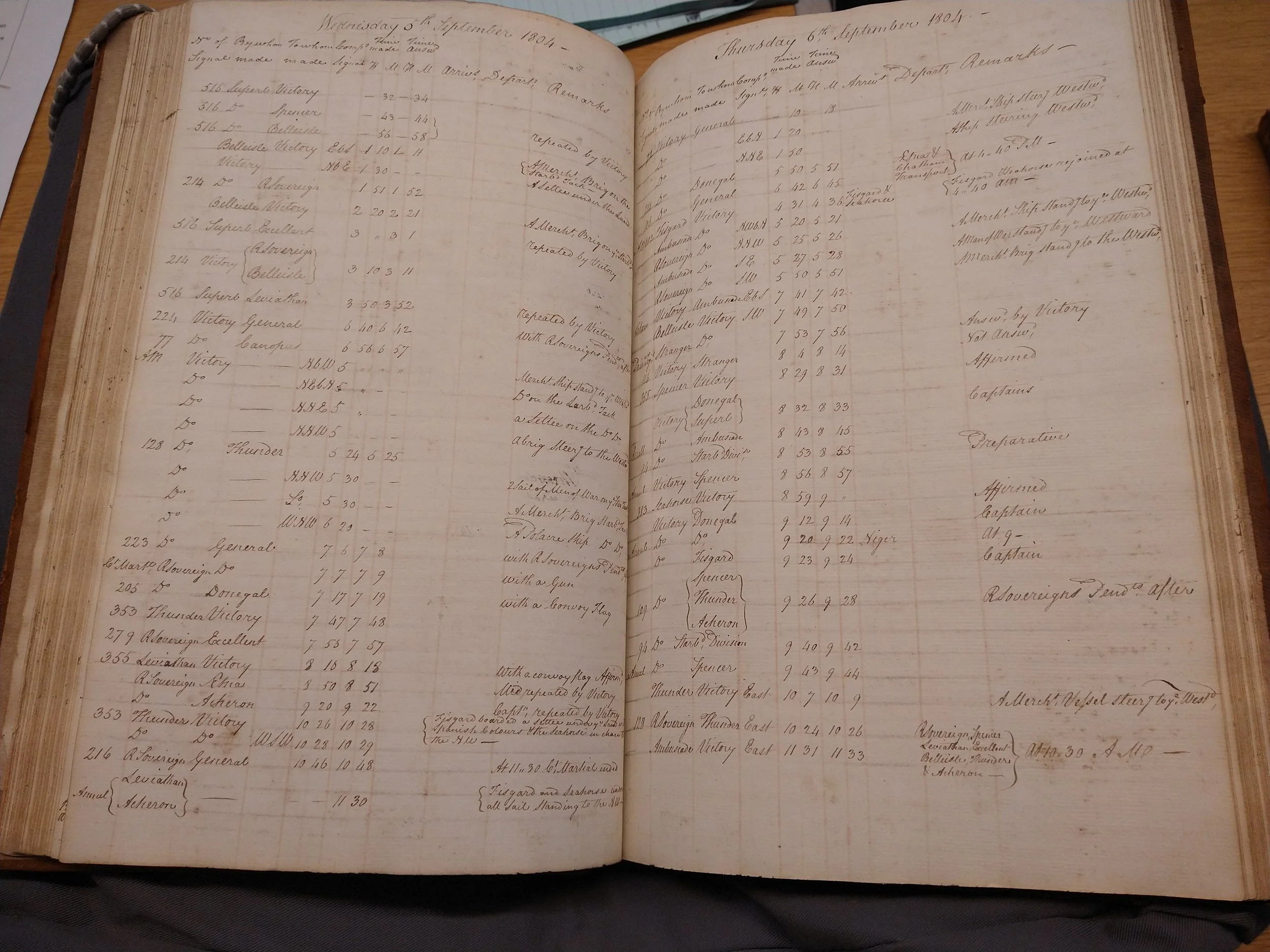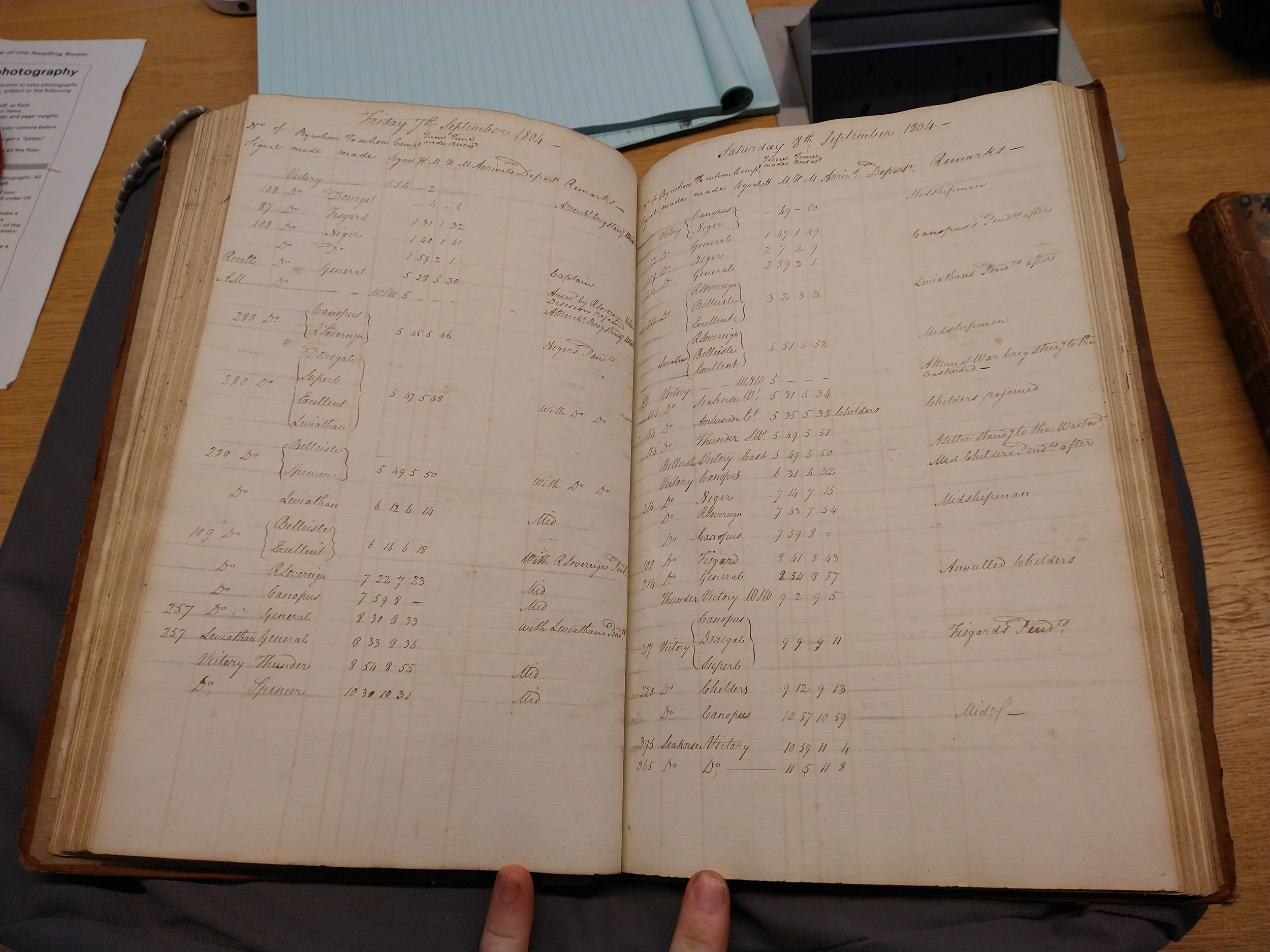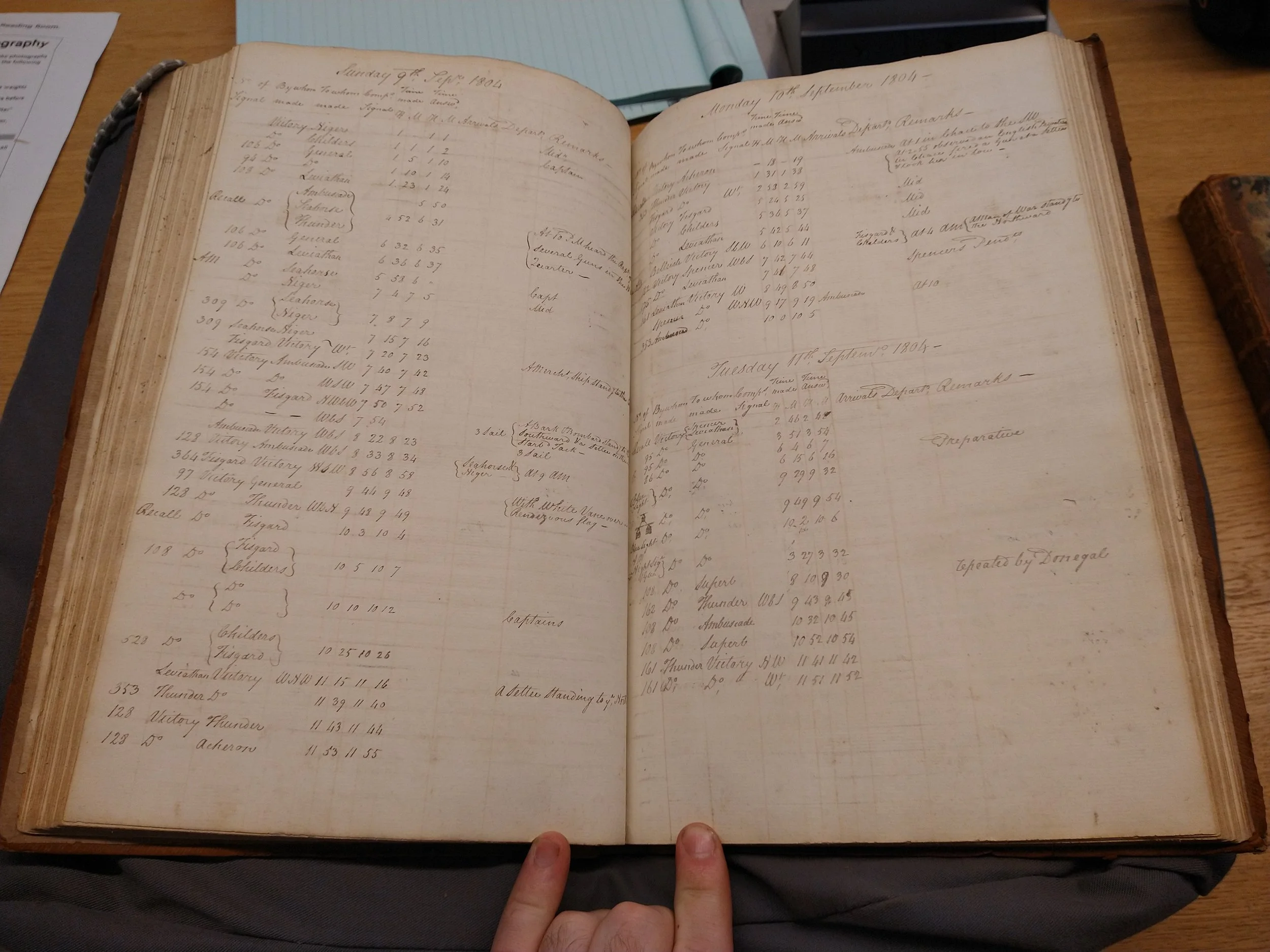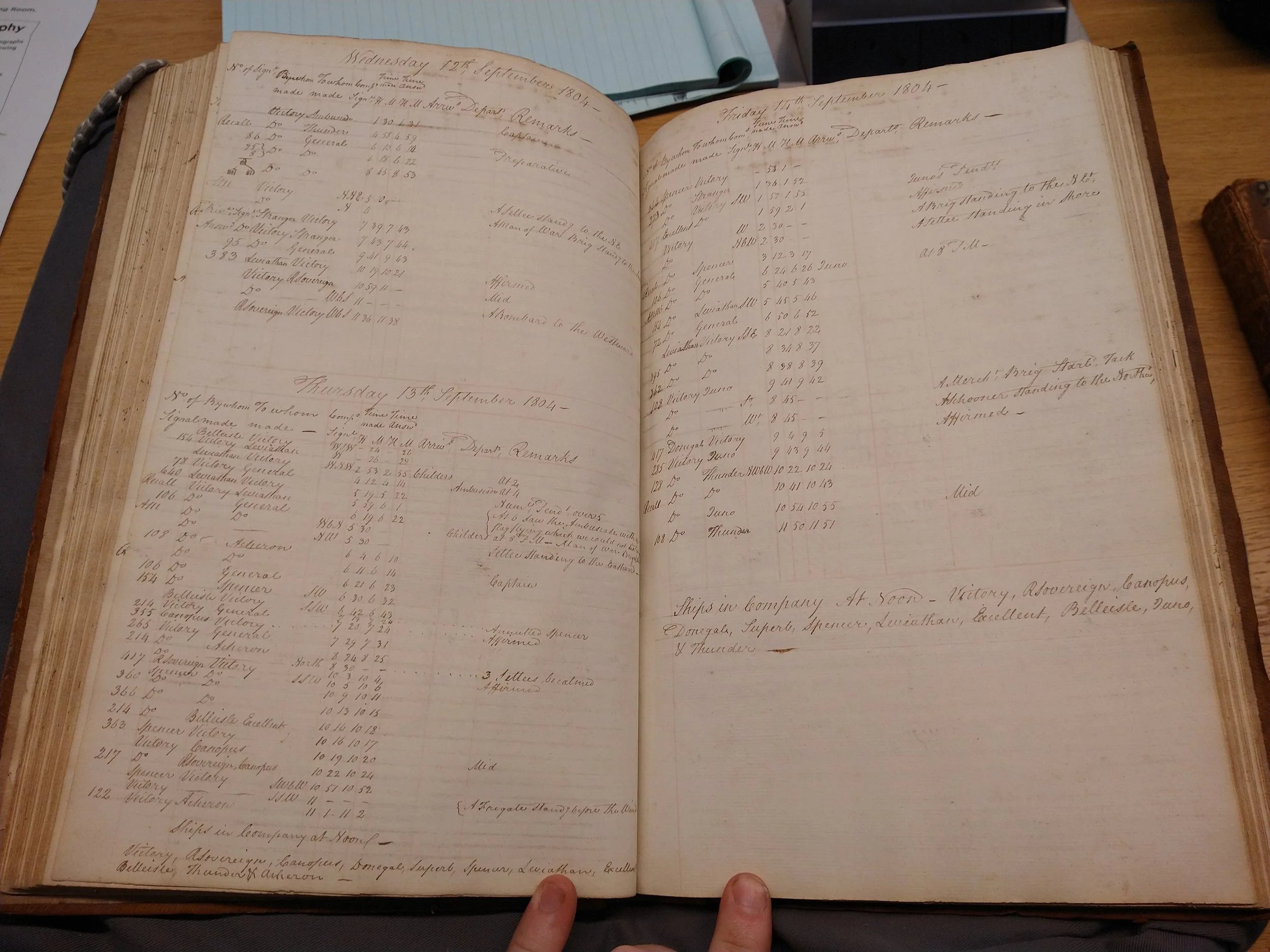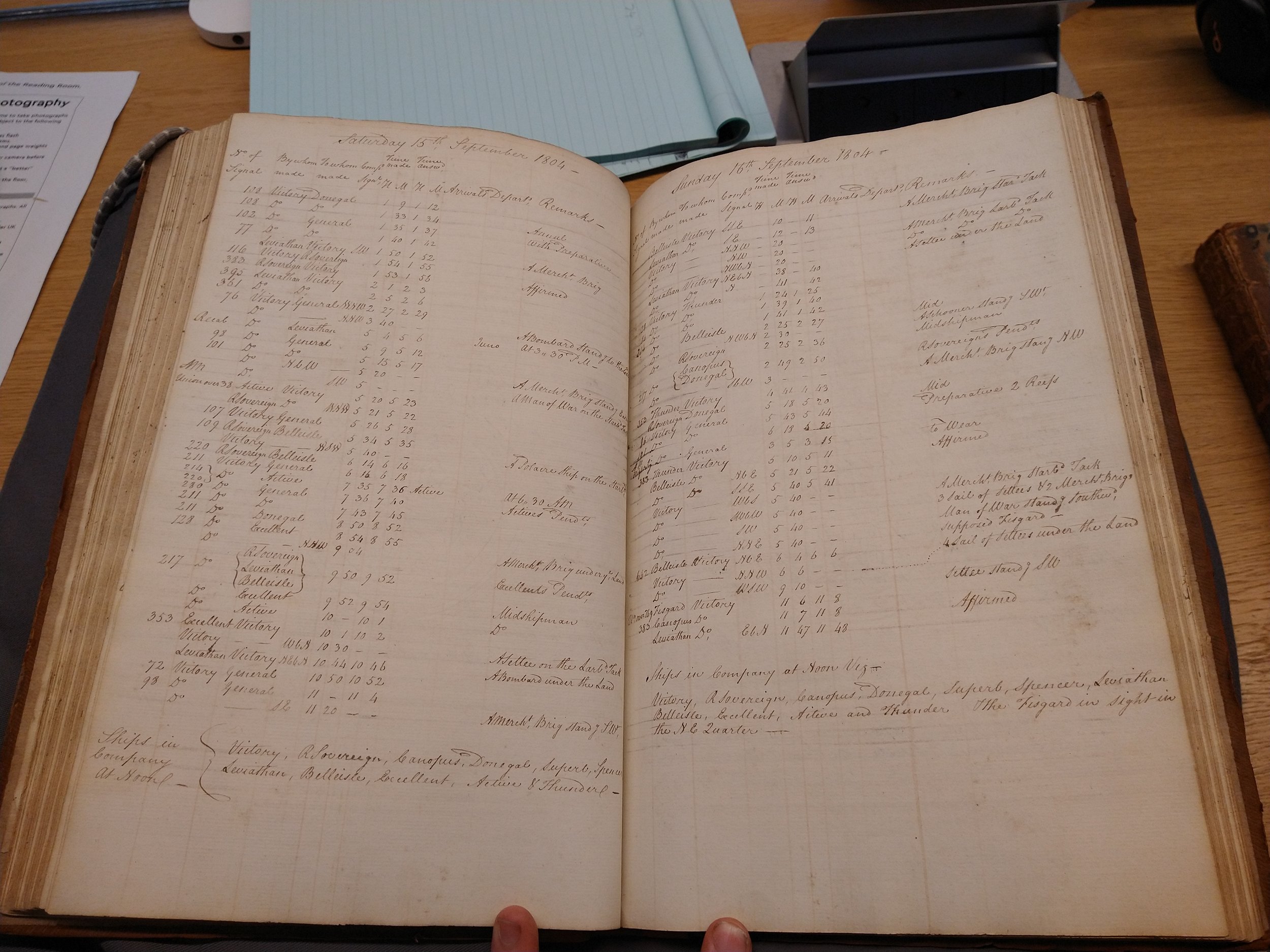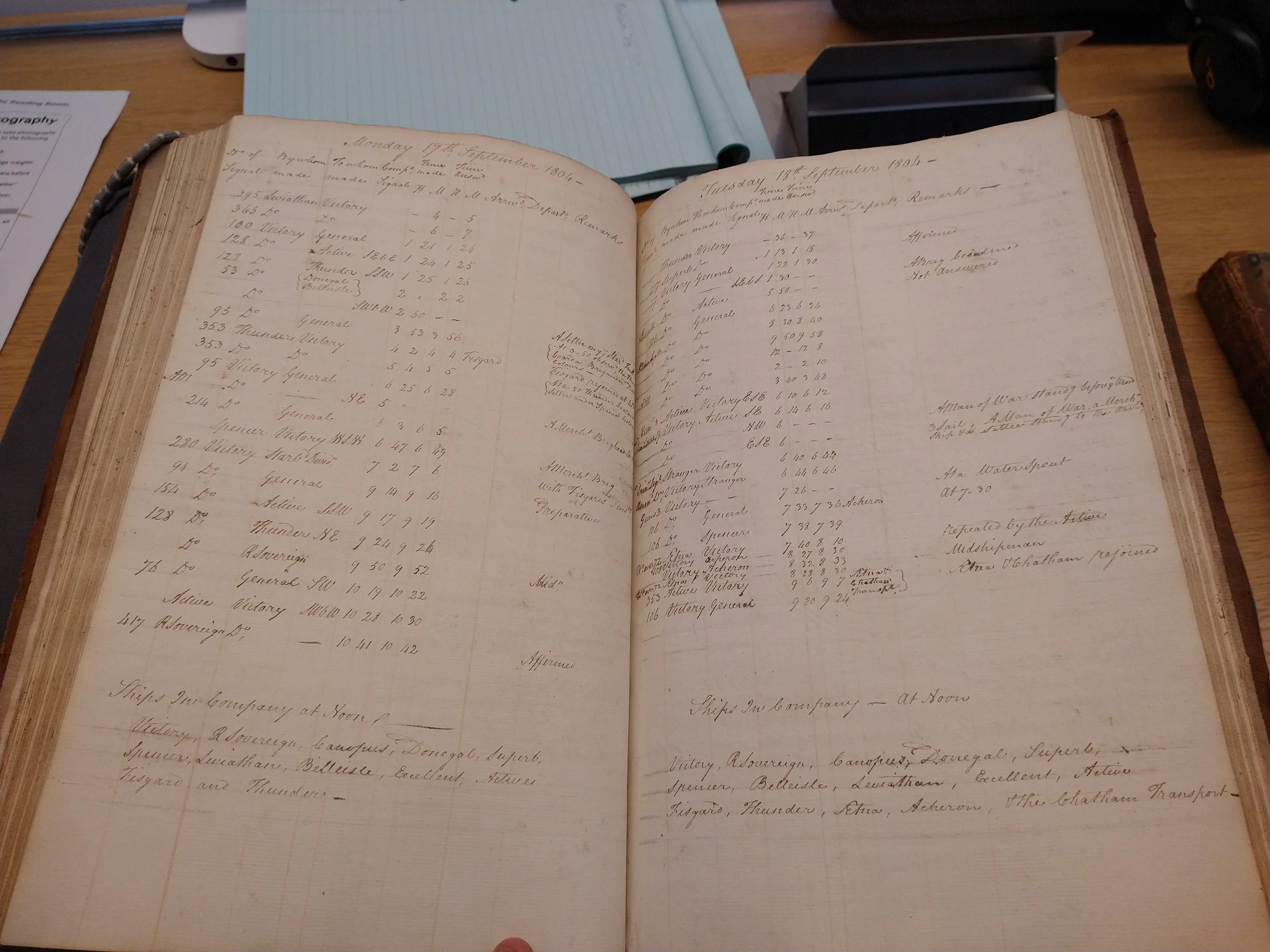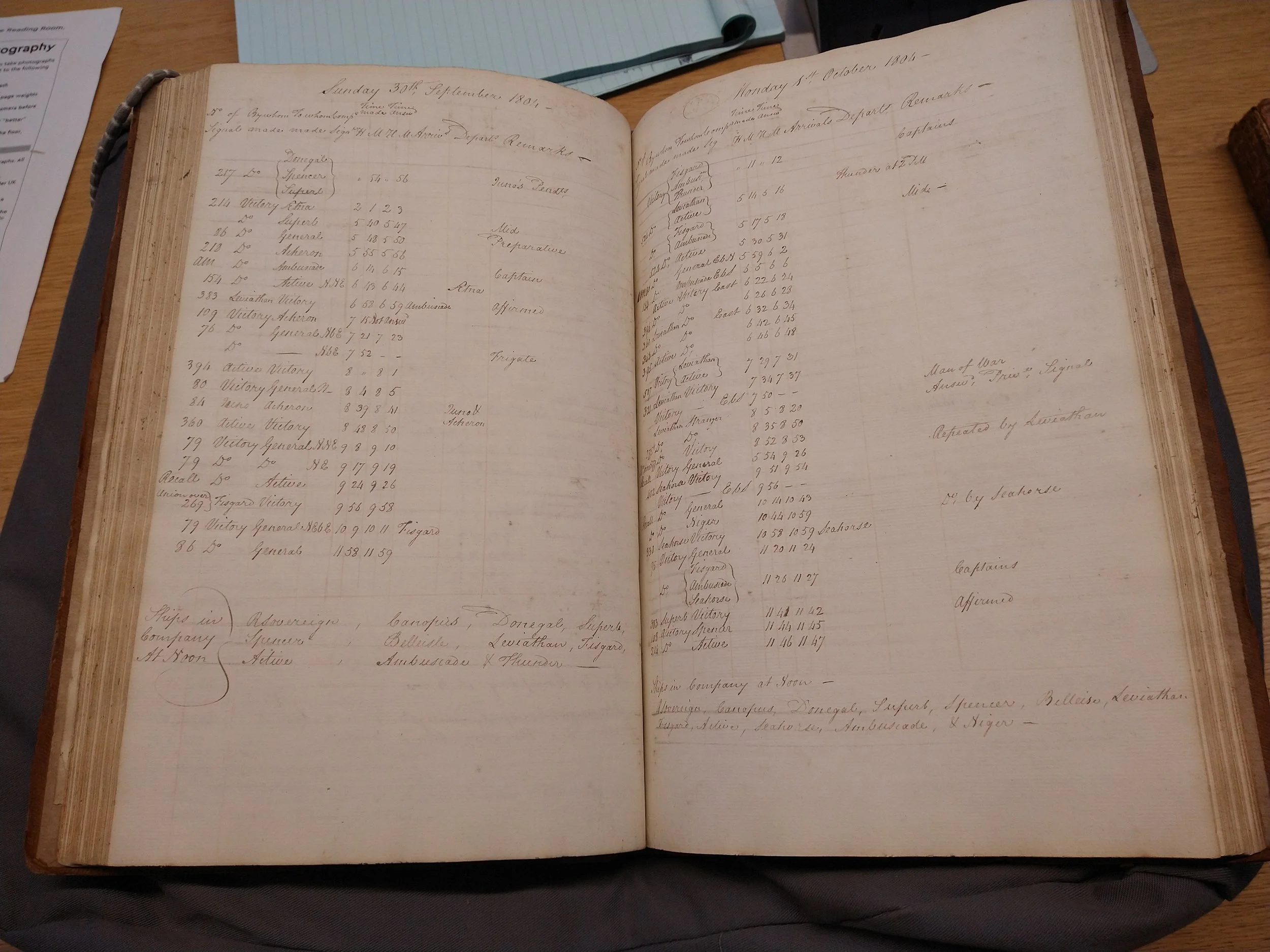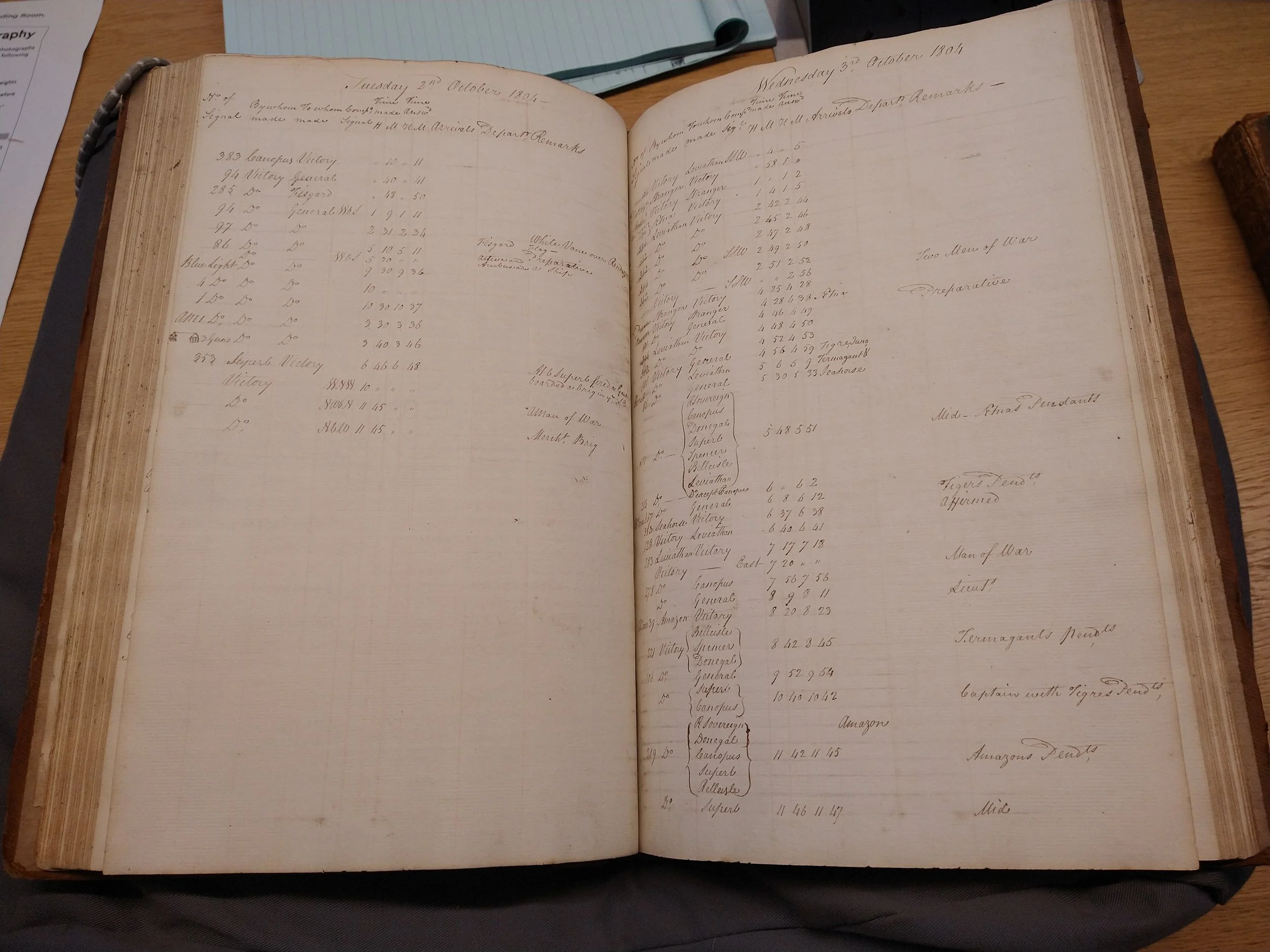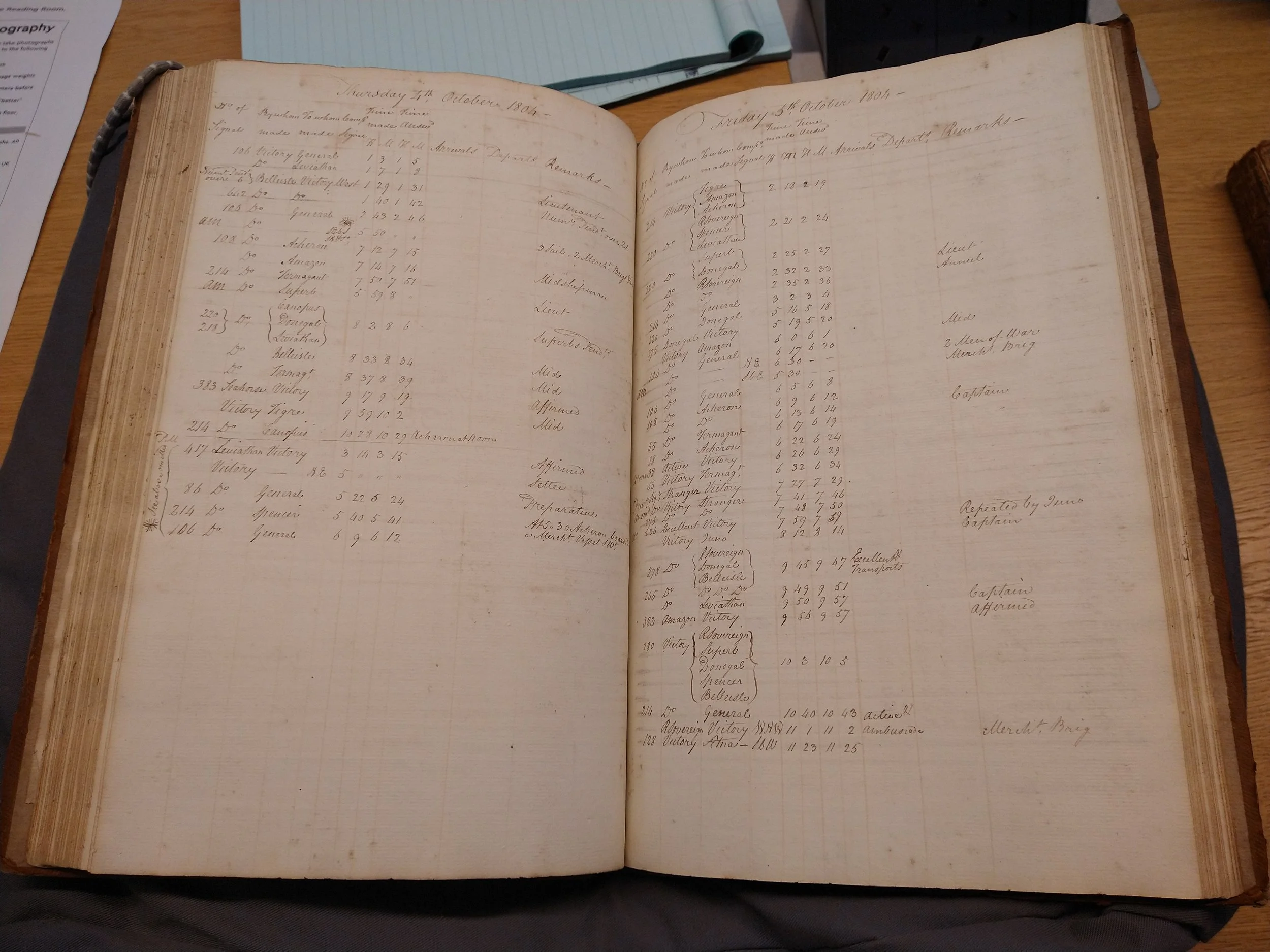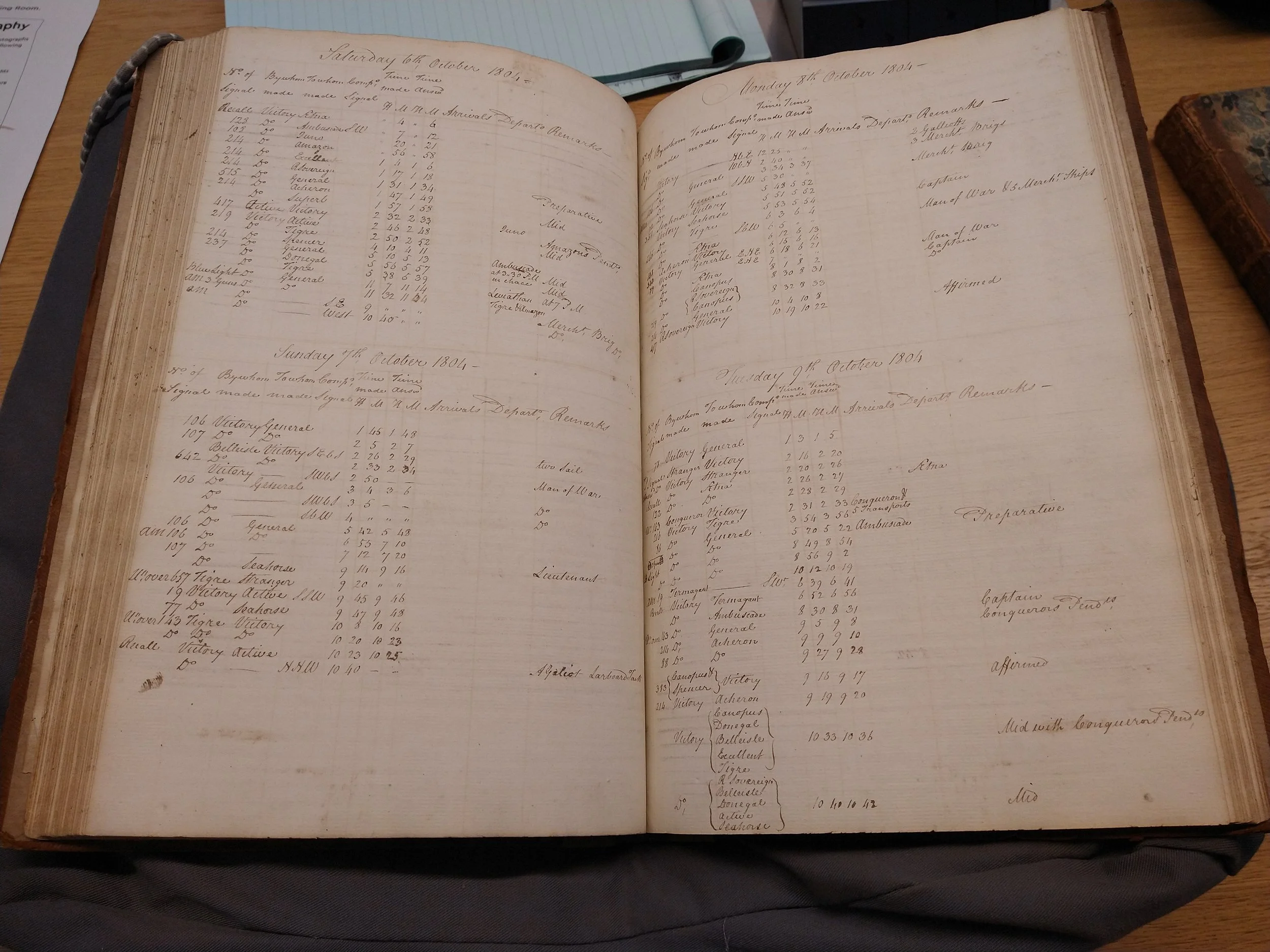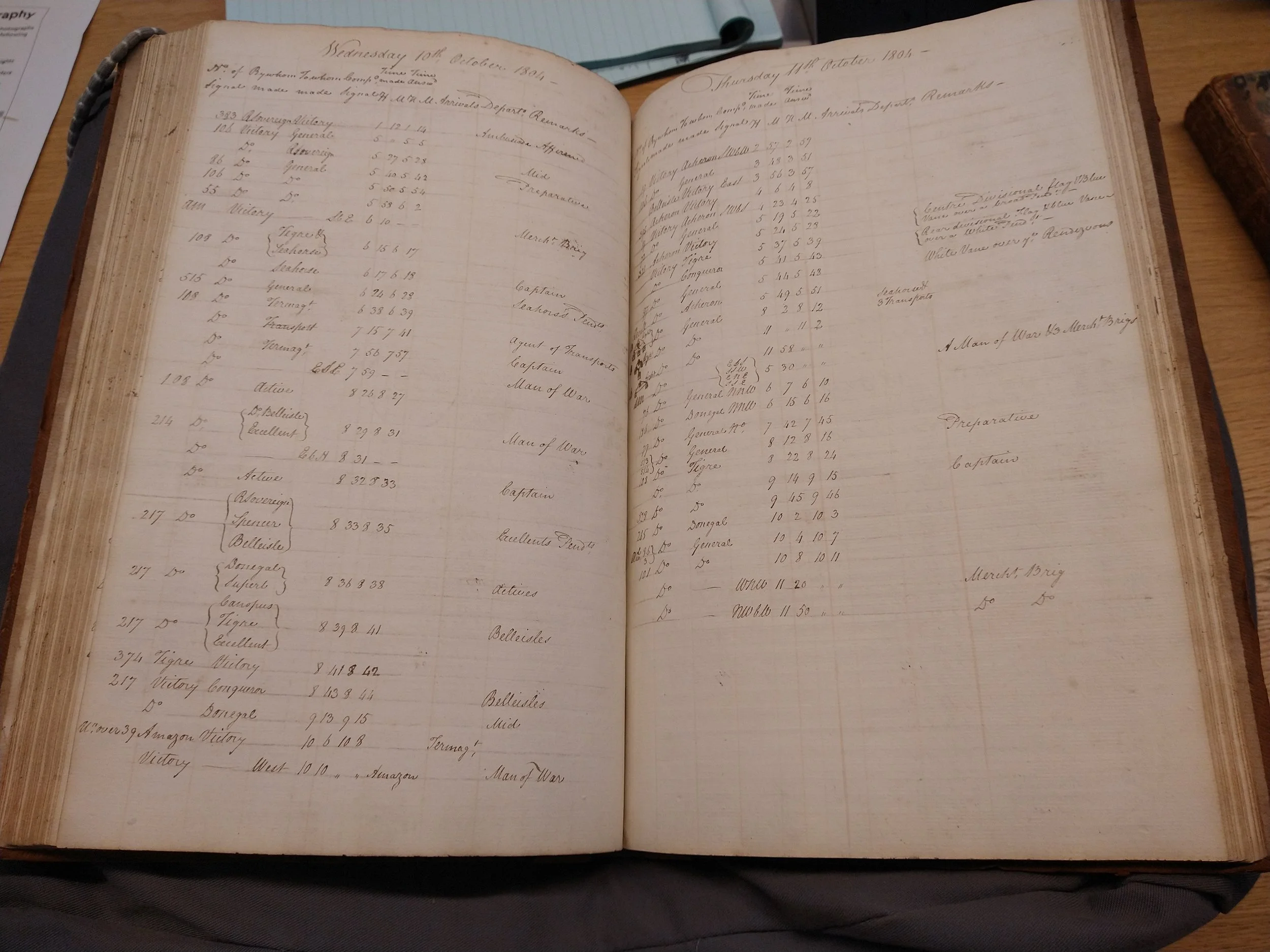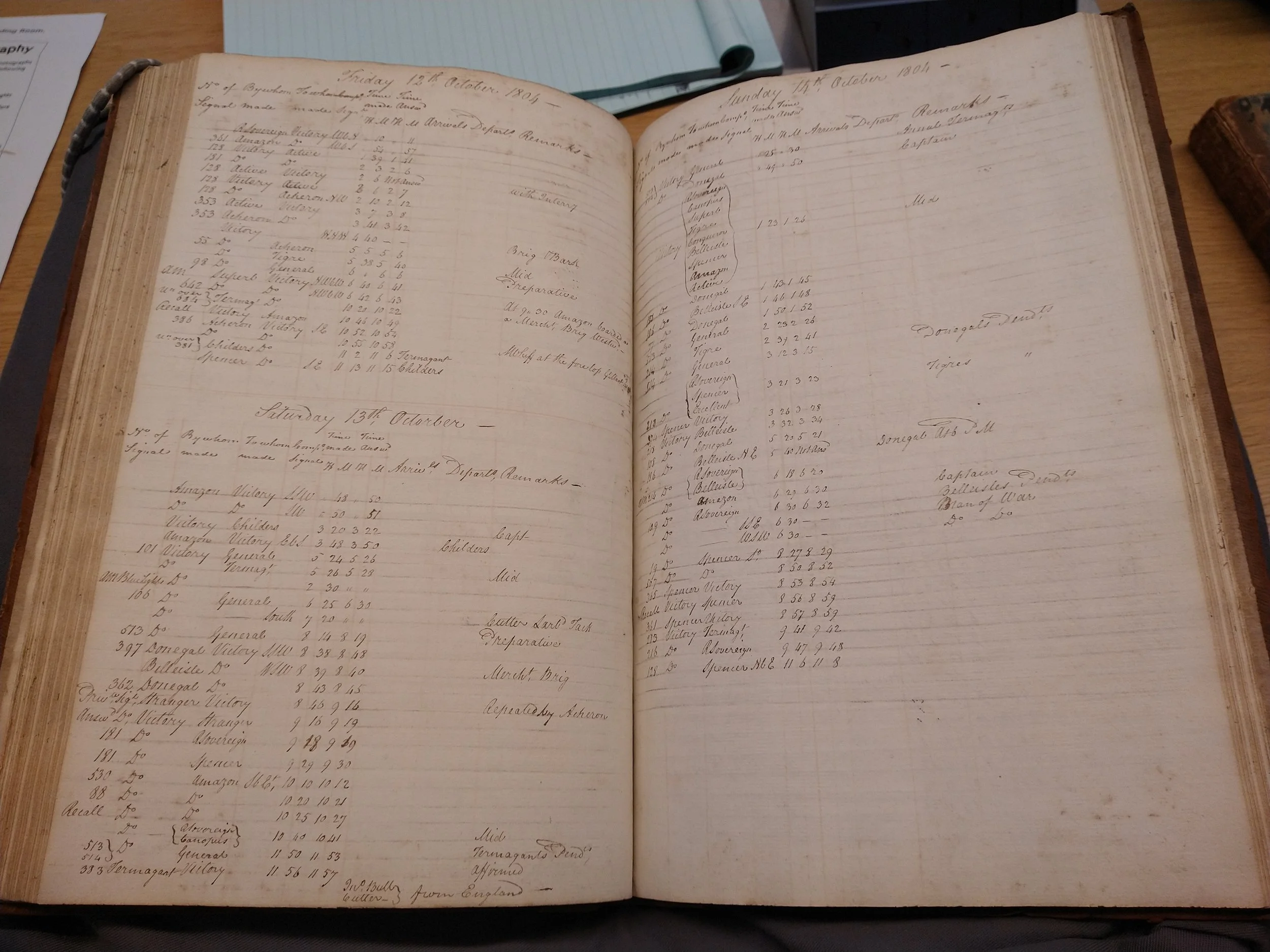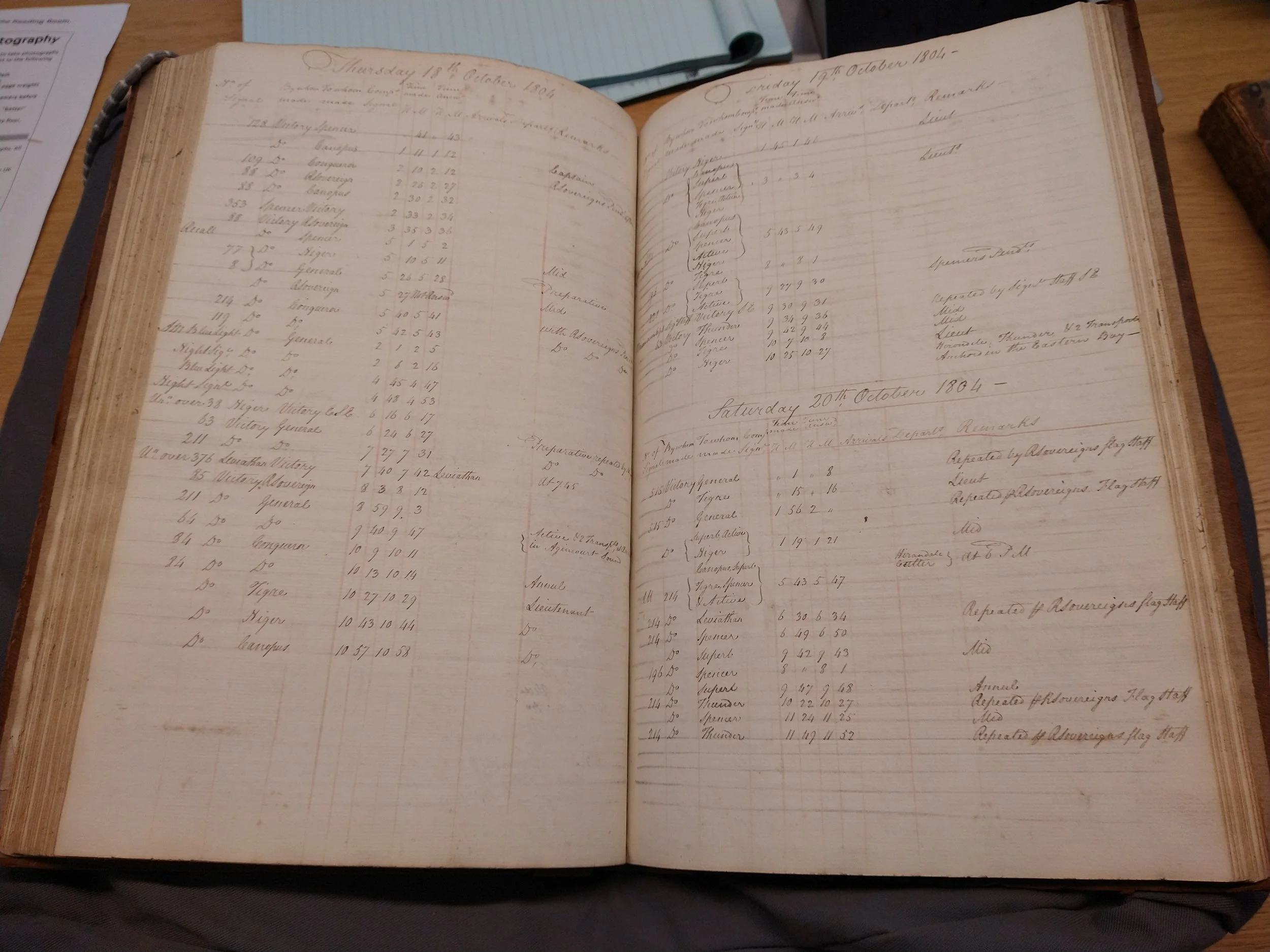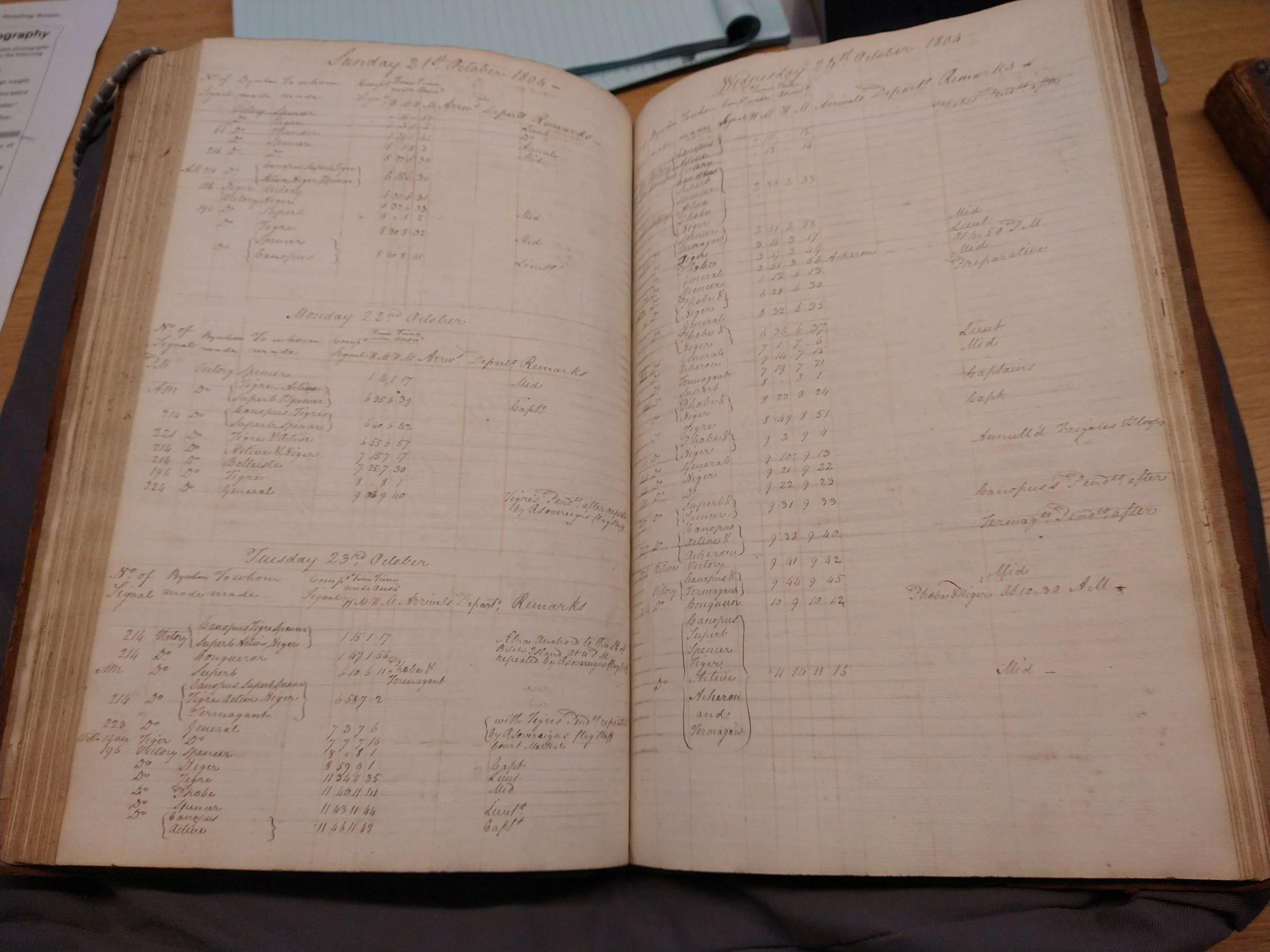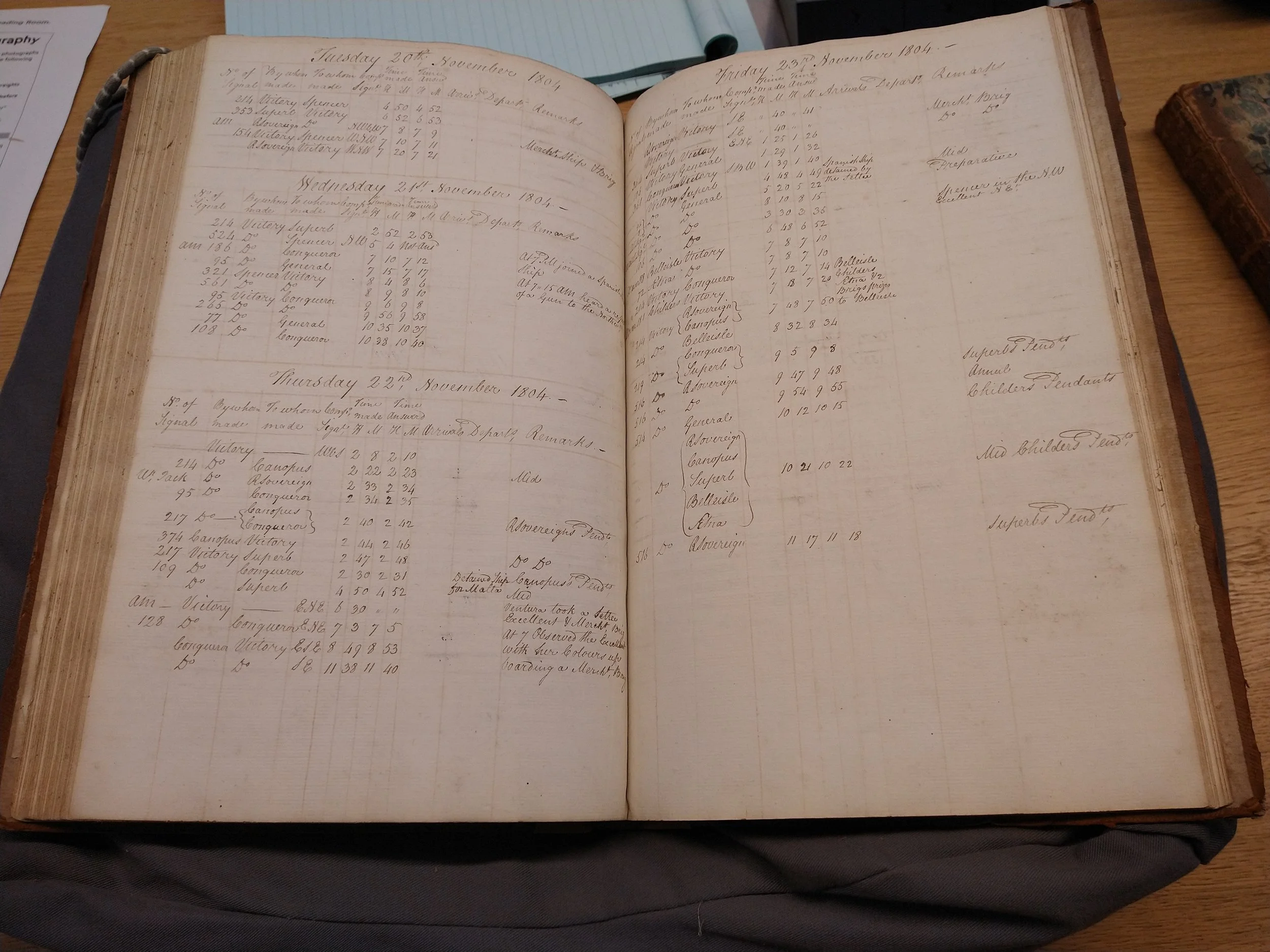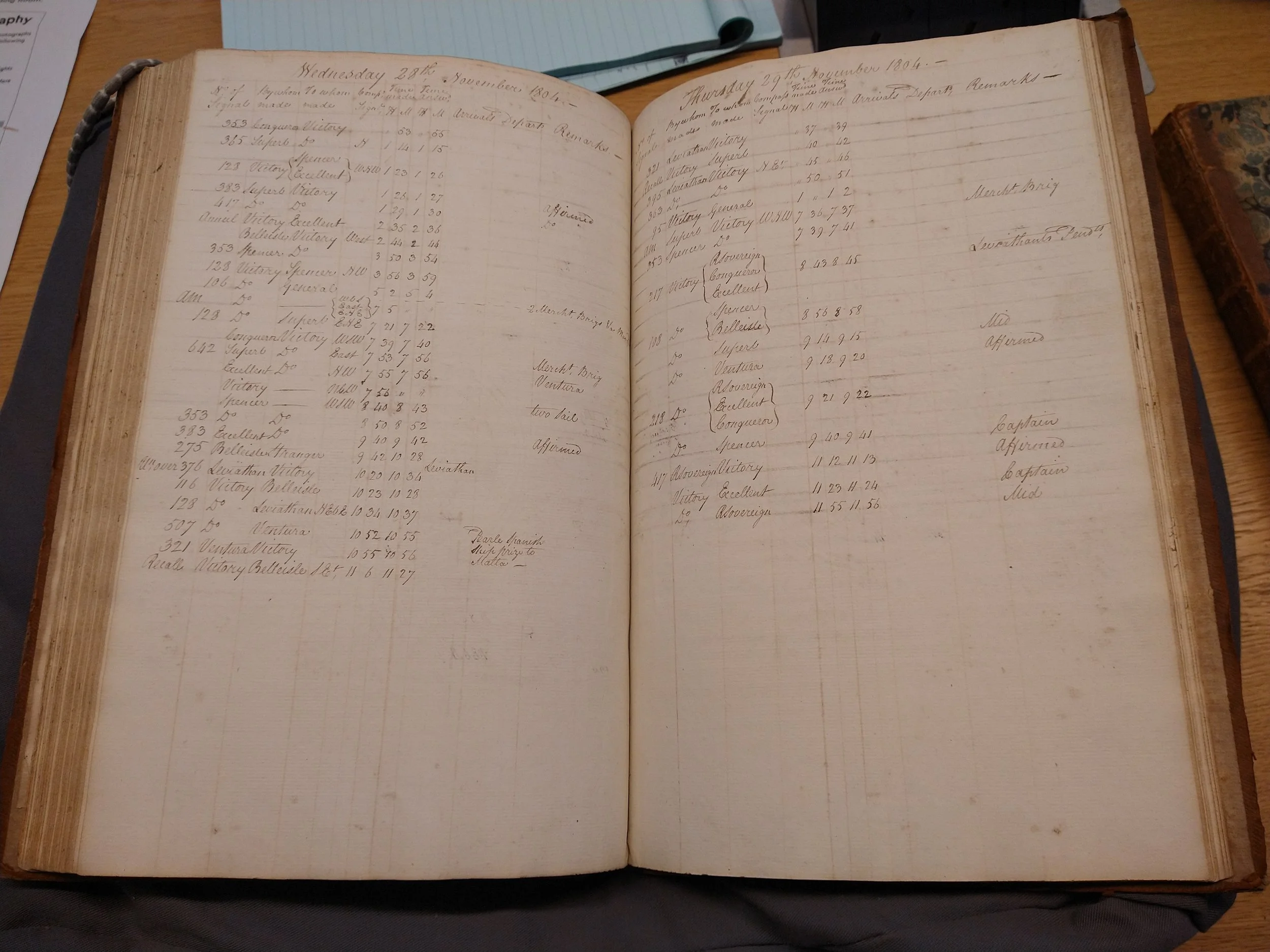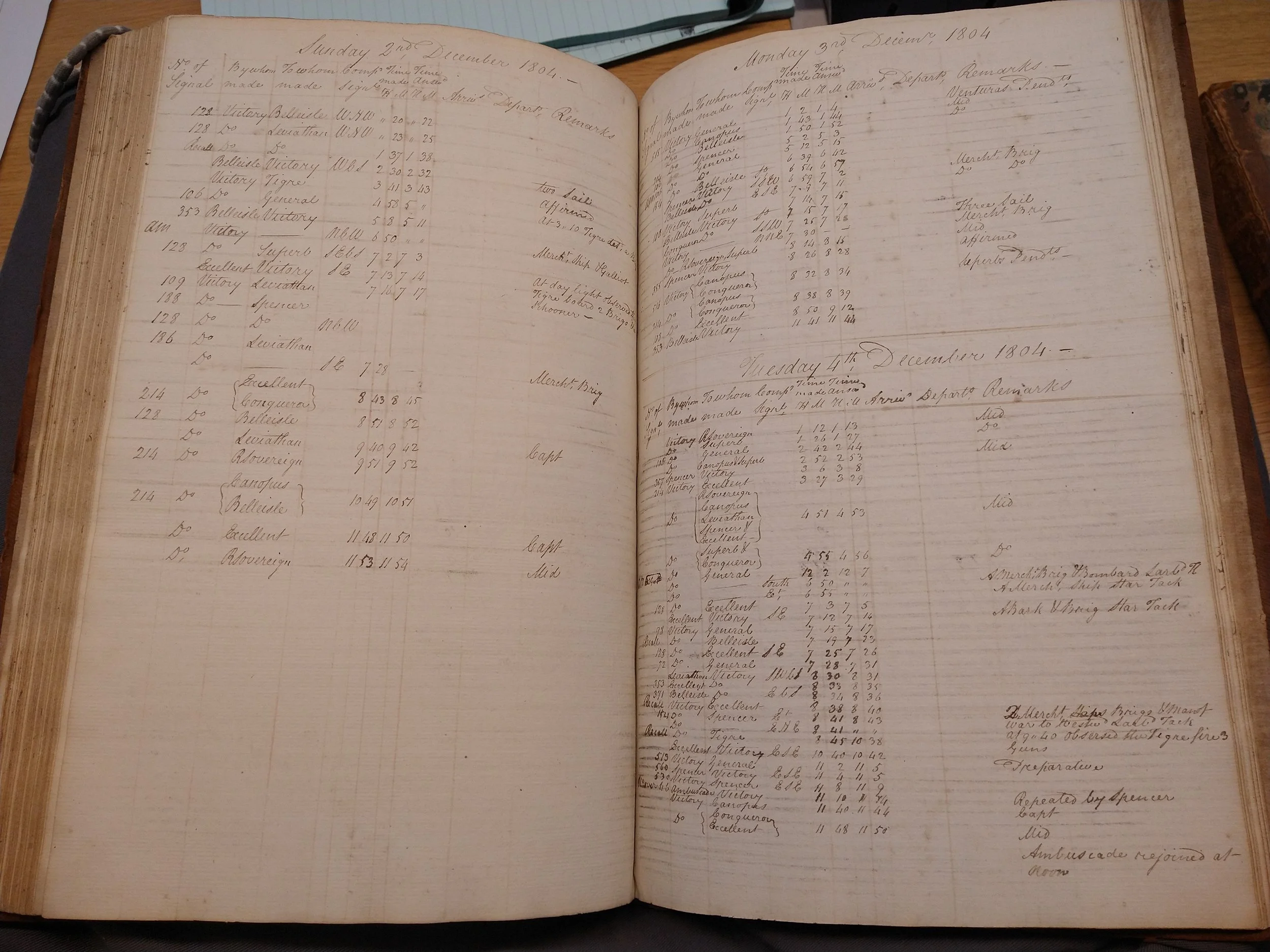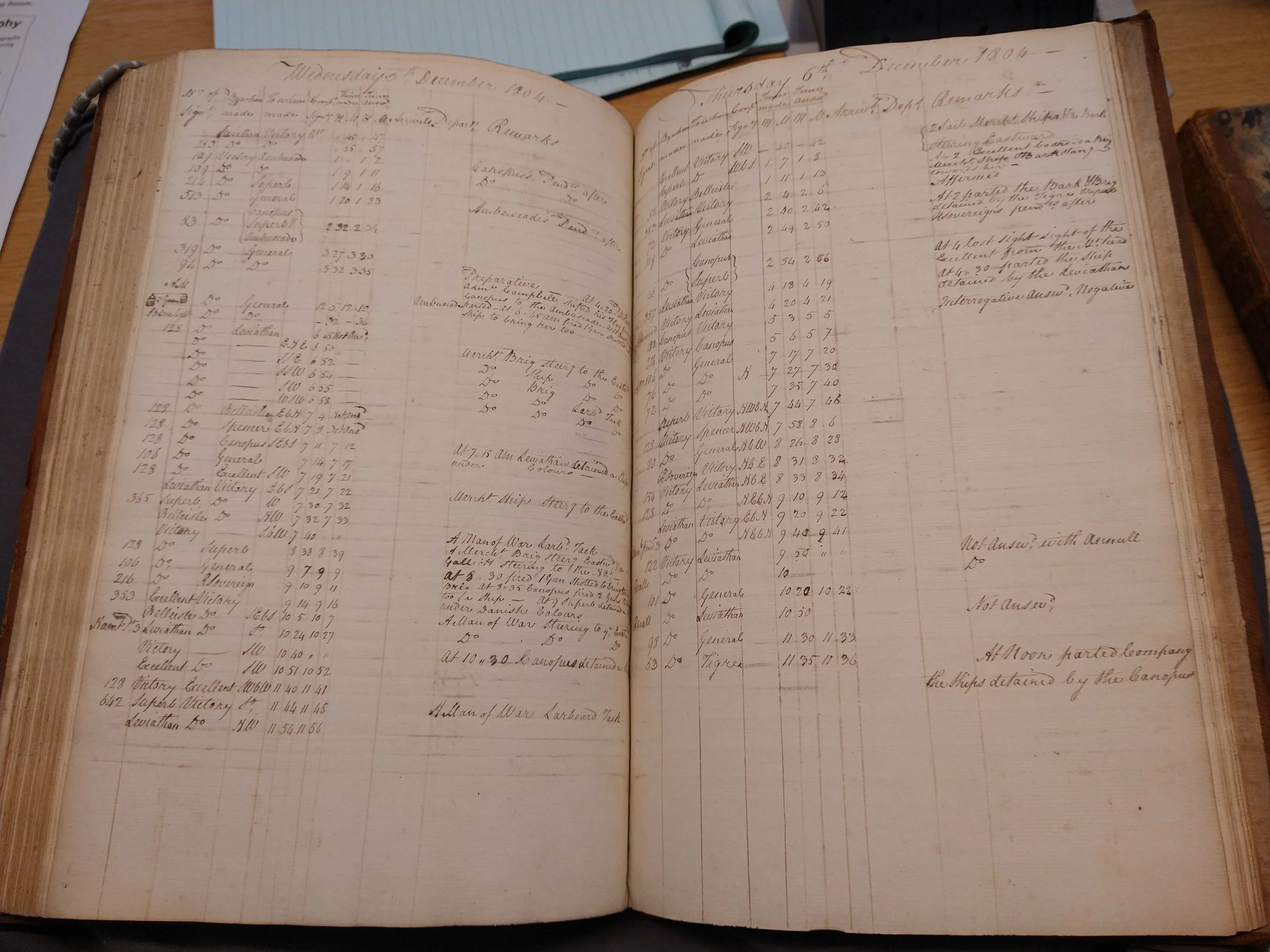
Signals at the Heart of the Fleet: HMS Victory, 1804
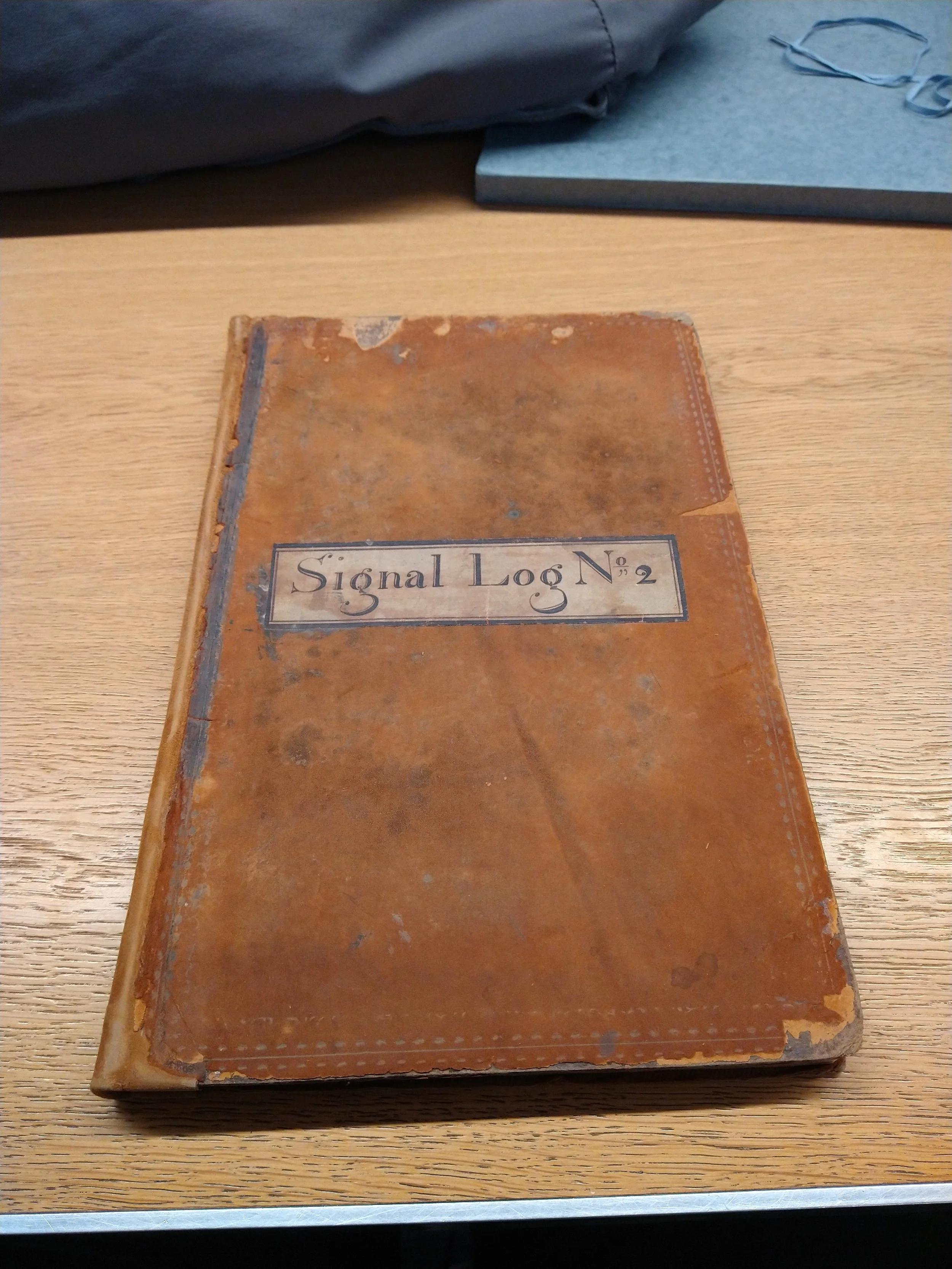
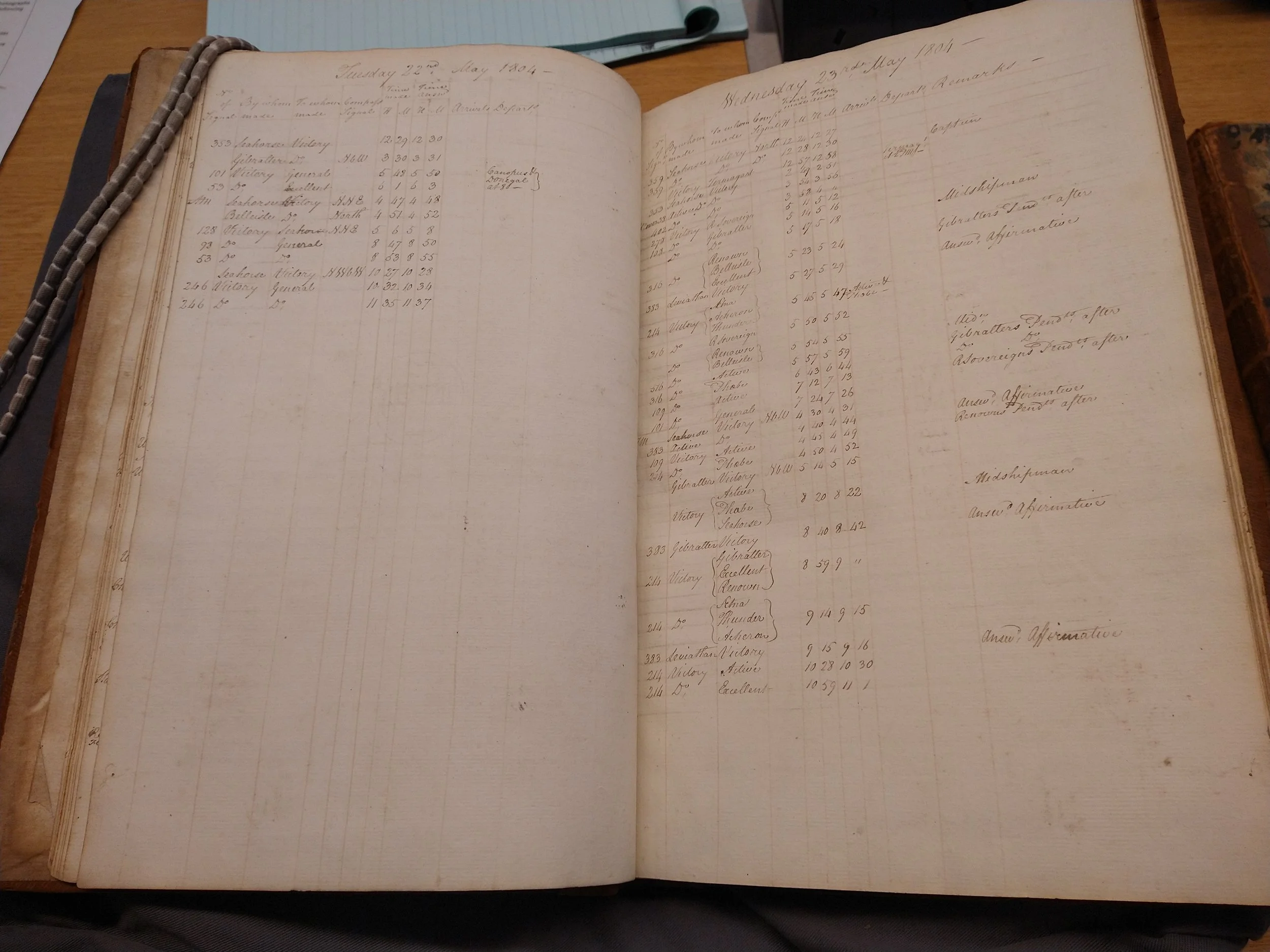
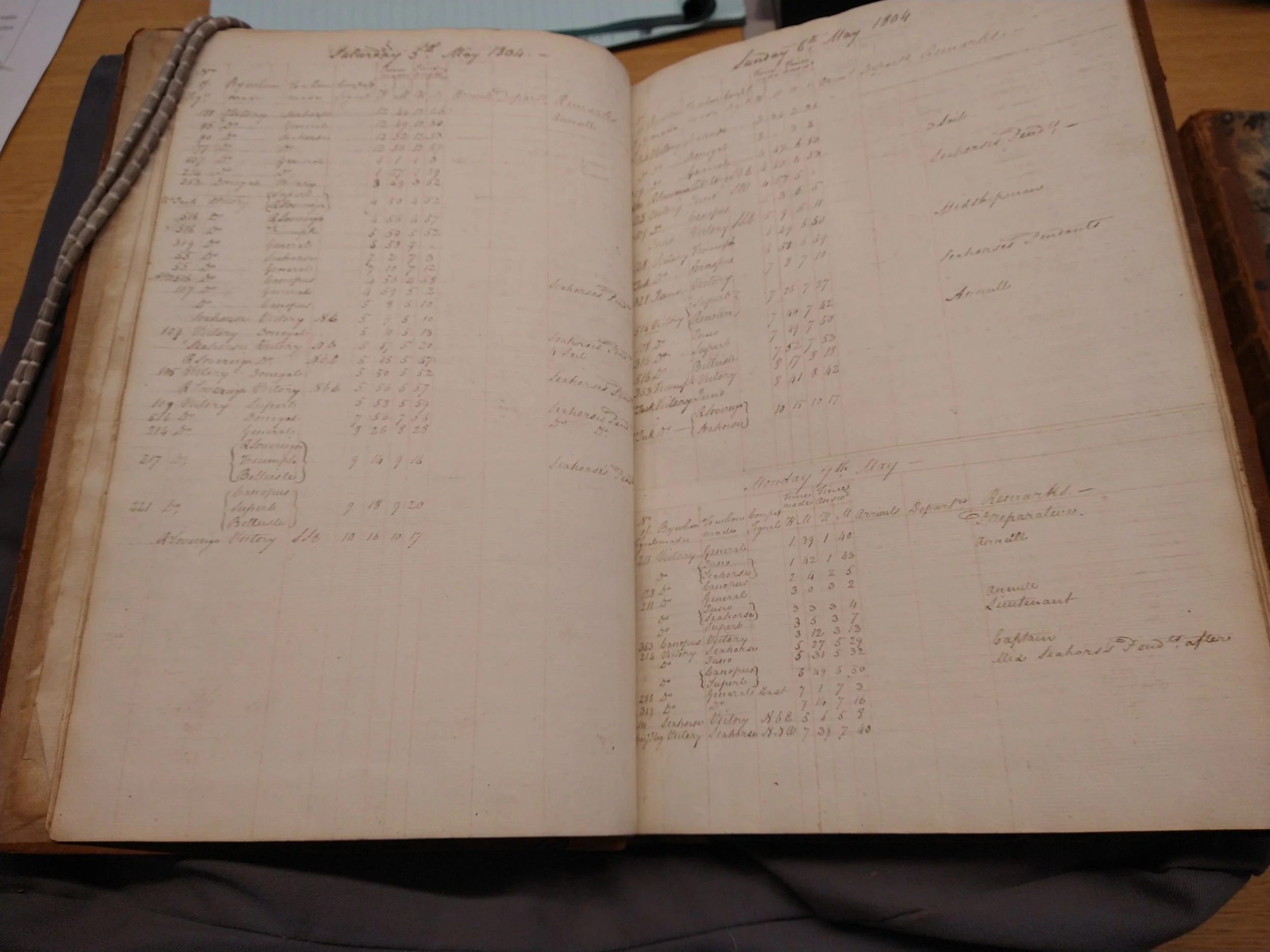
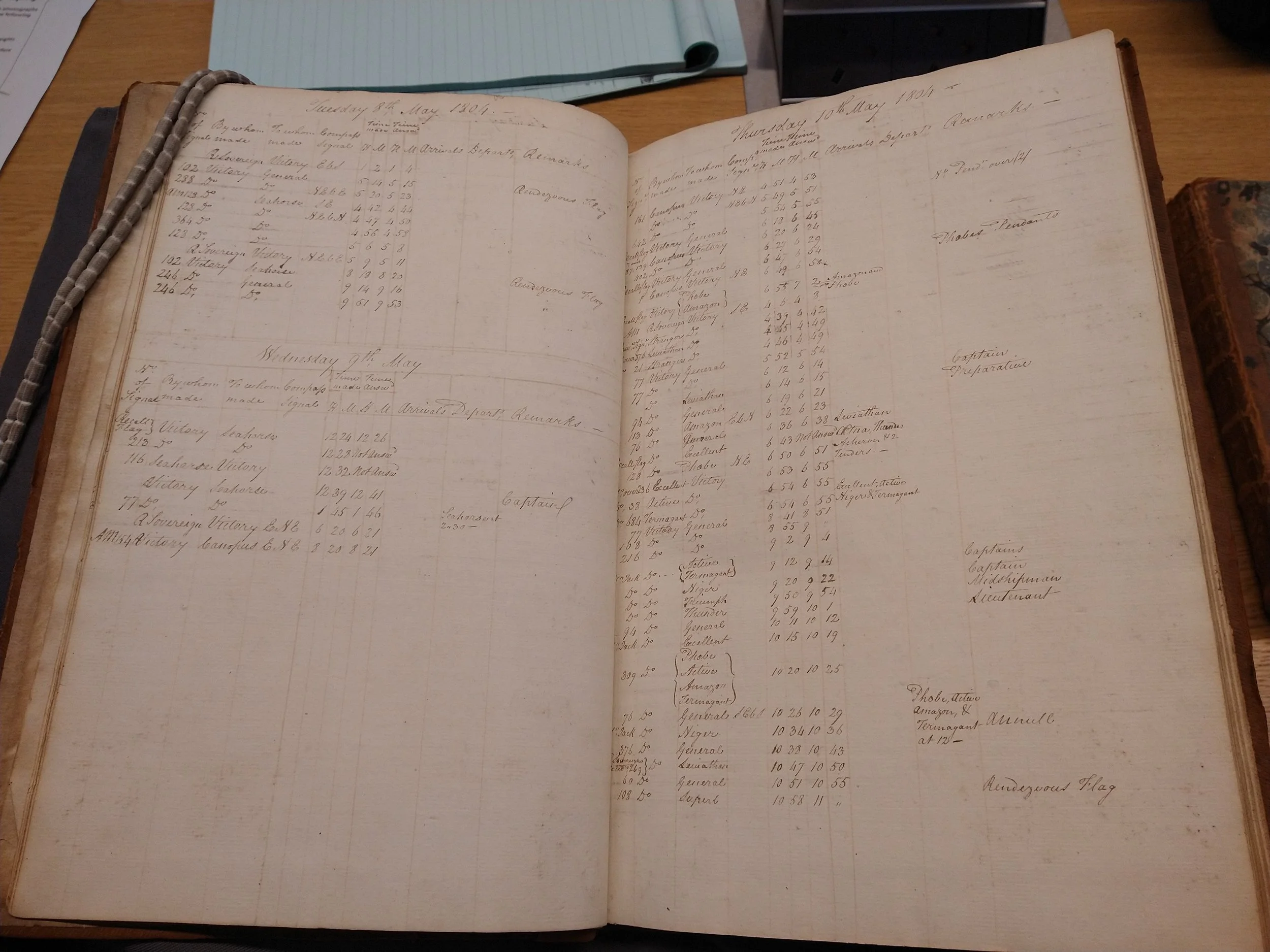
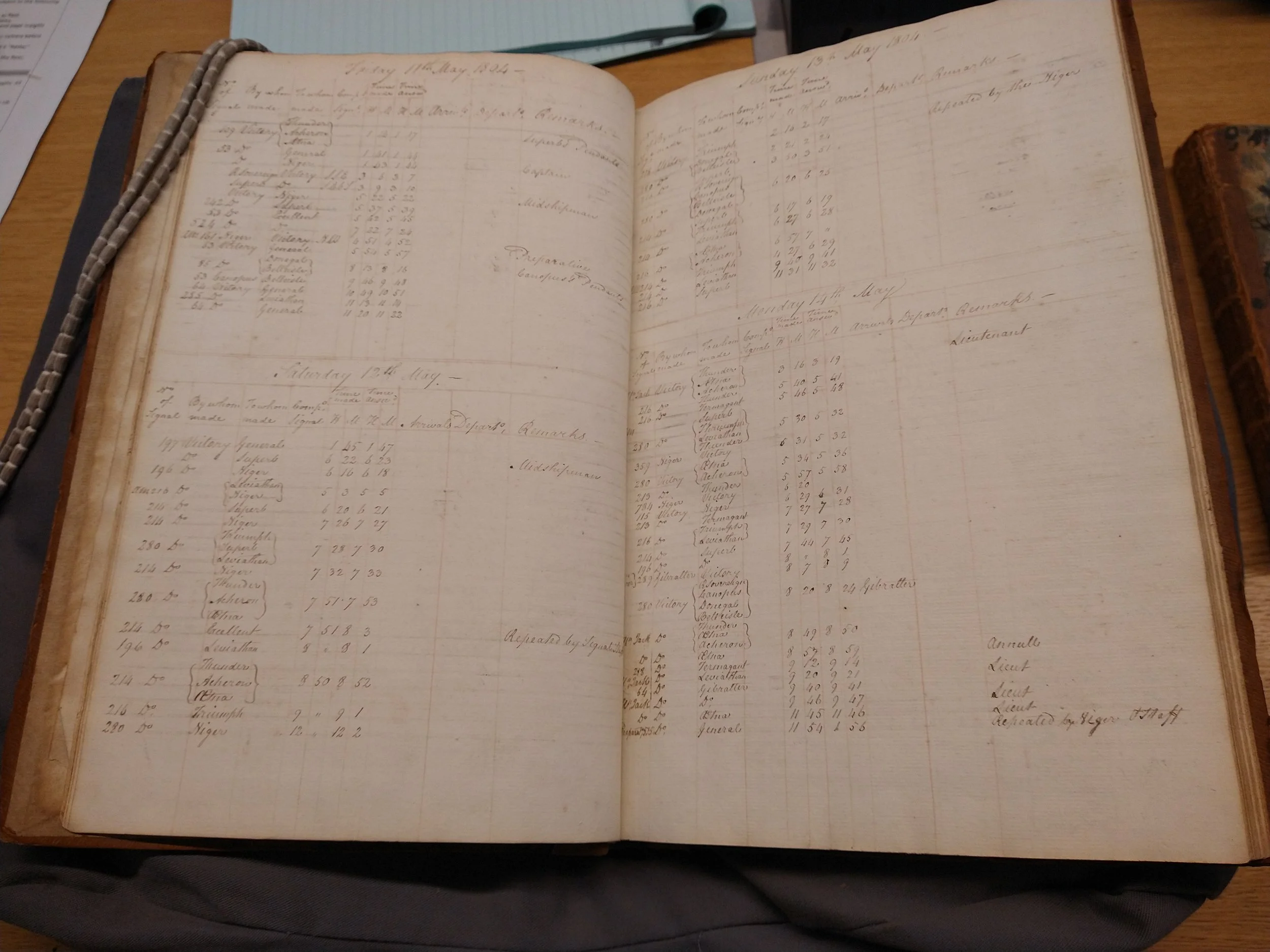
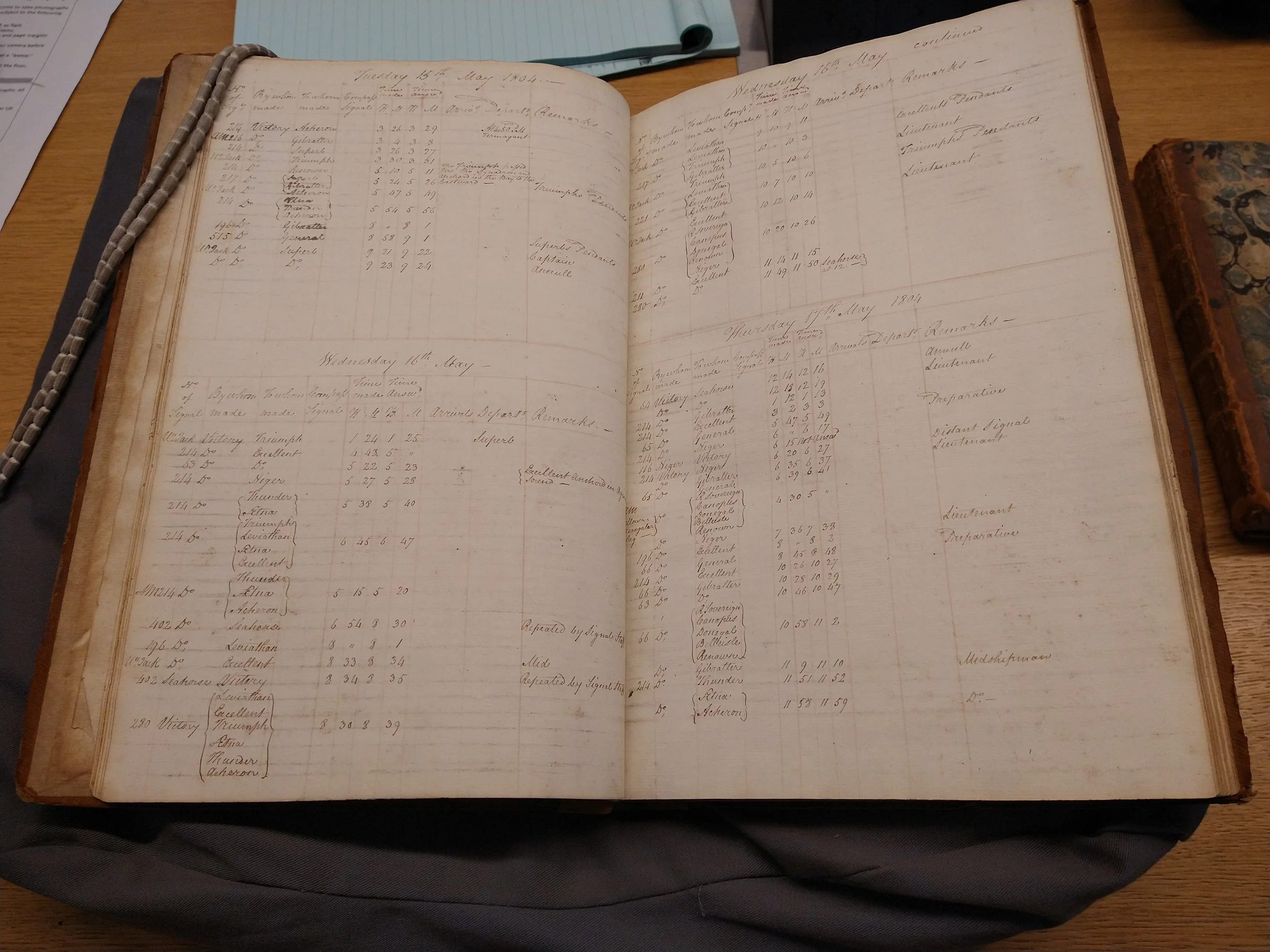
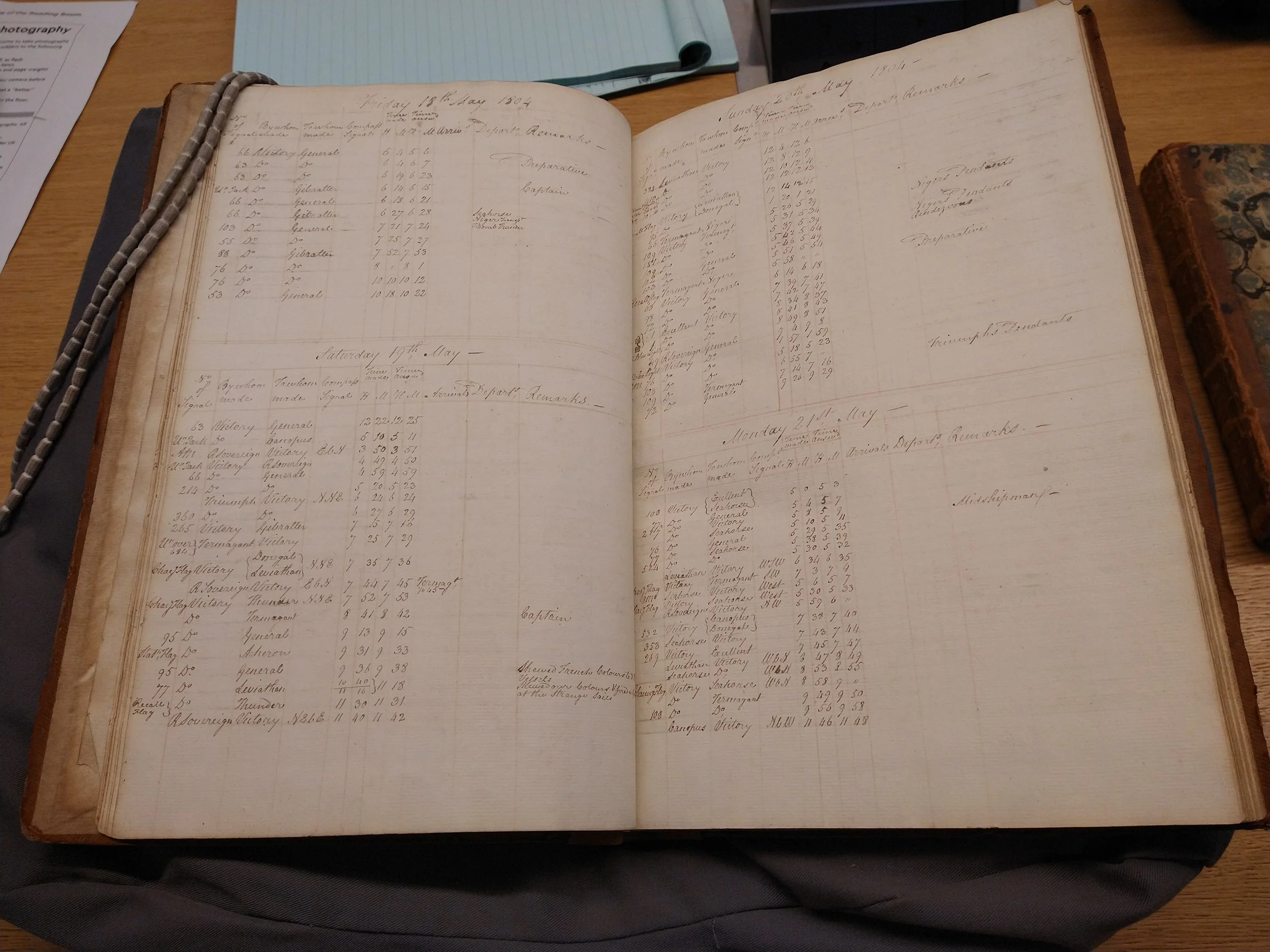
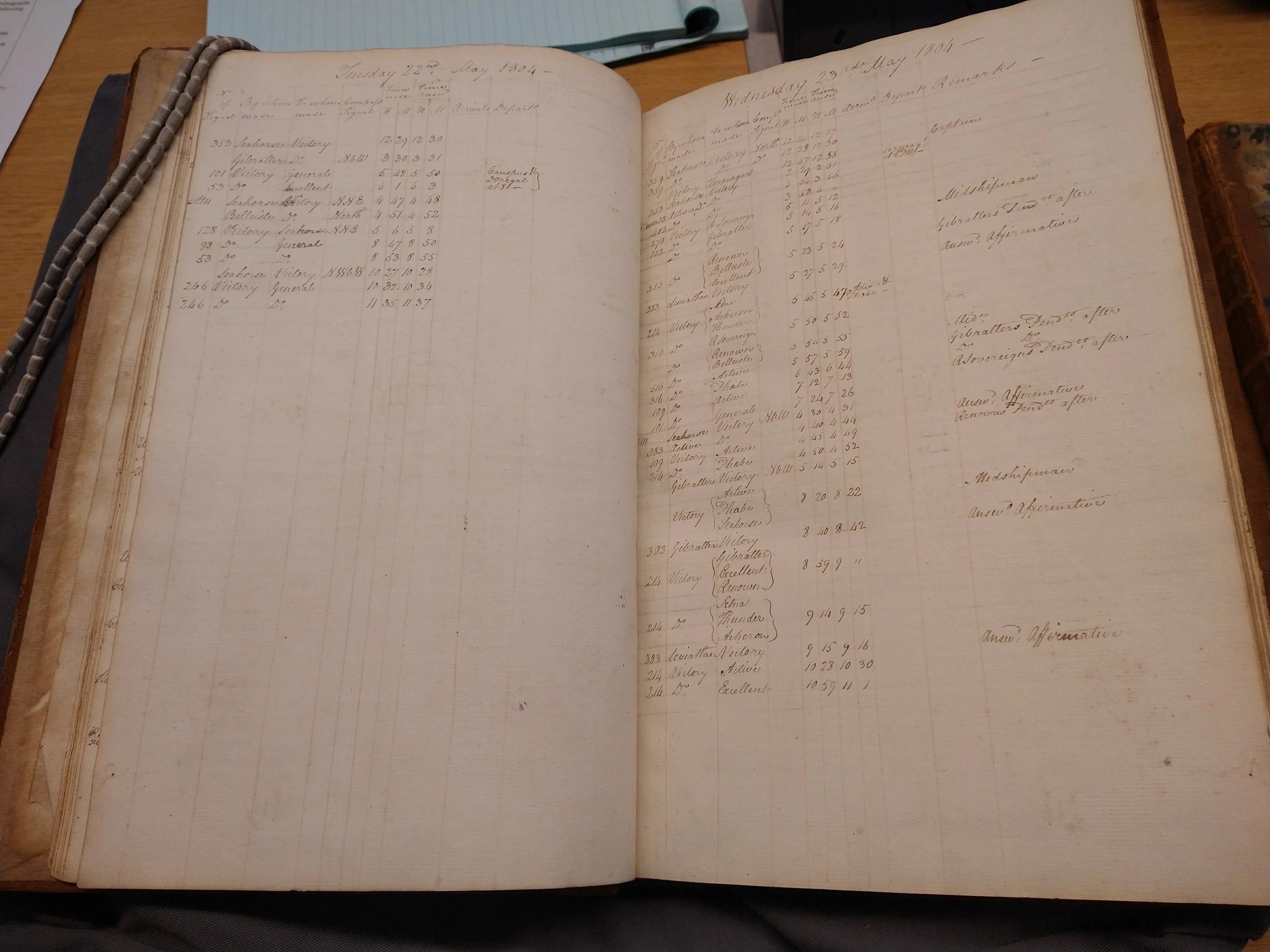
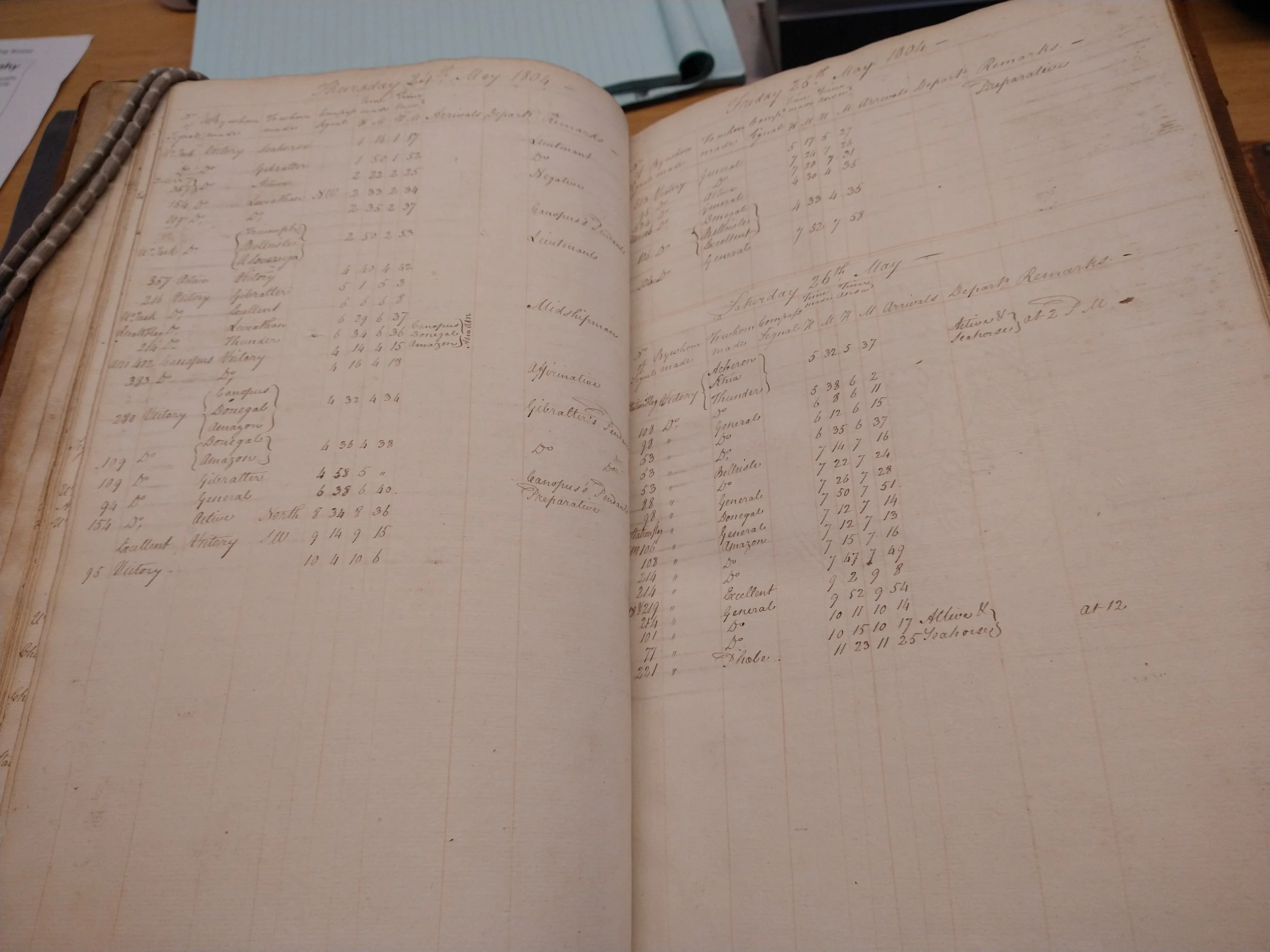
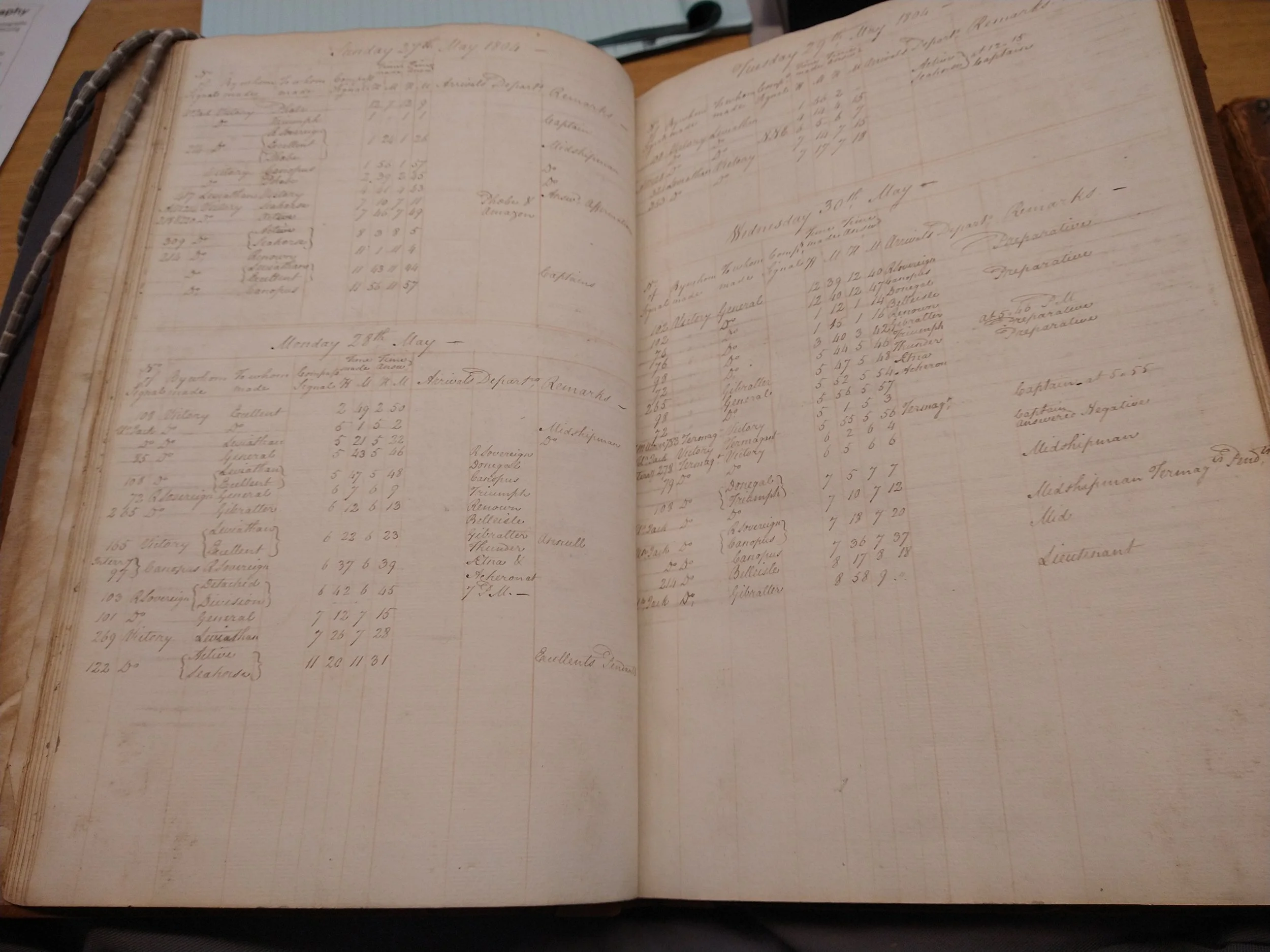
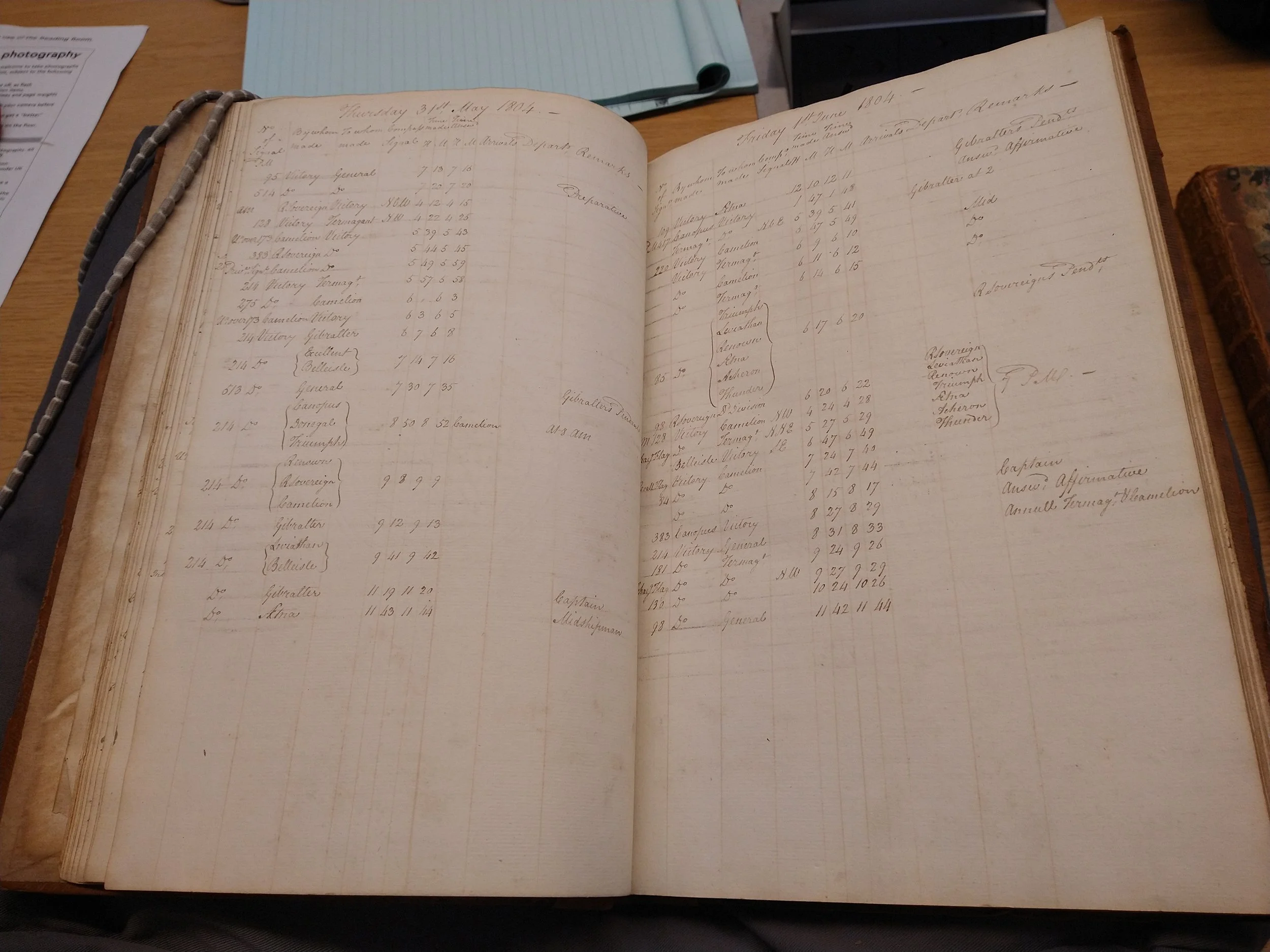
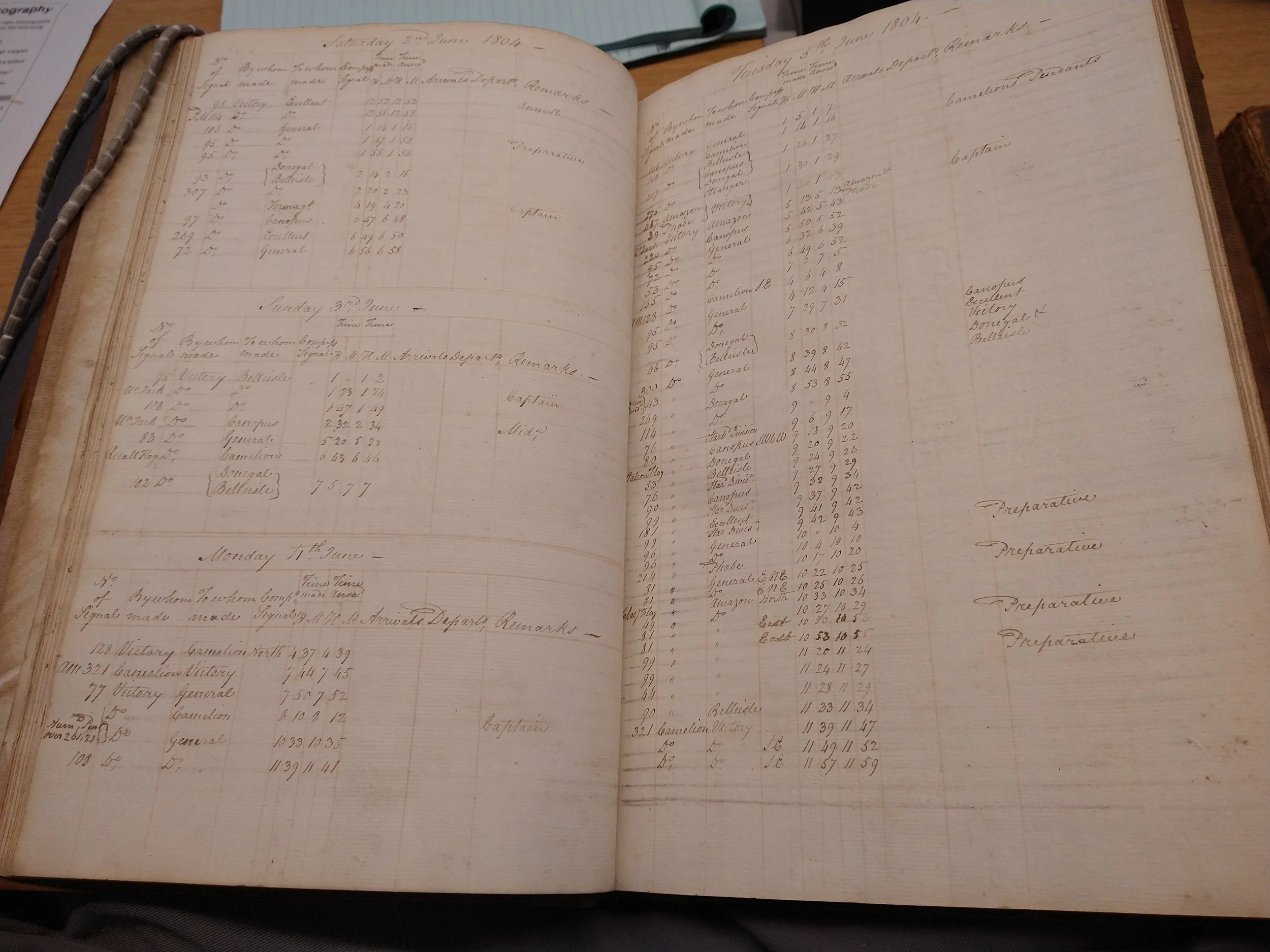
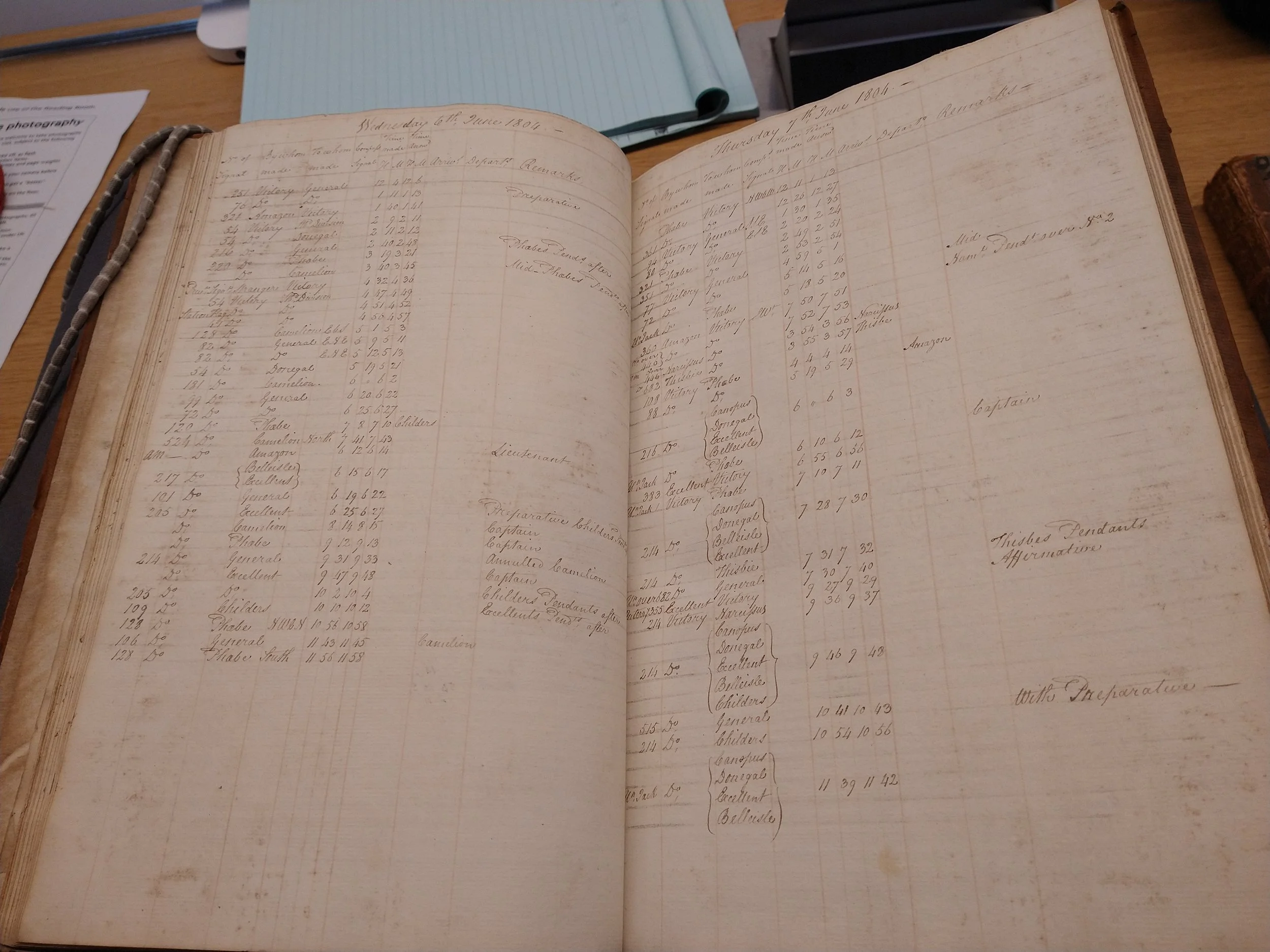
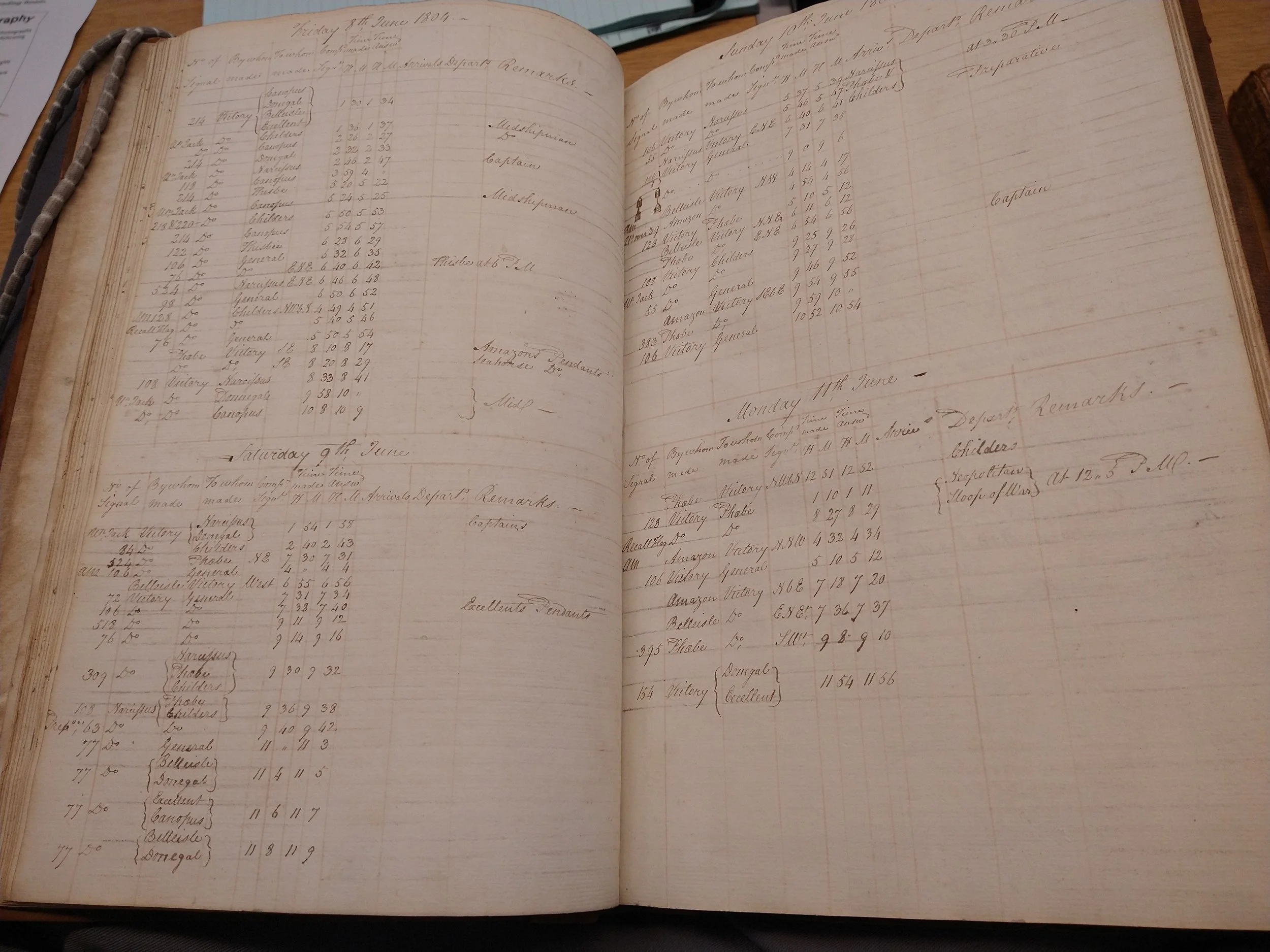
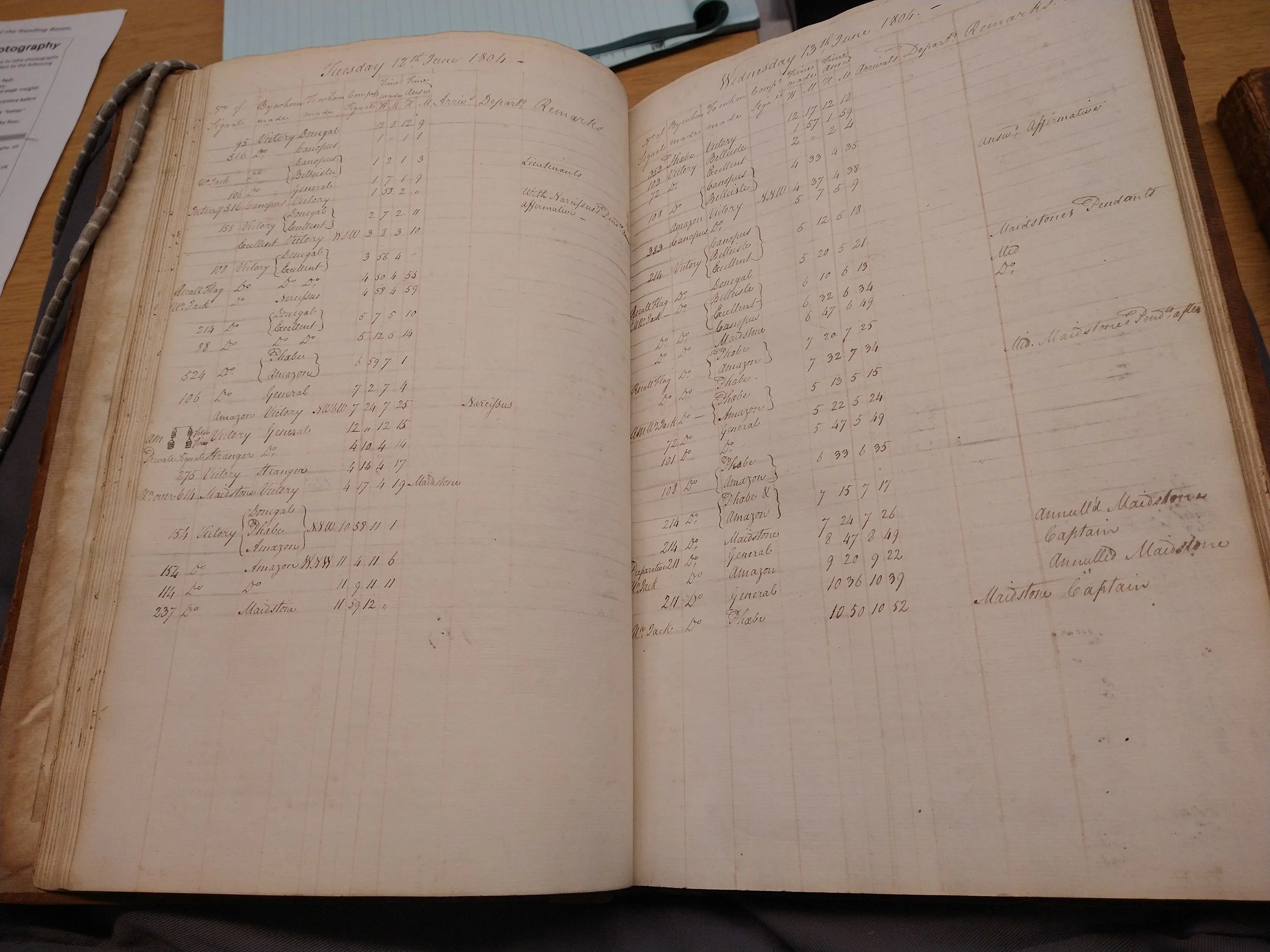
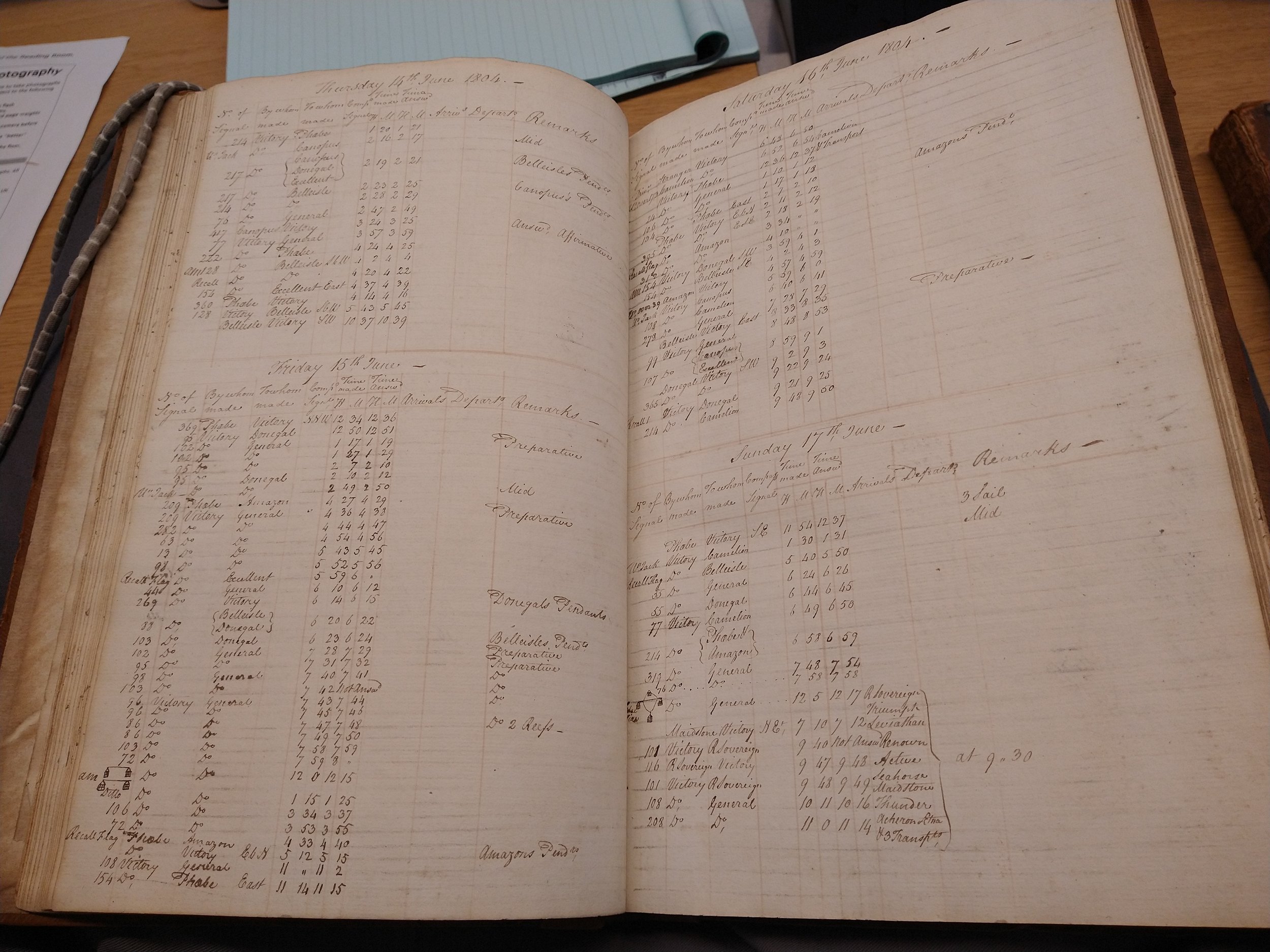
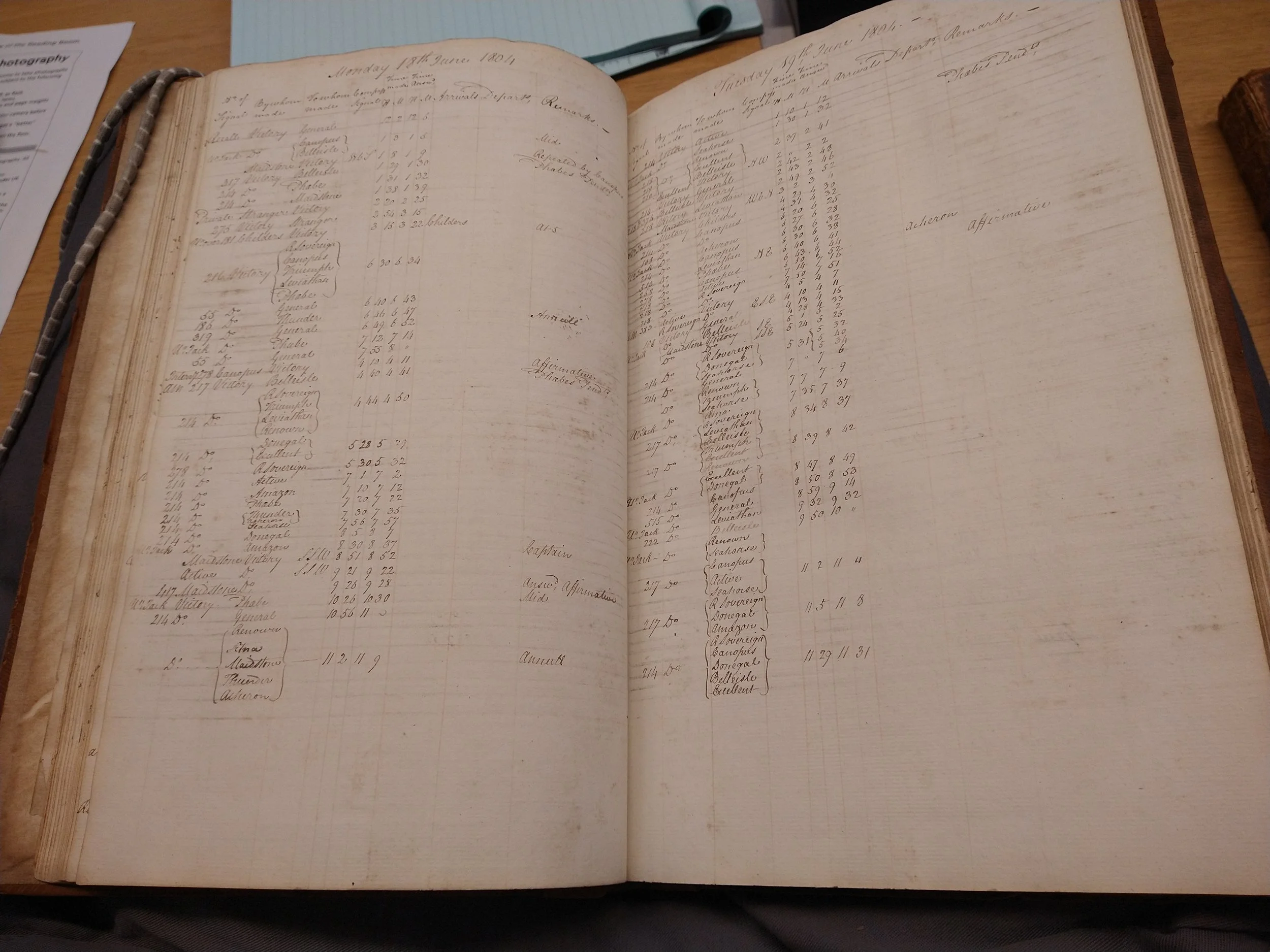
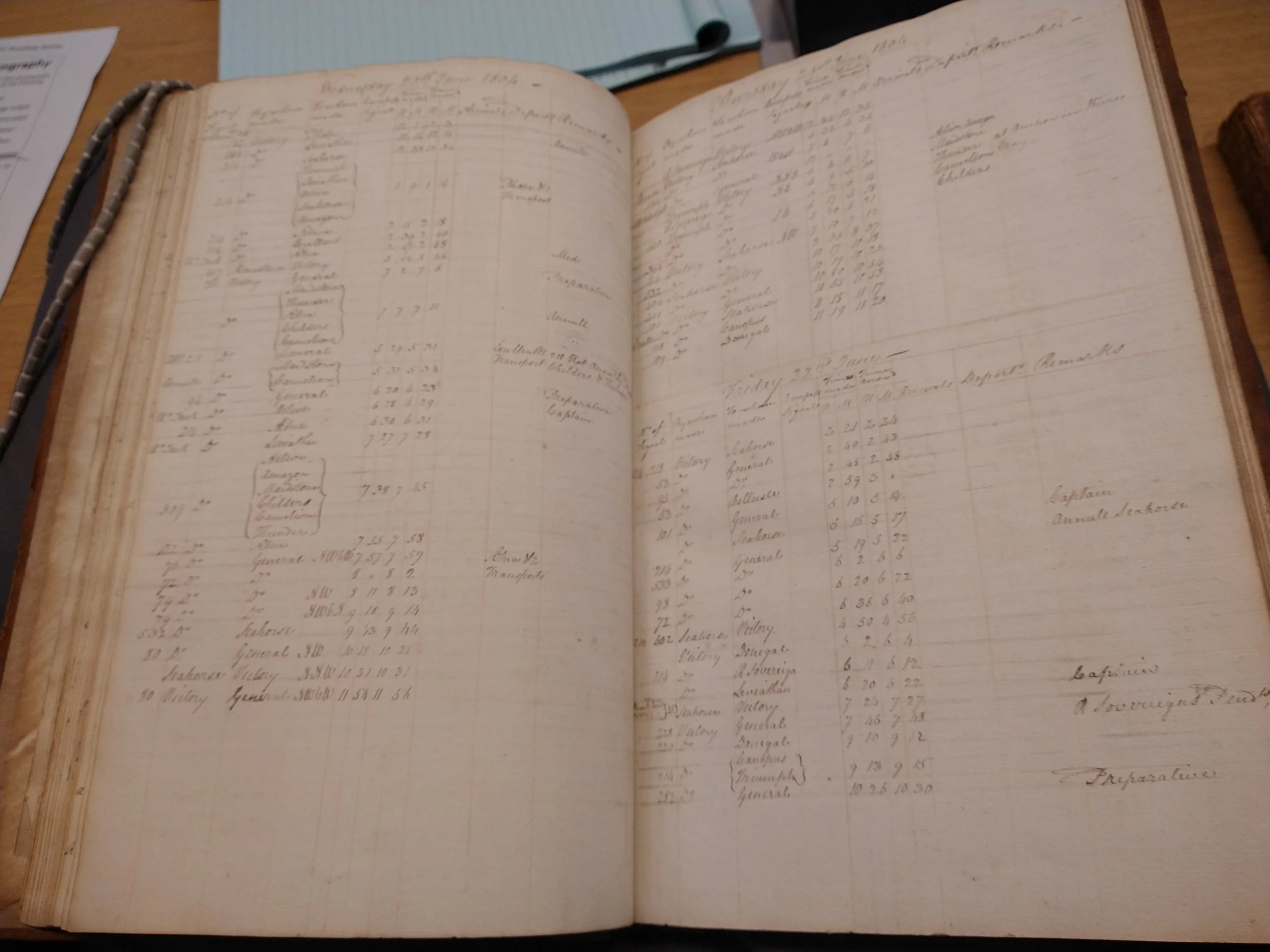
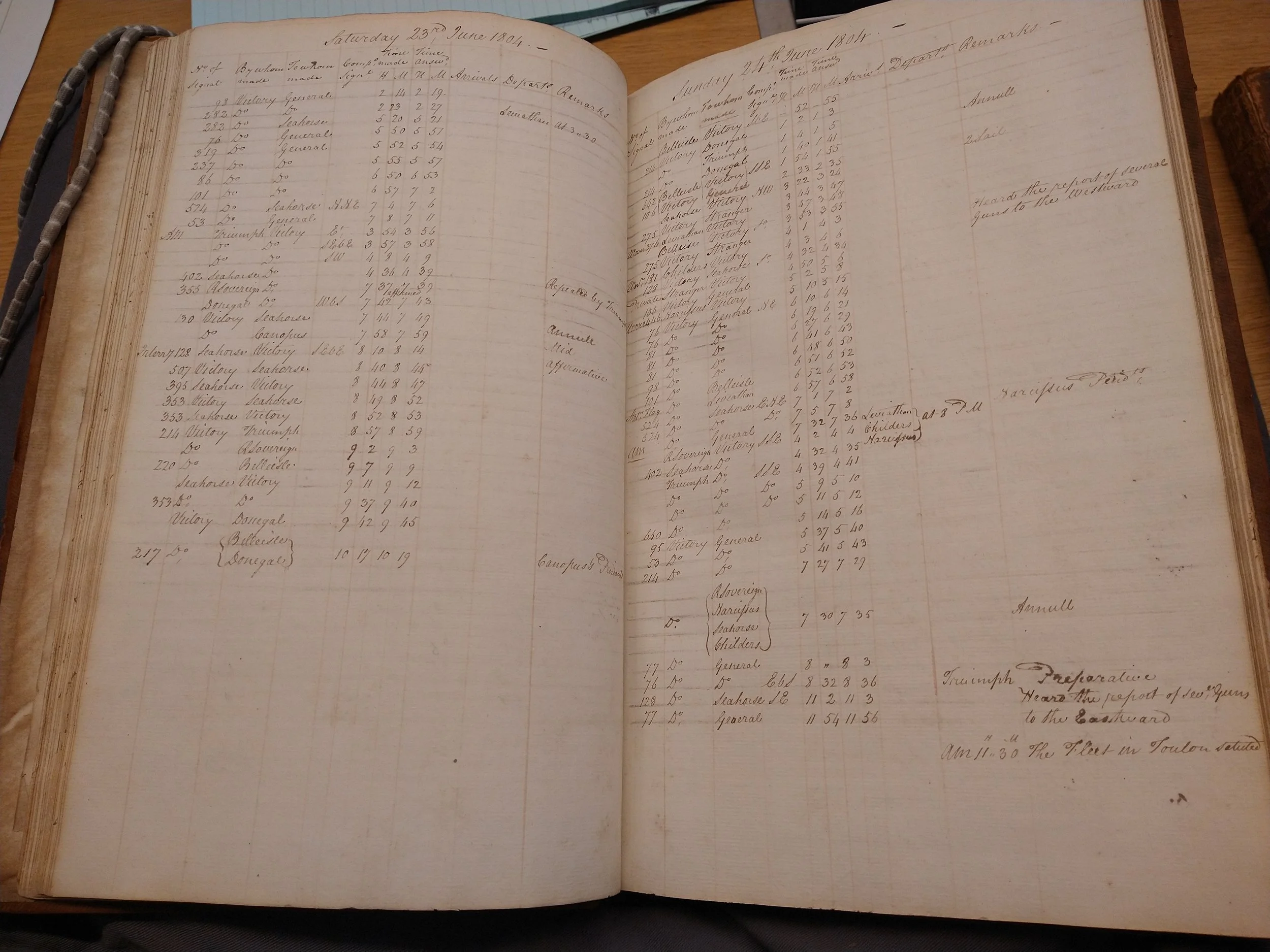
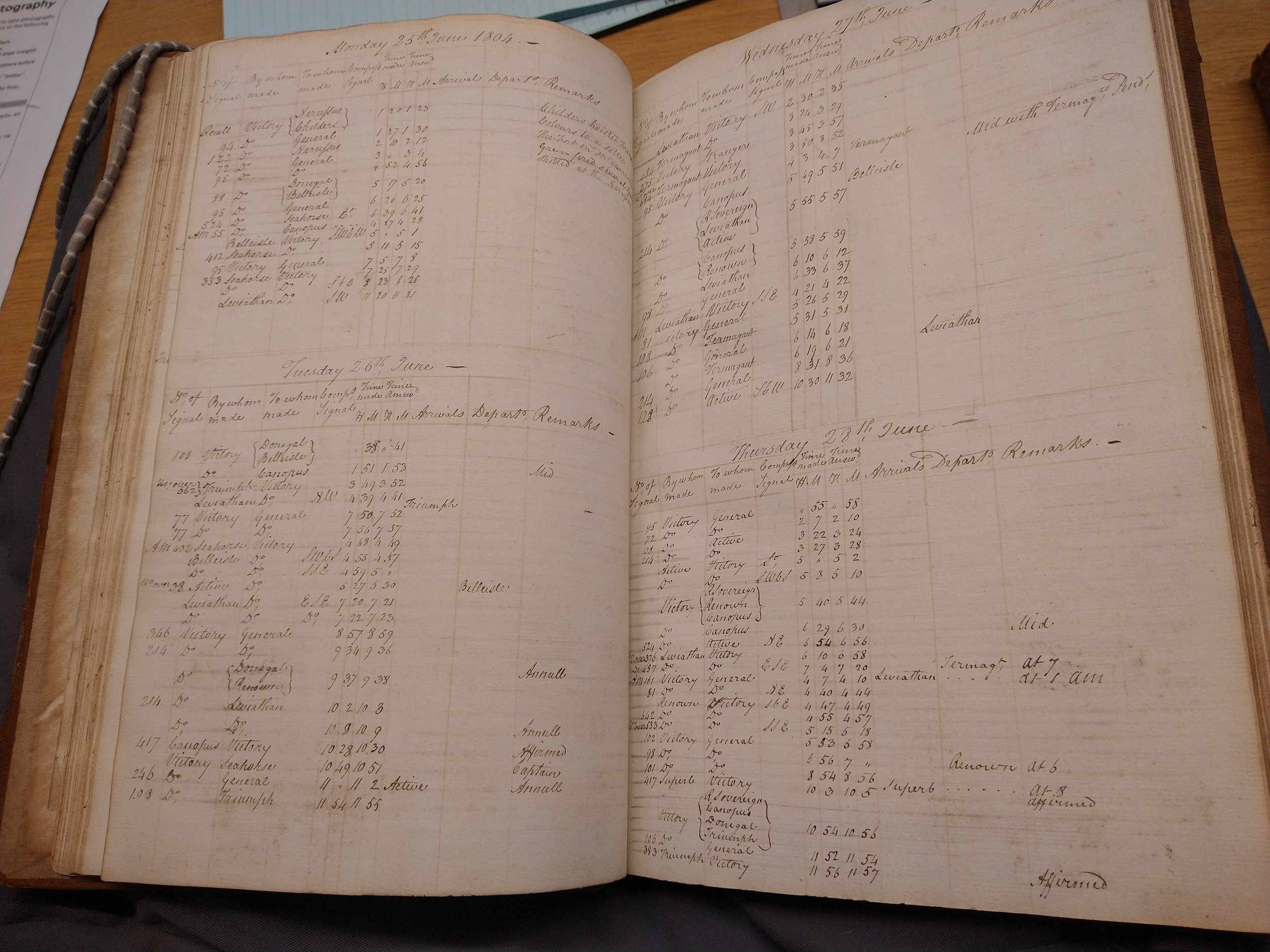
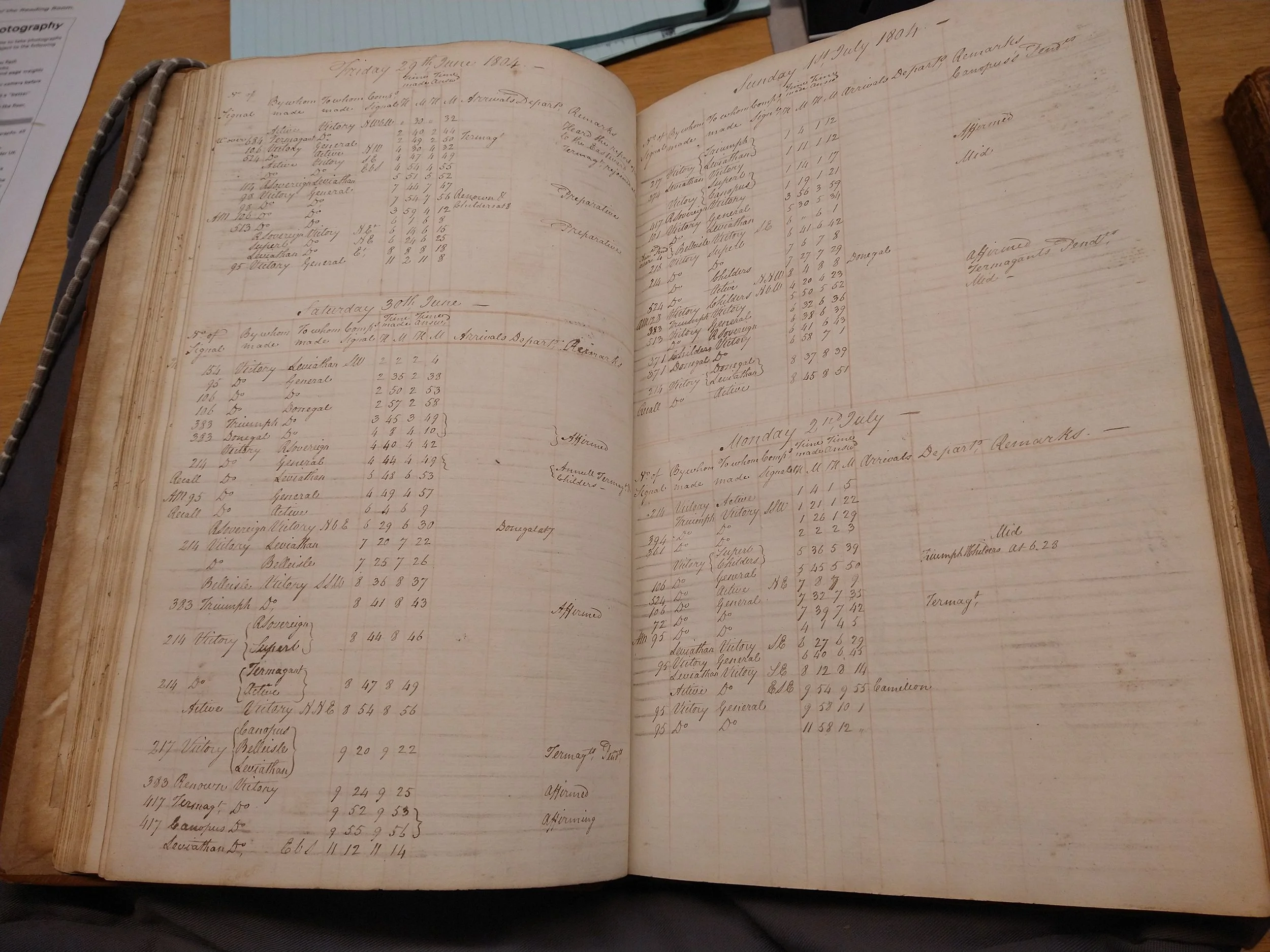
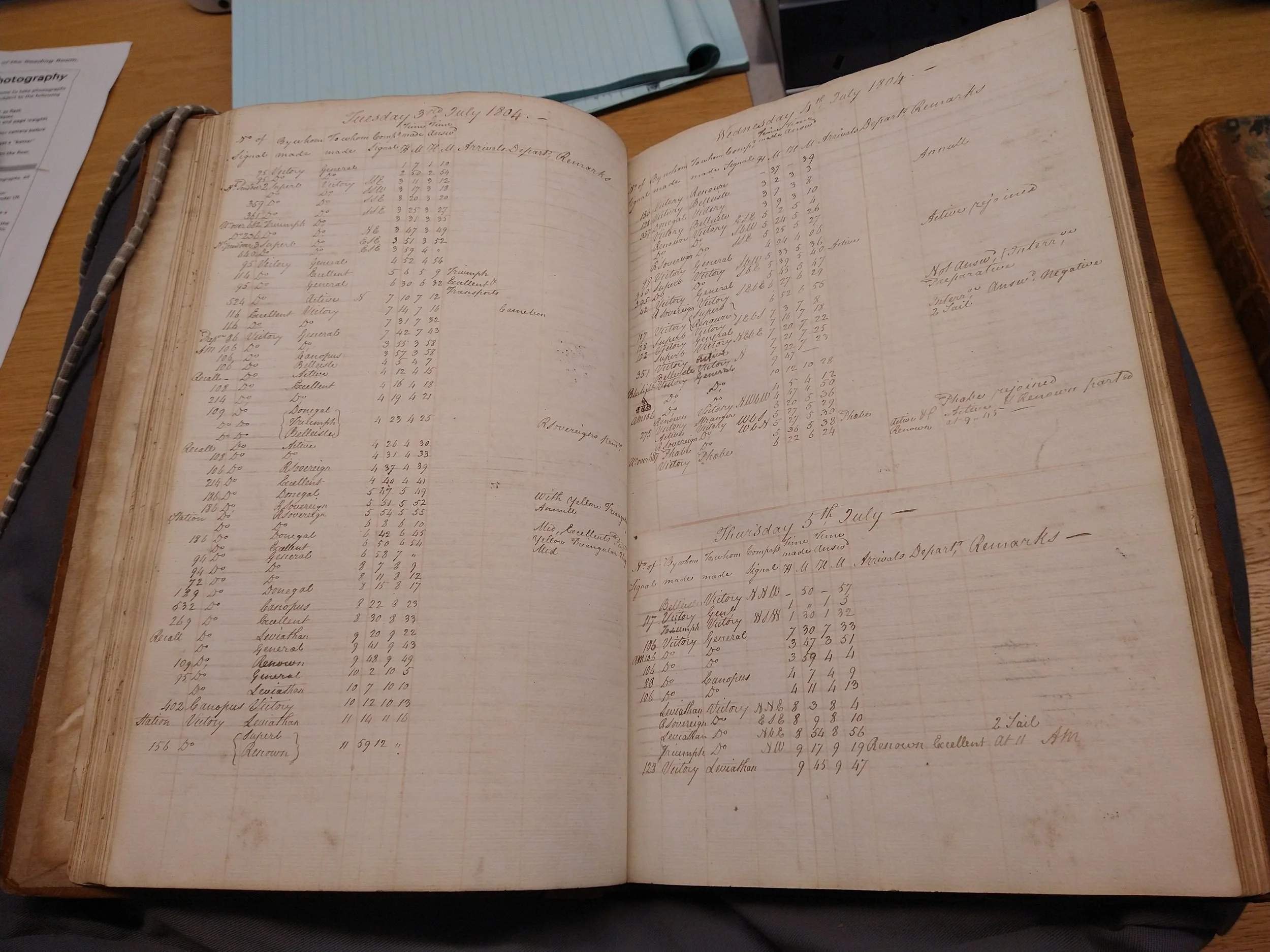
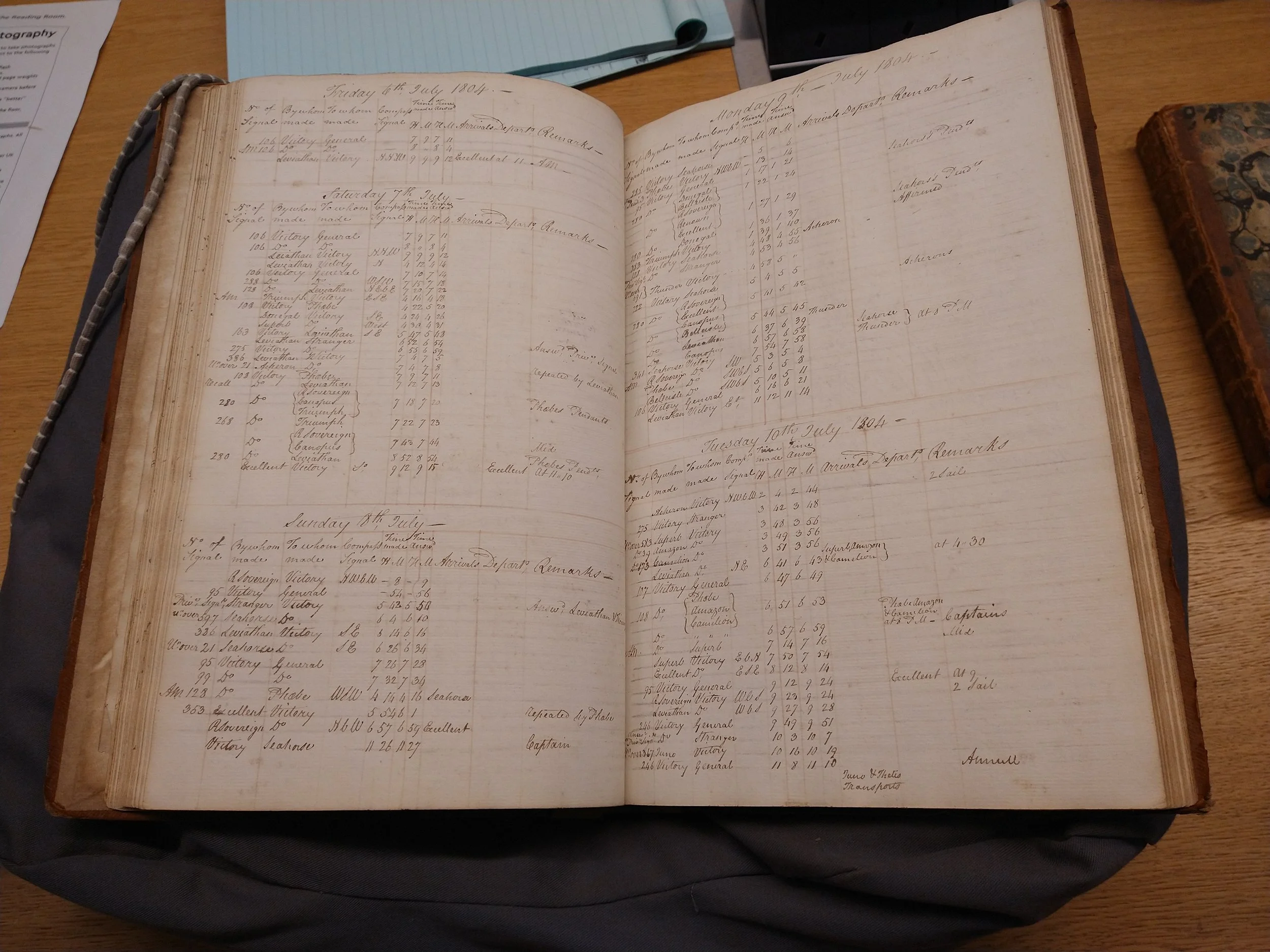
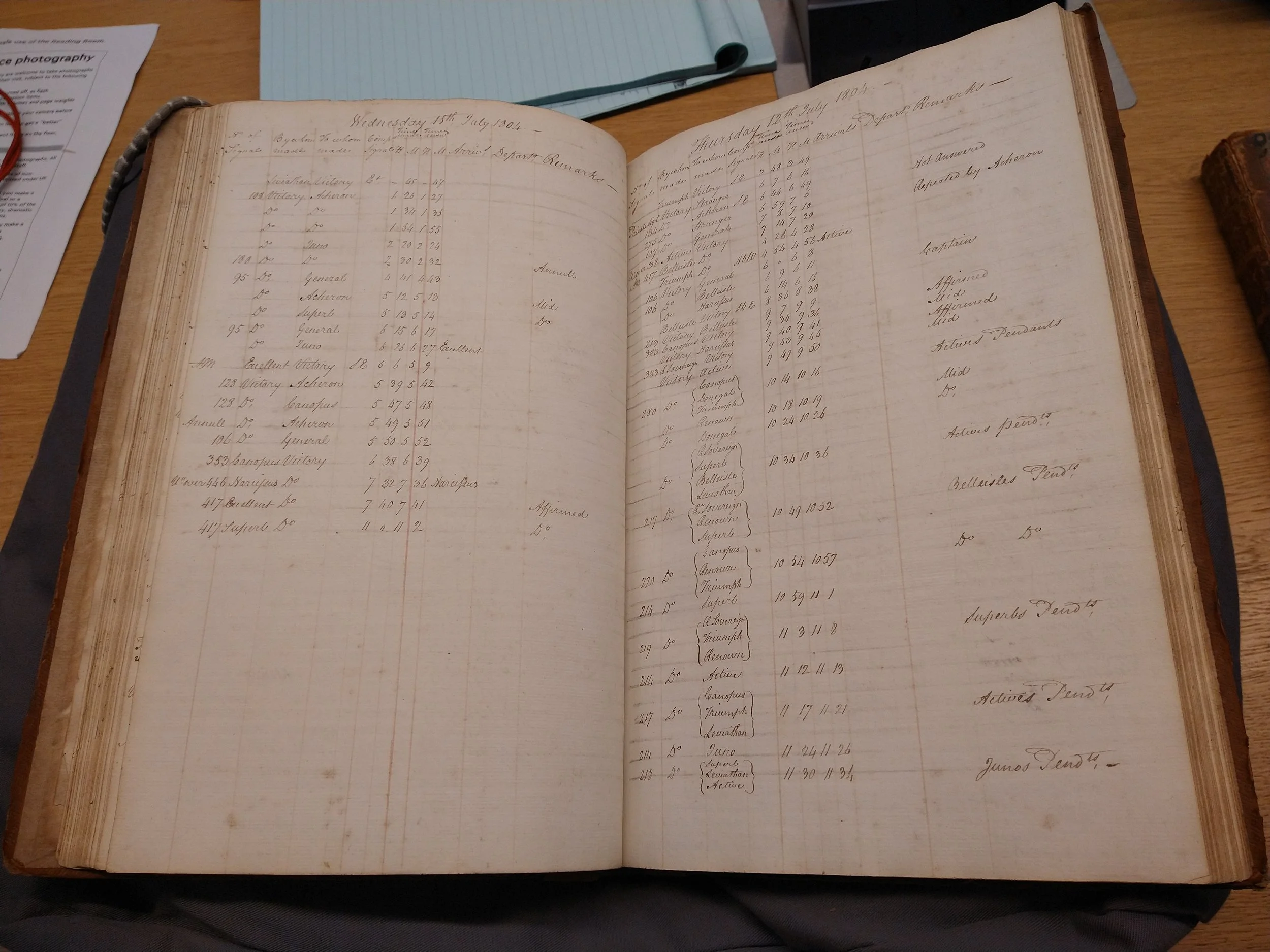
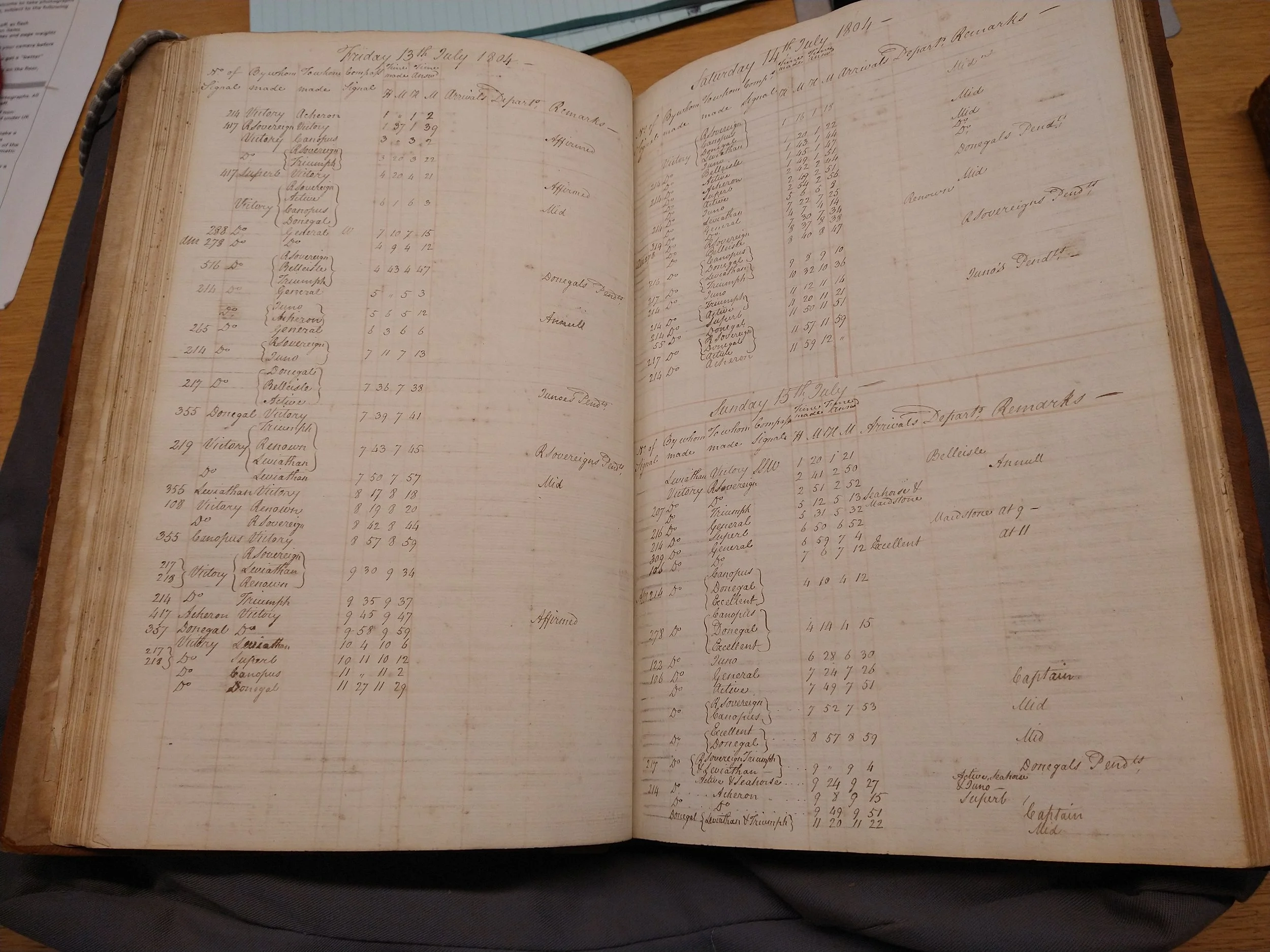
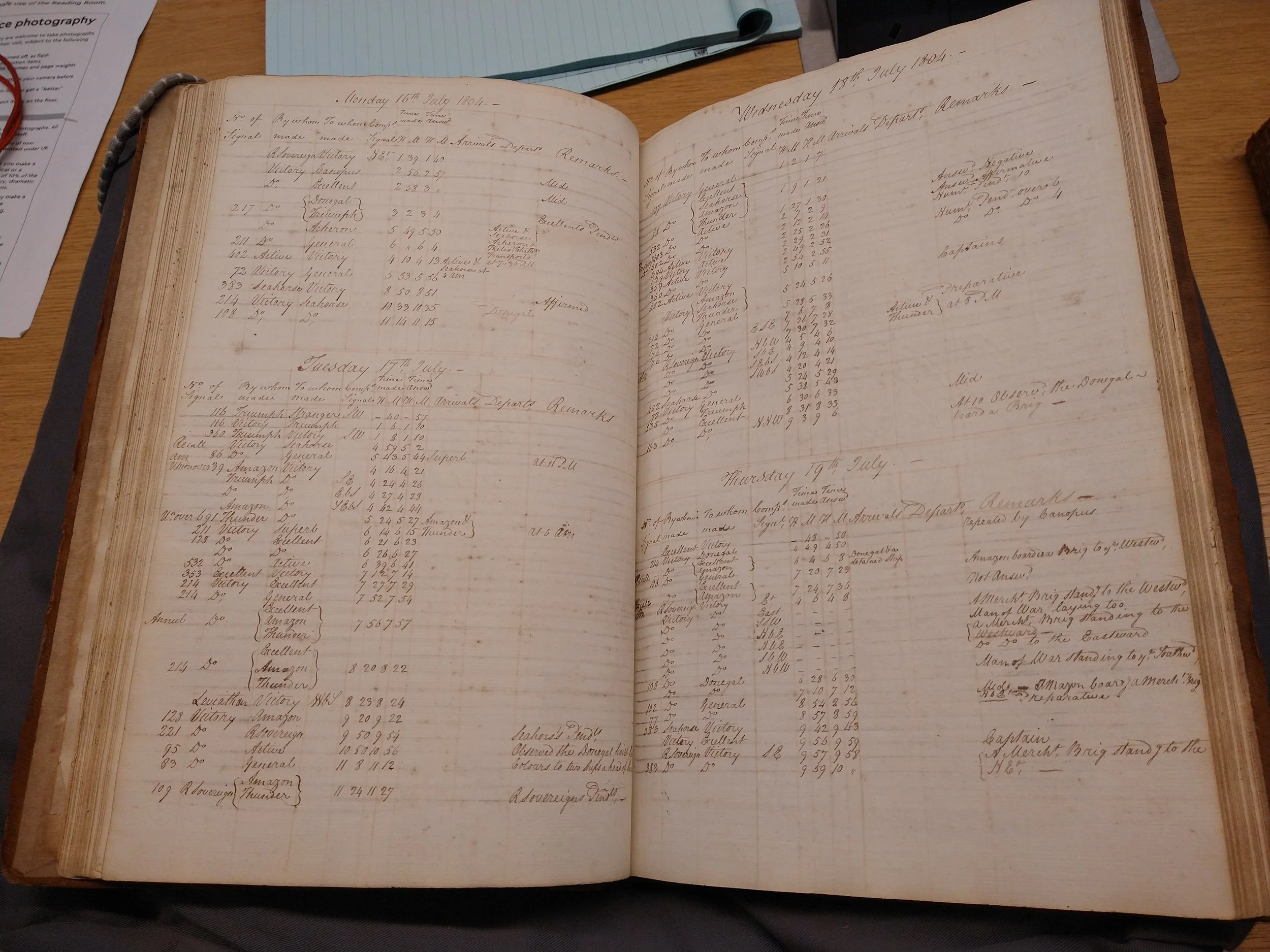
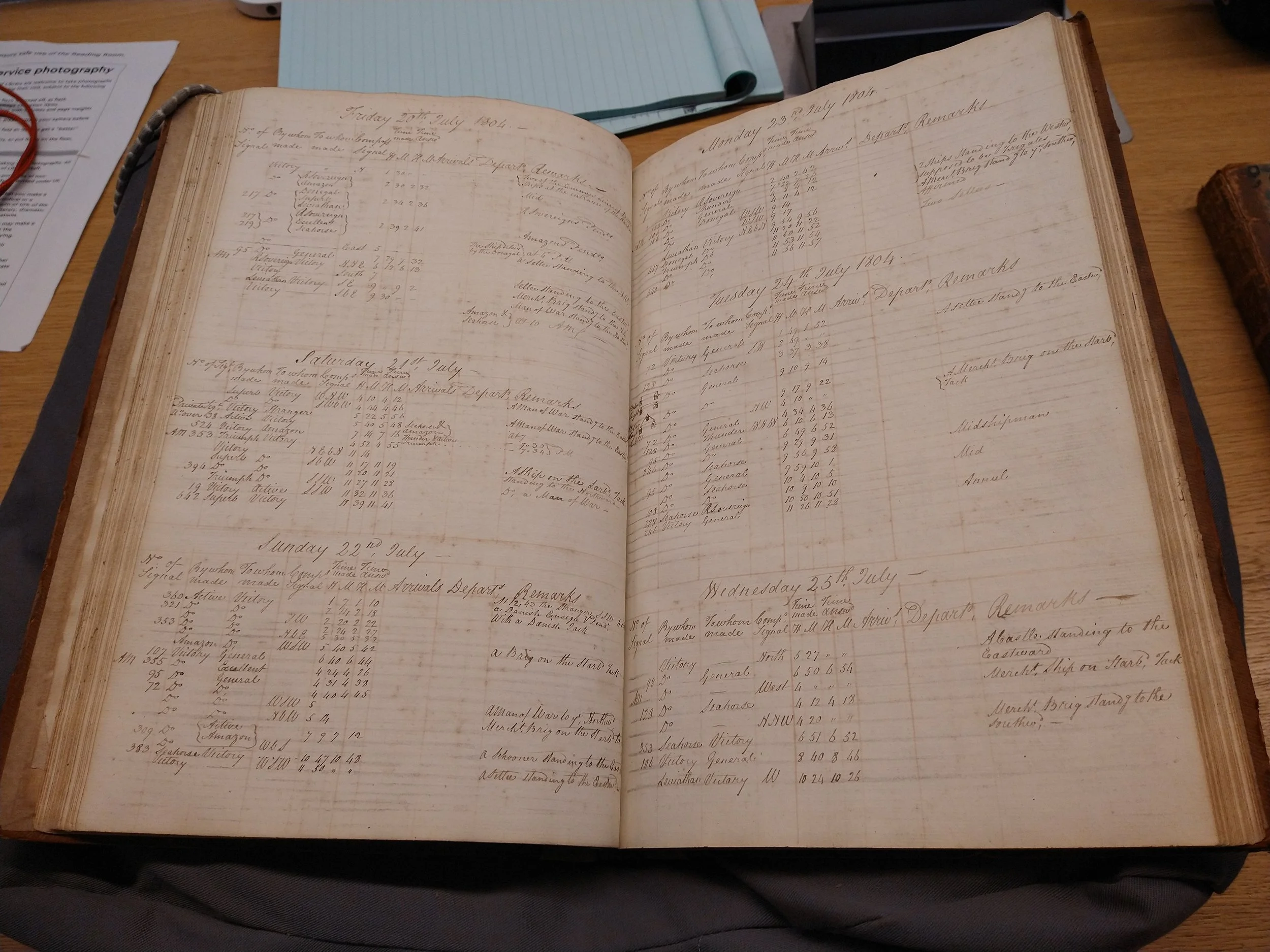
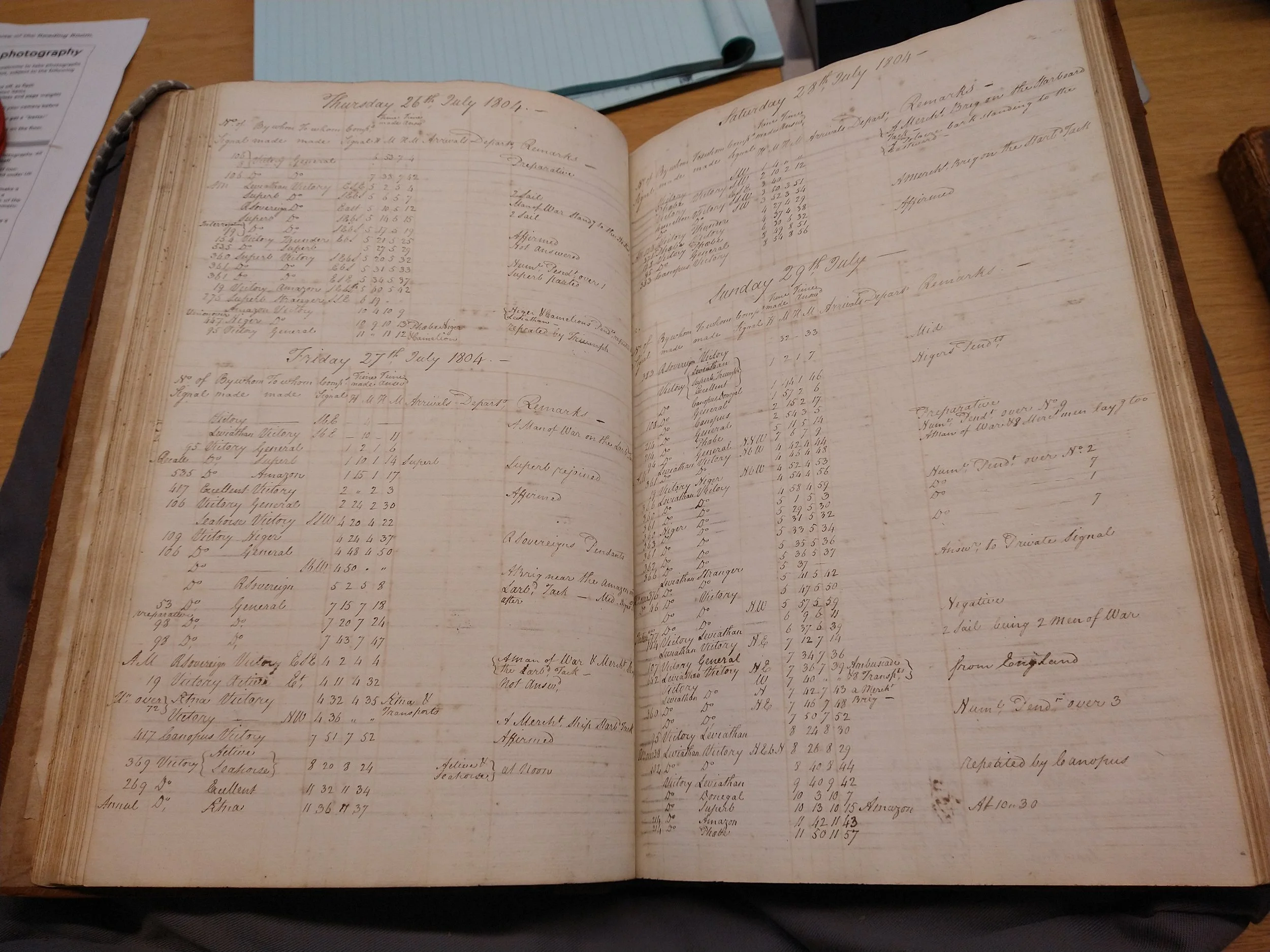
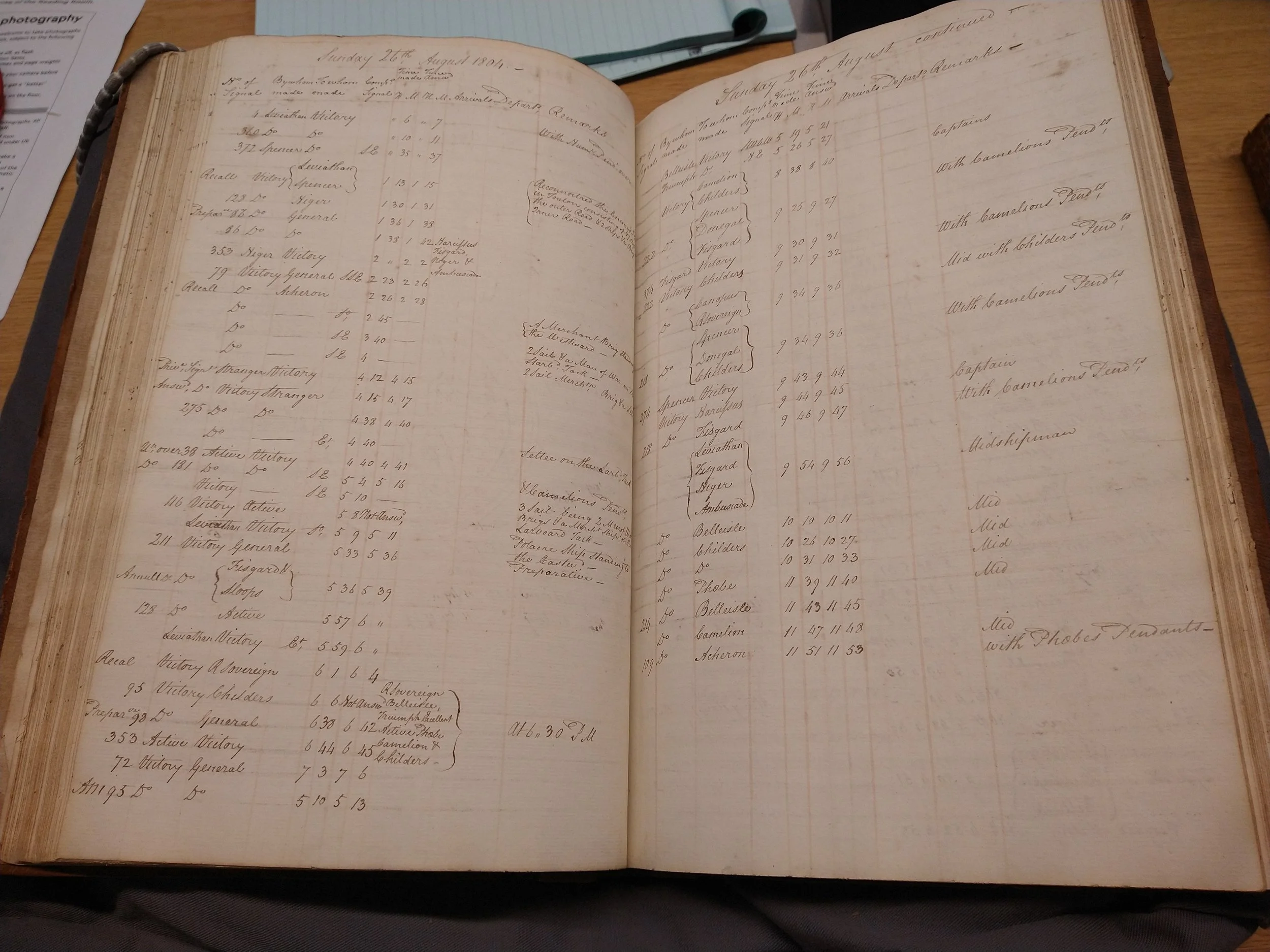
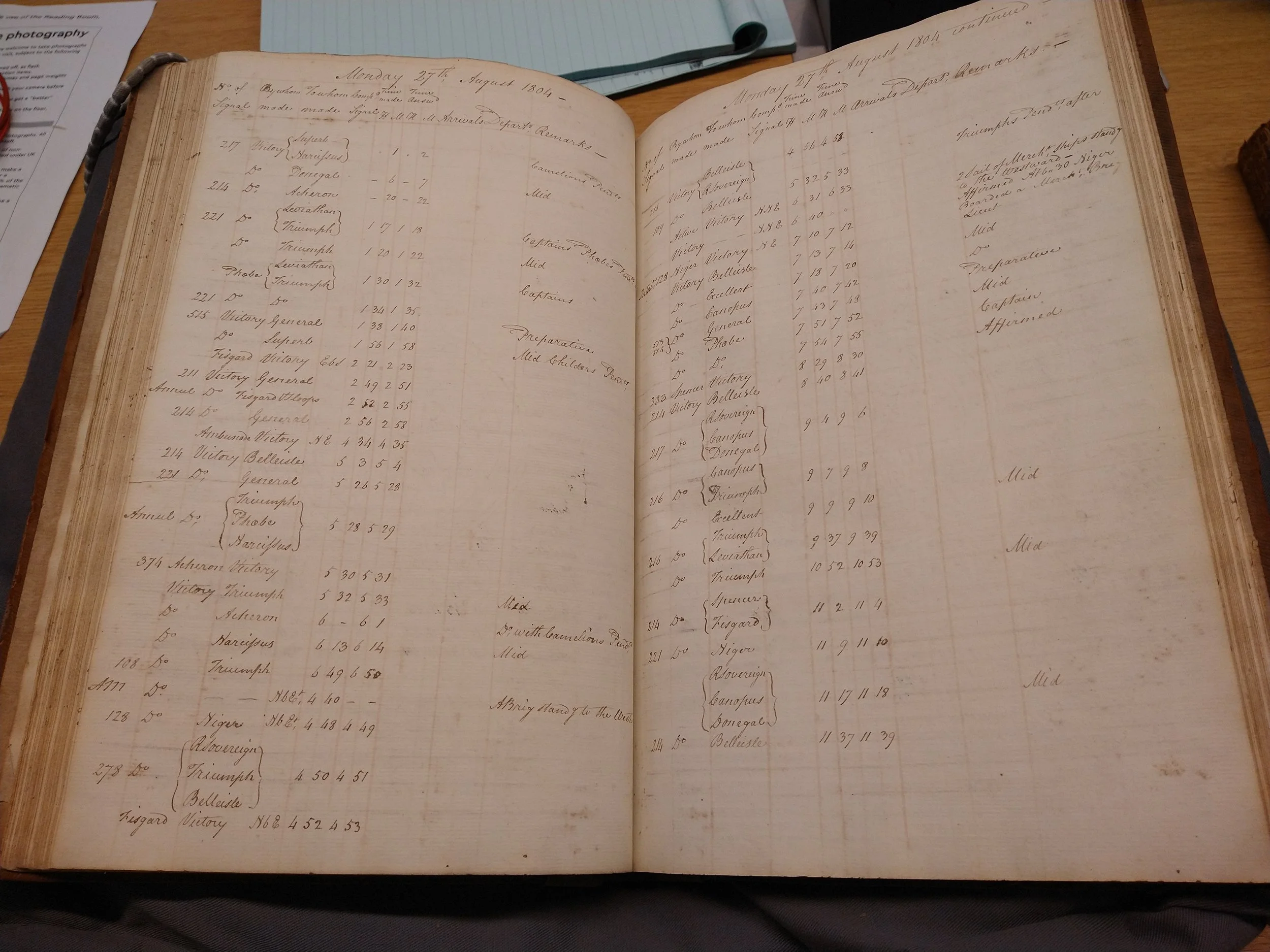
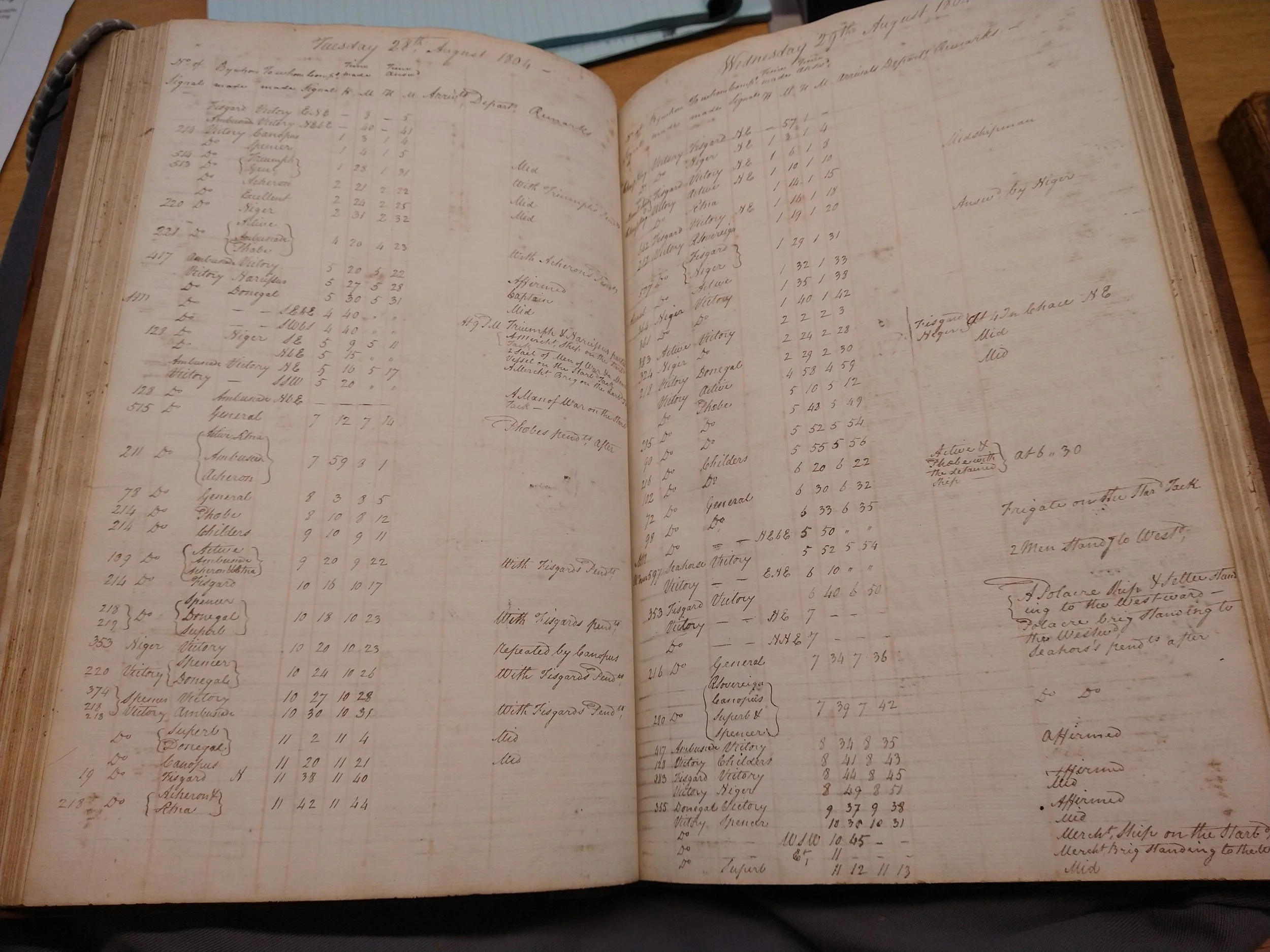
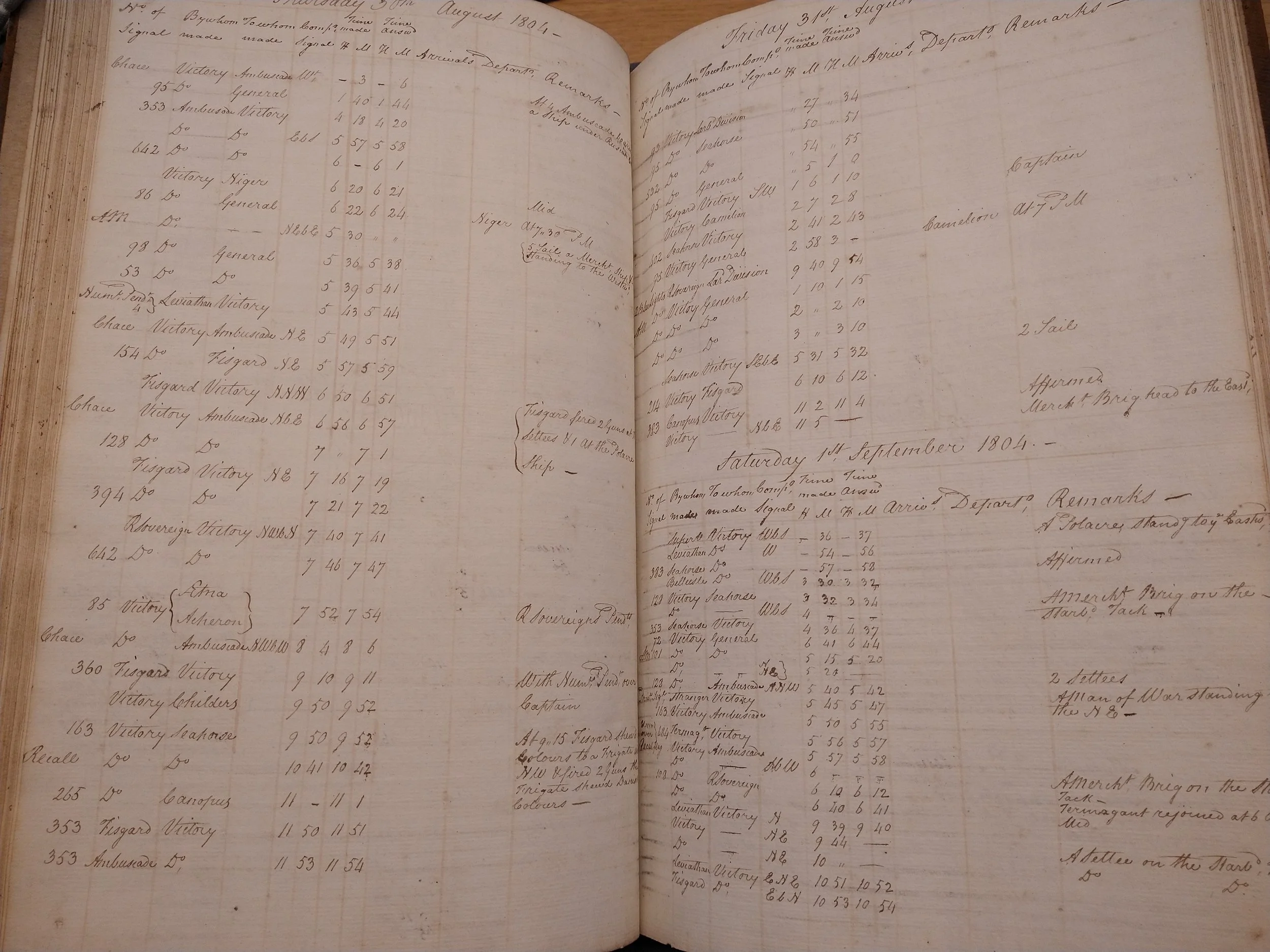
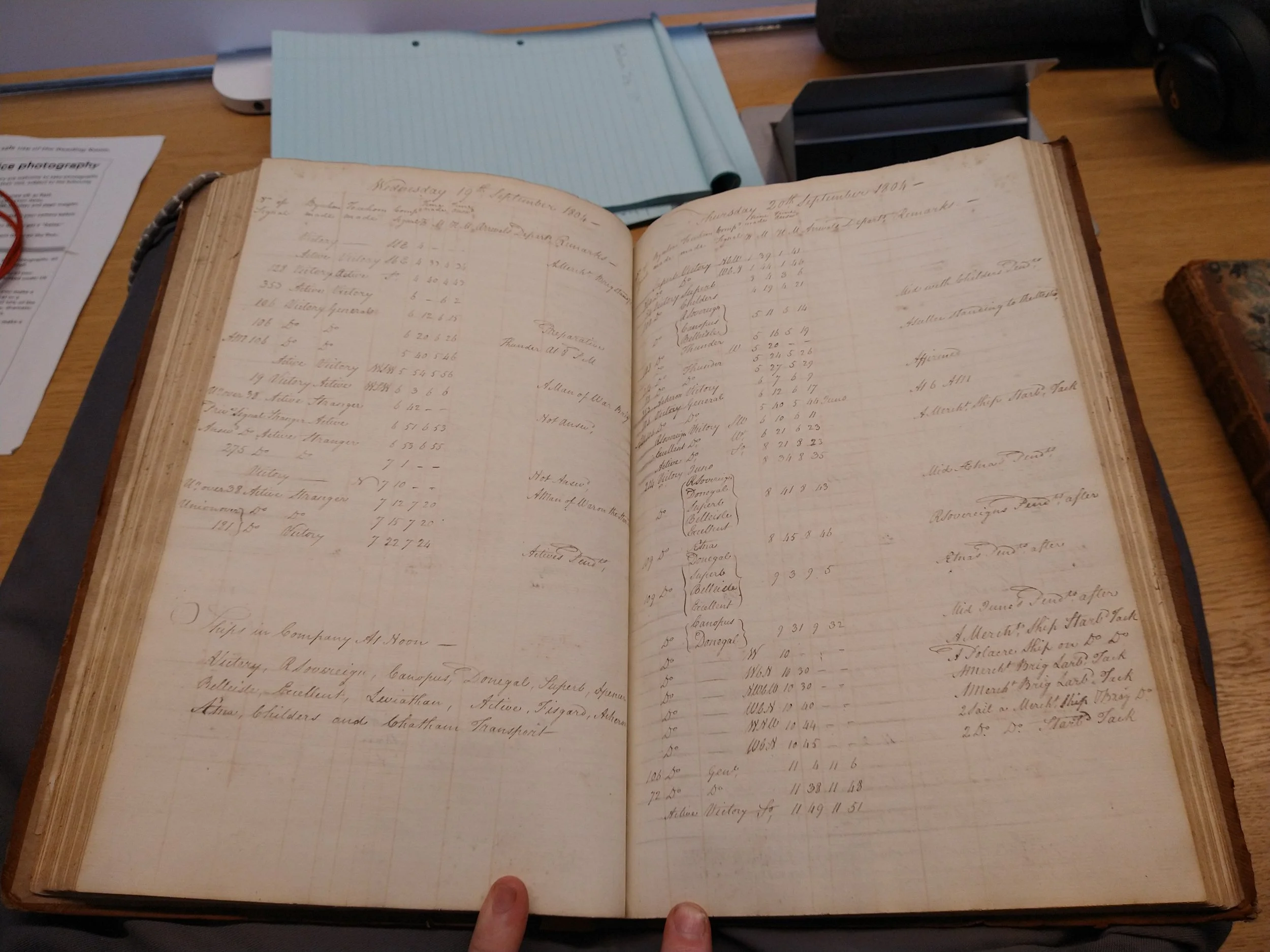
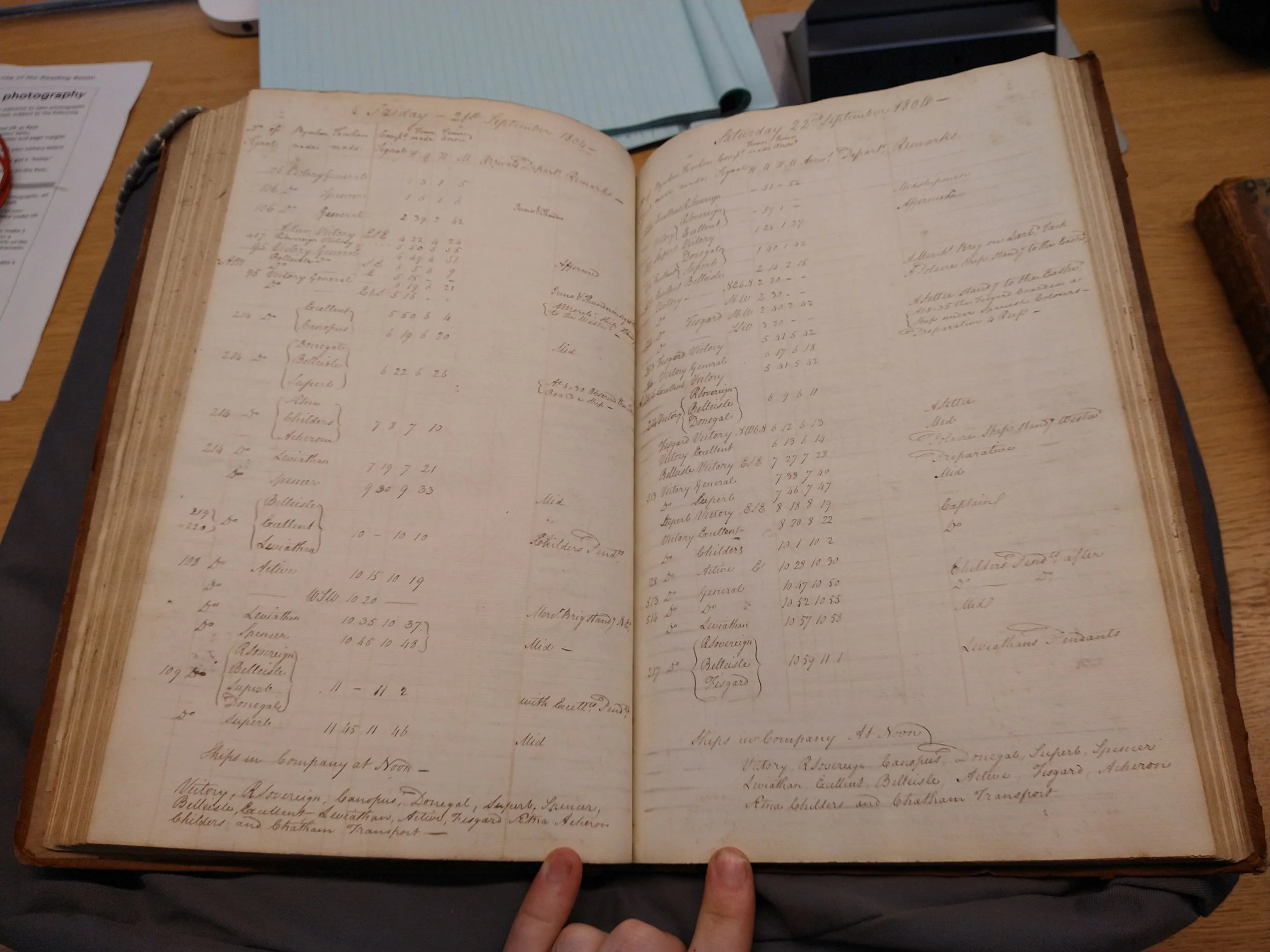
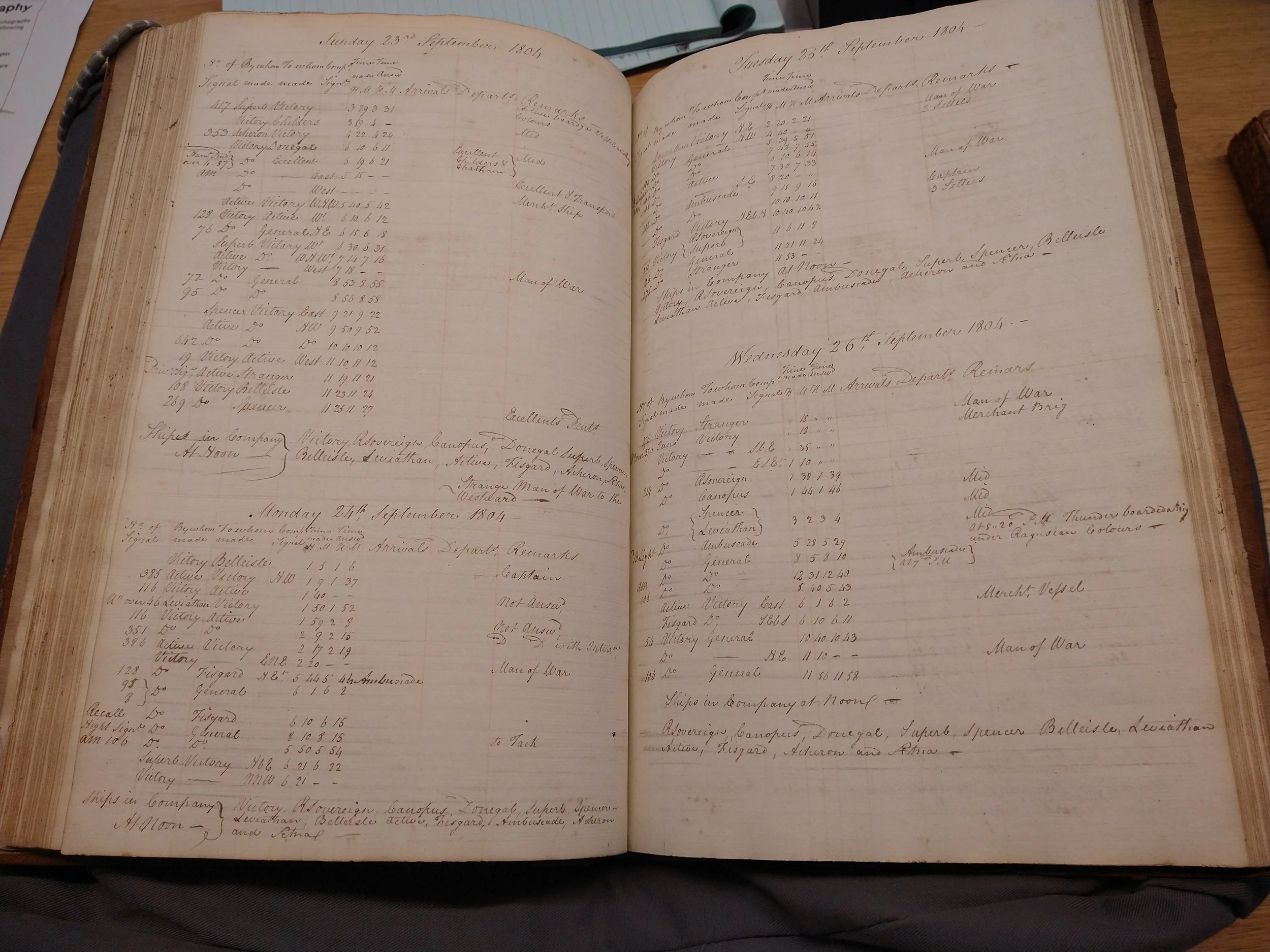
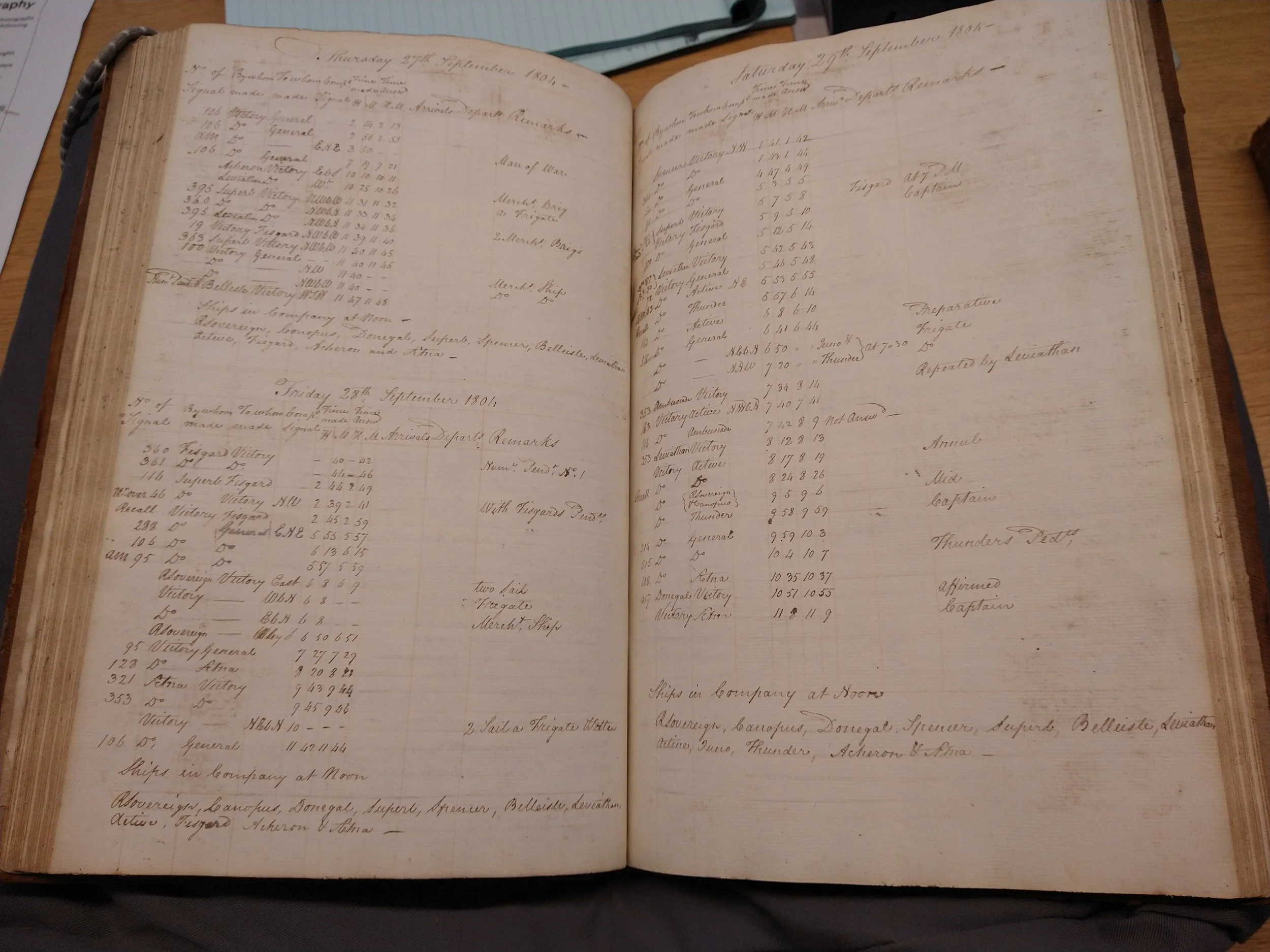
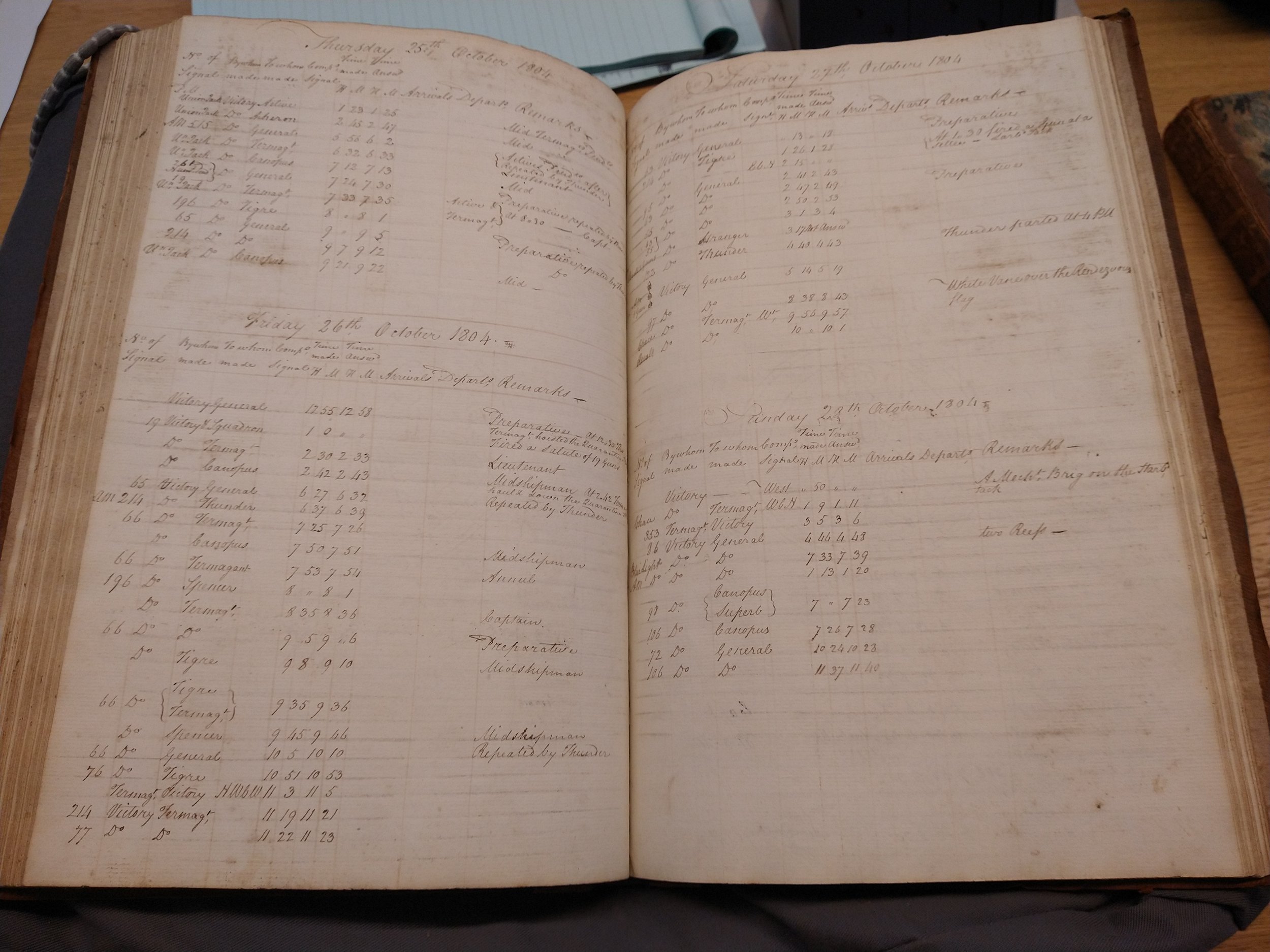
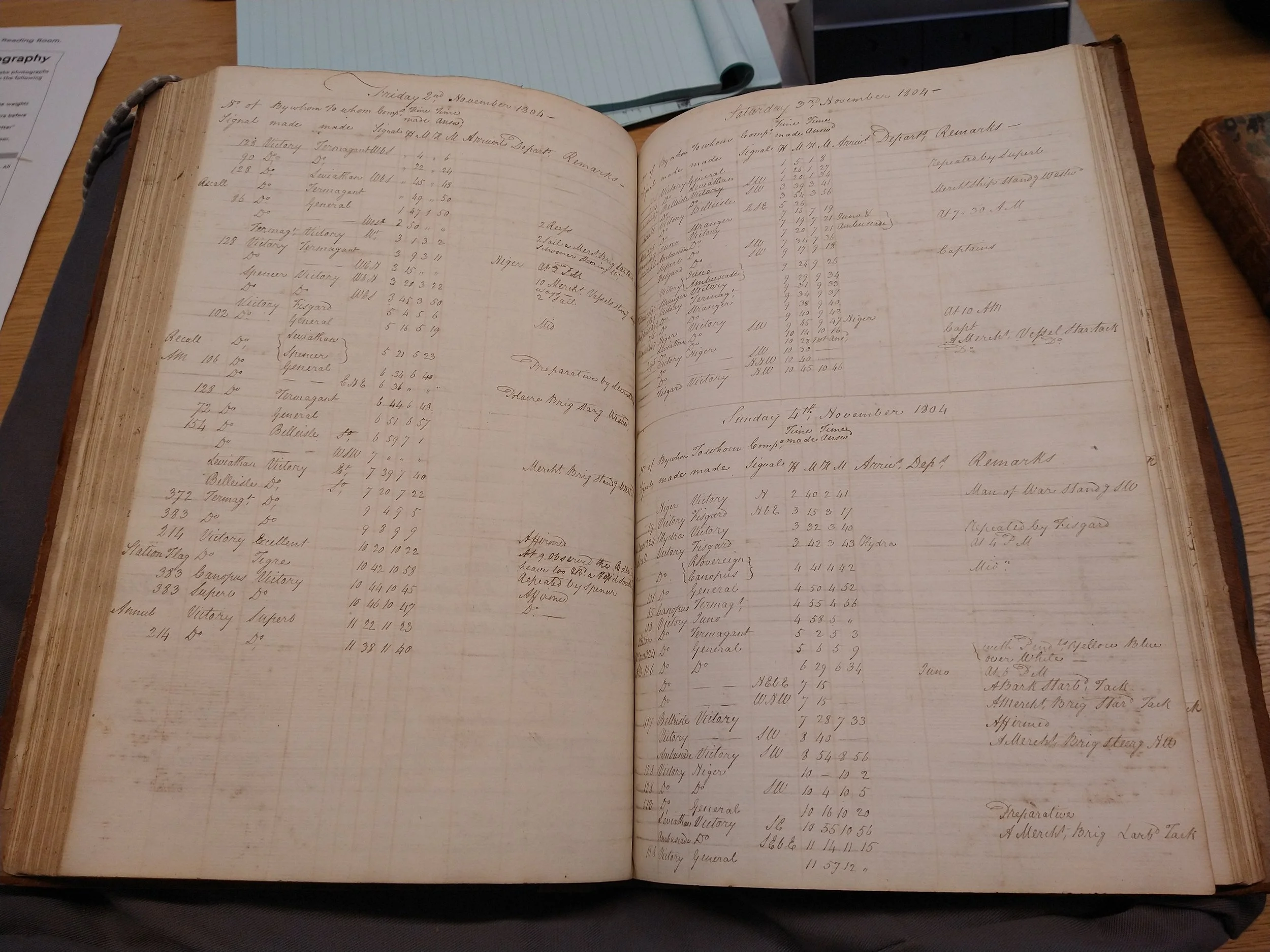
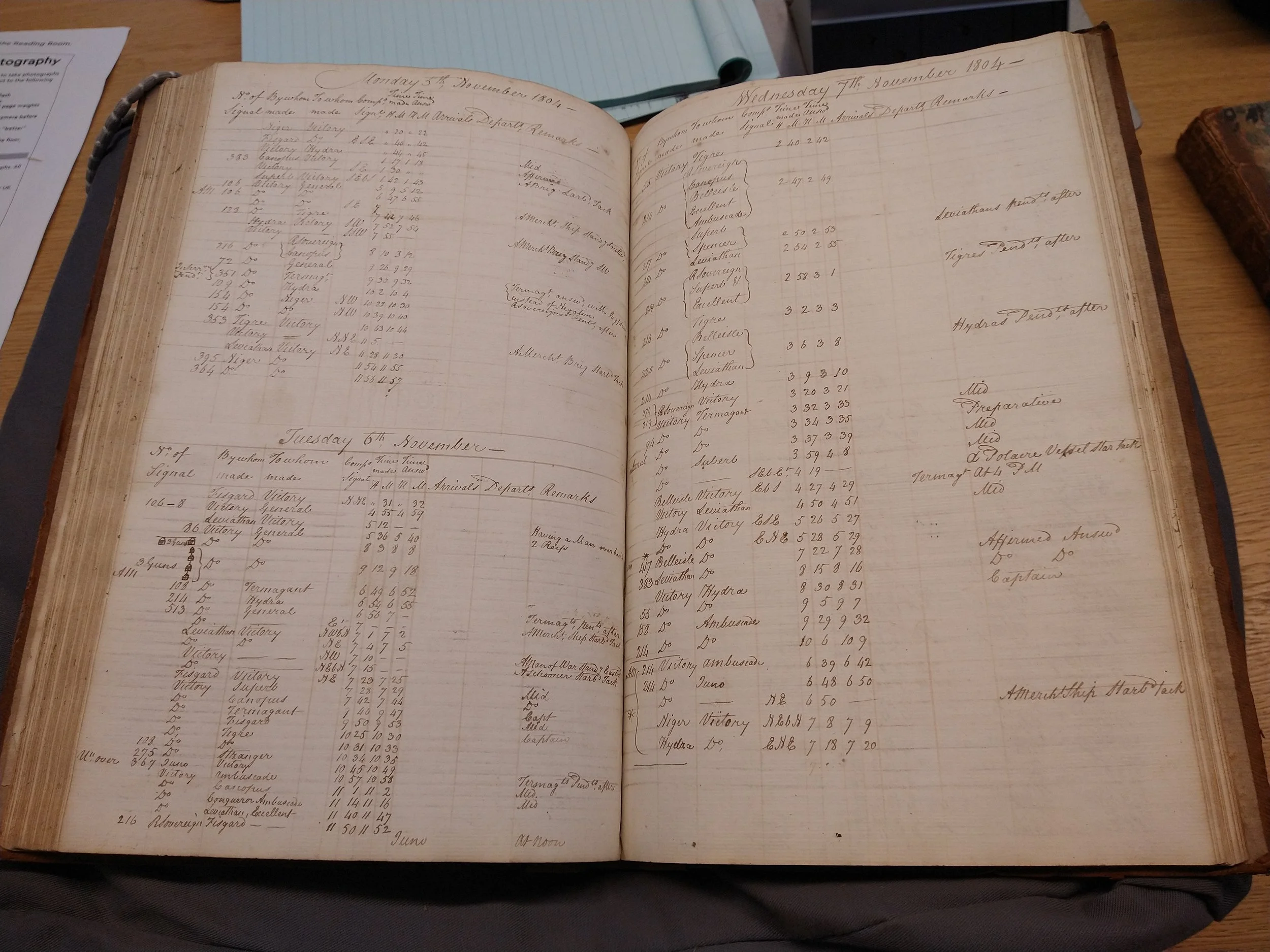
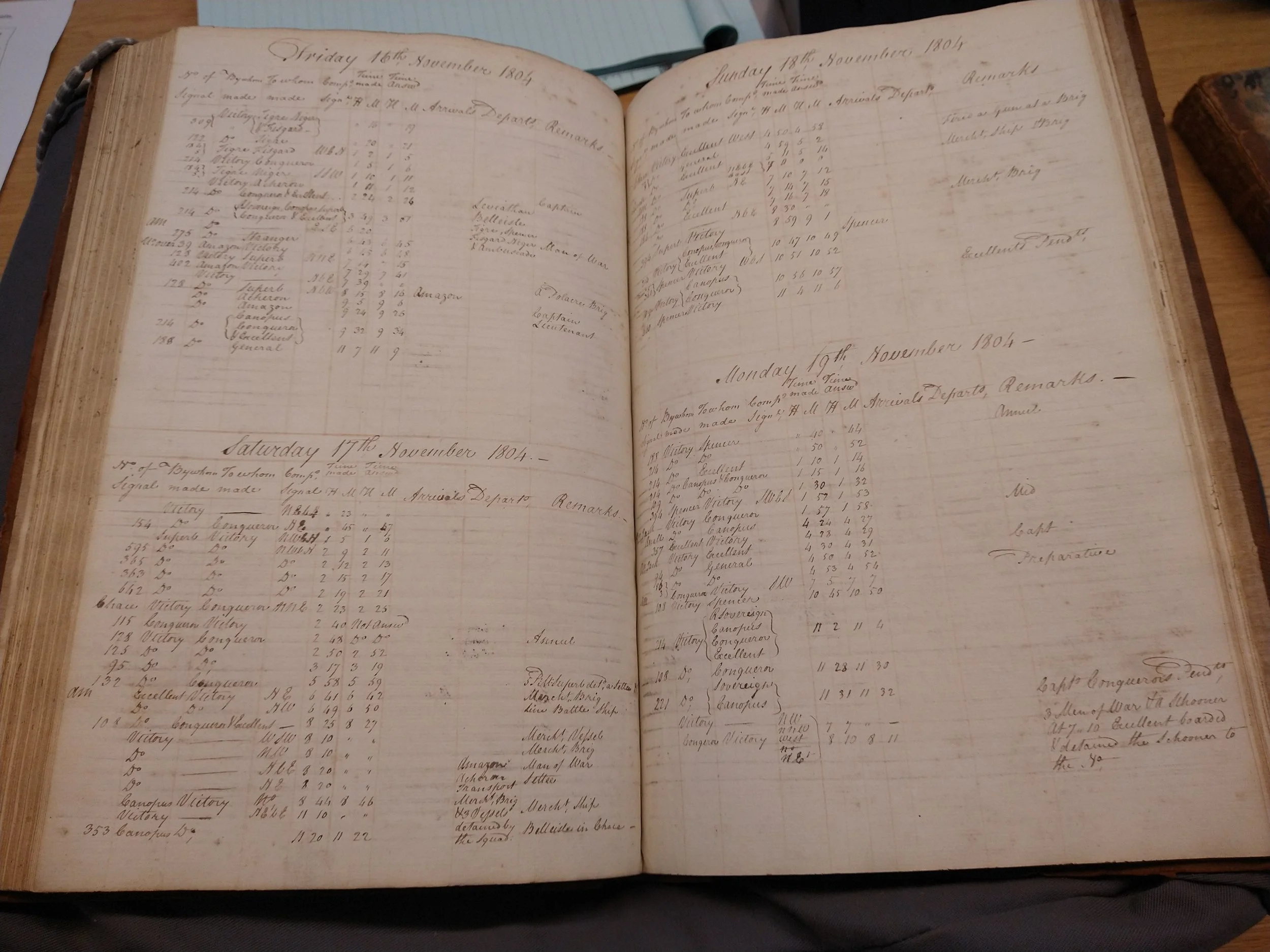
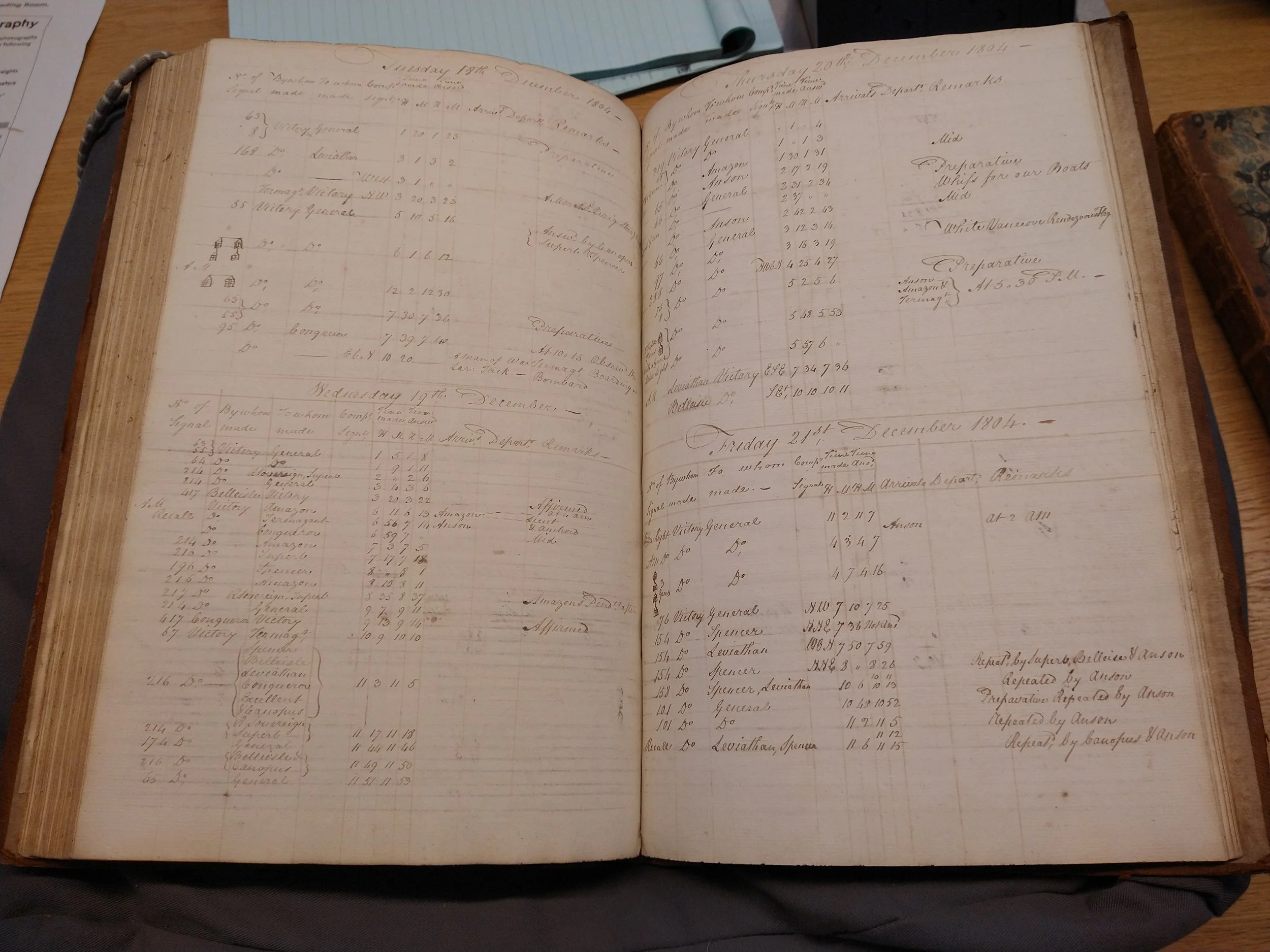
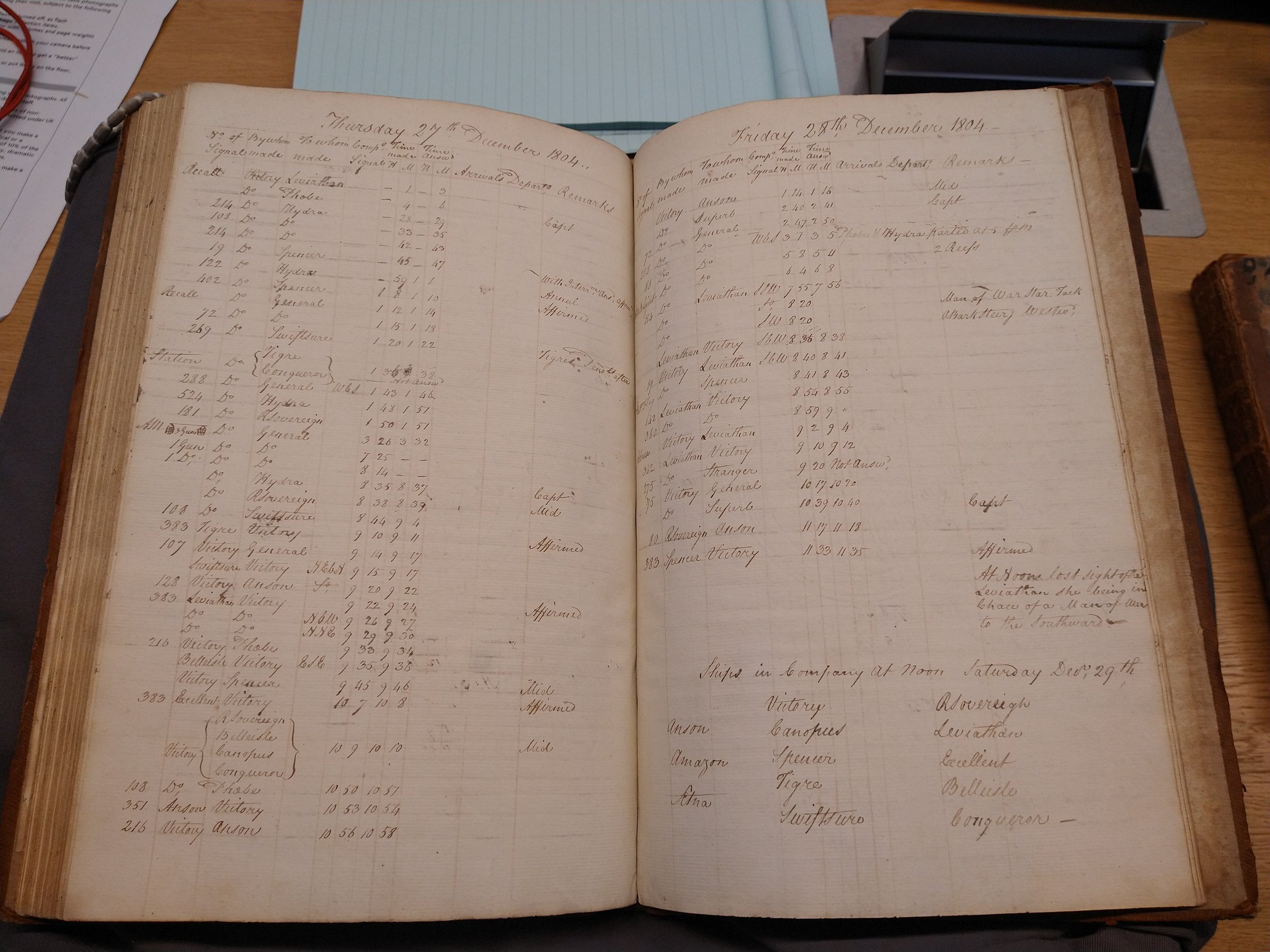
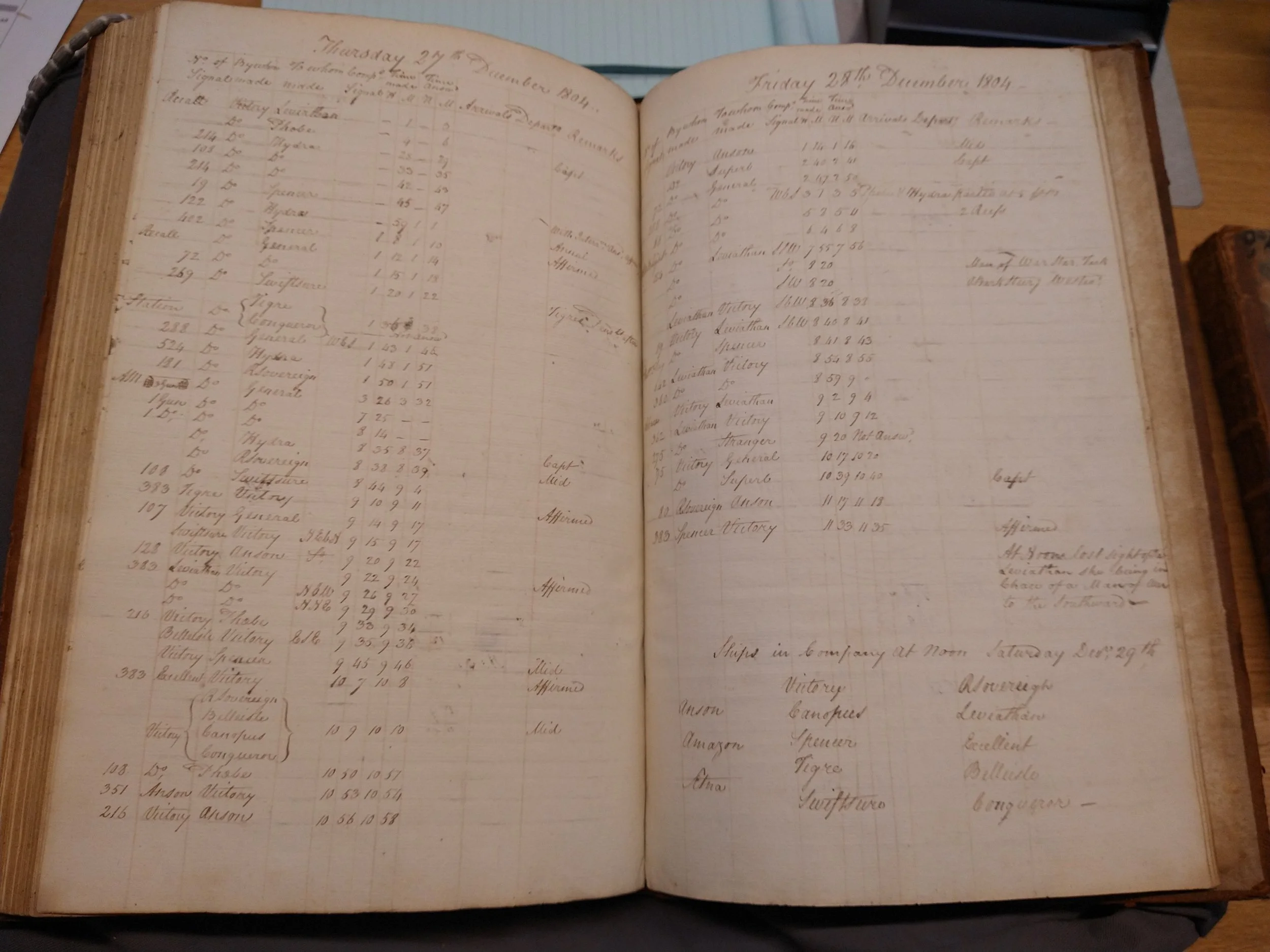
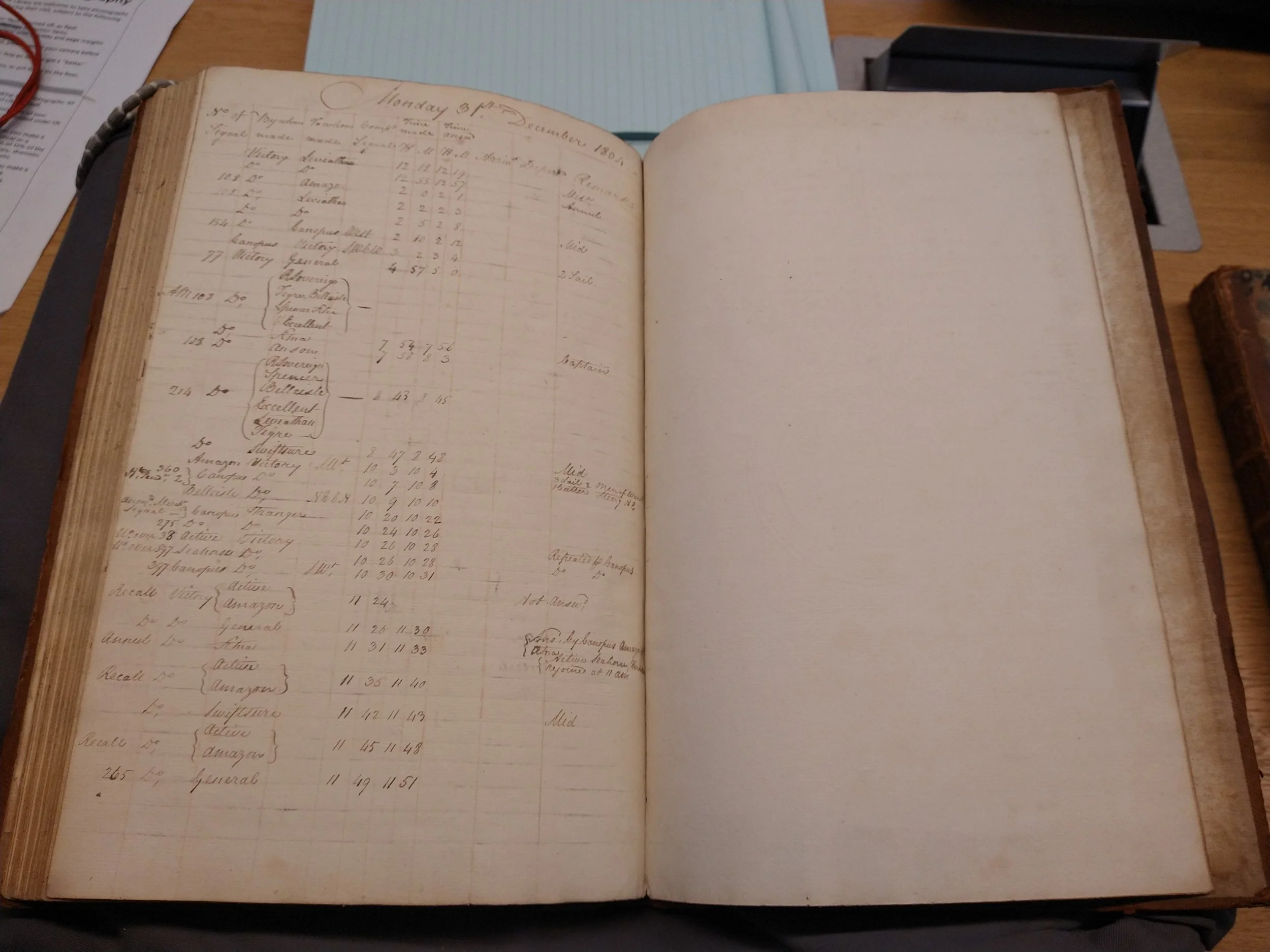
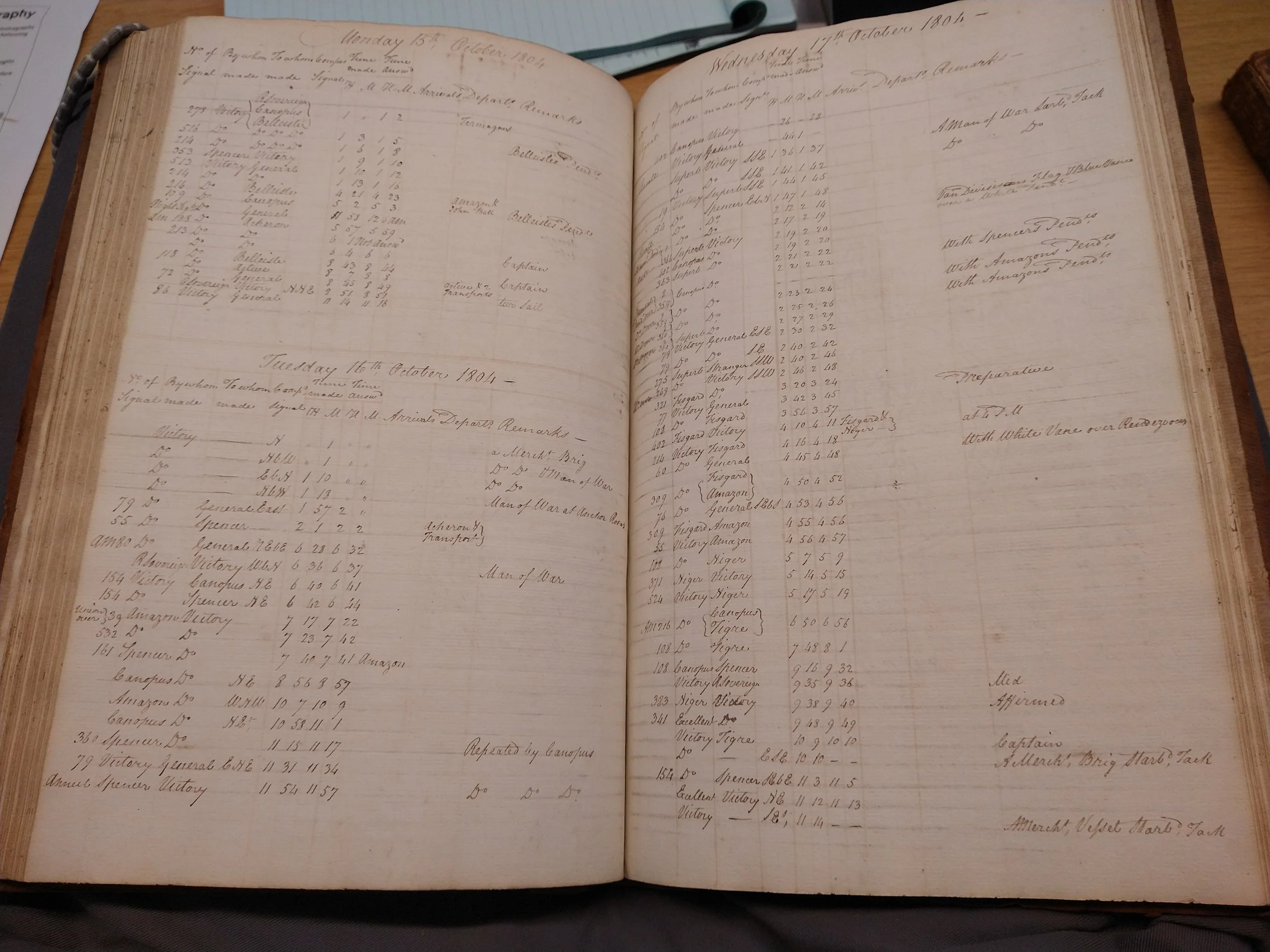
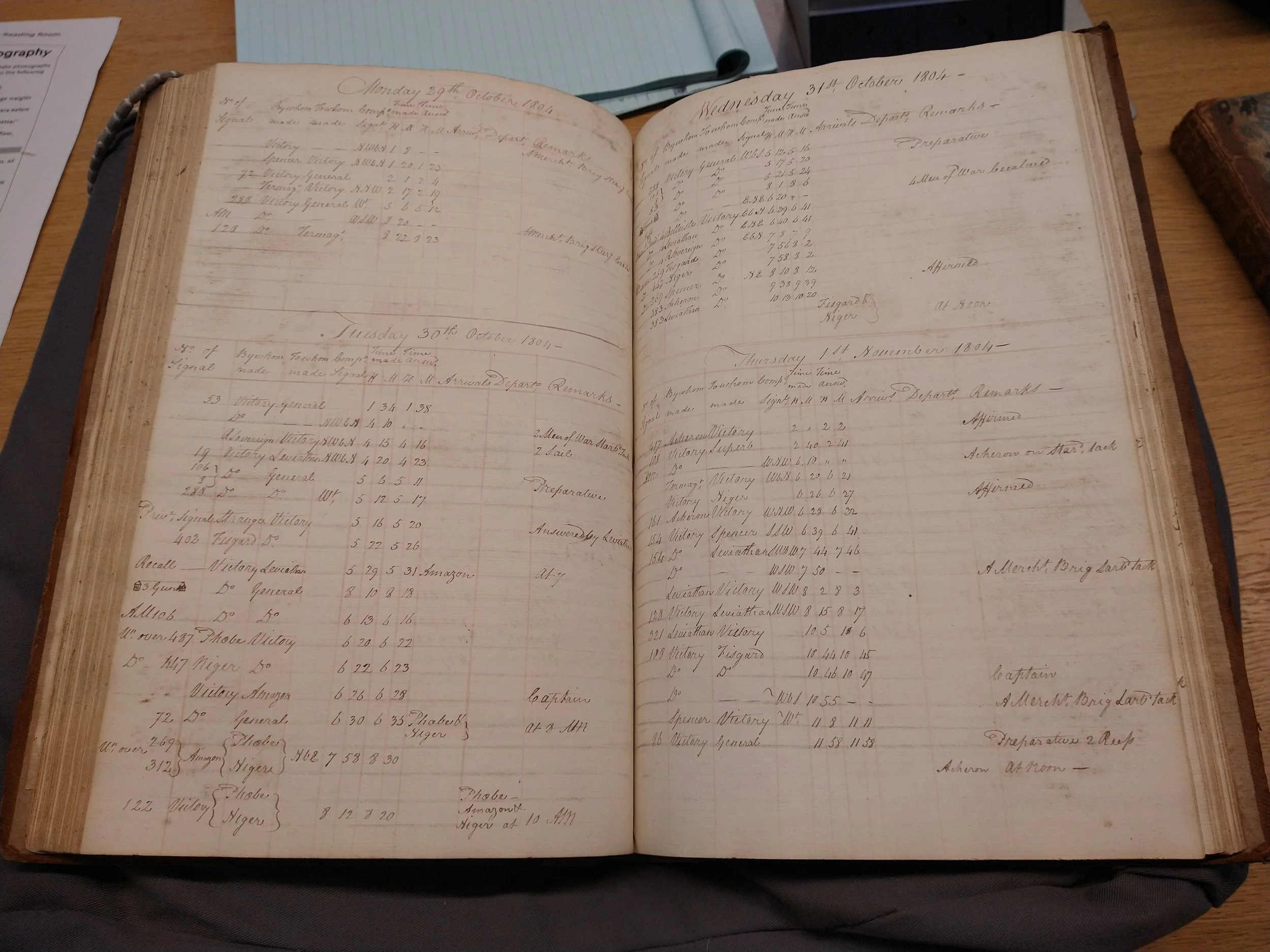
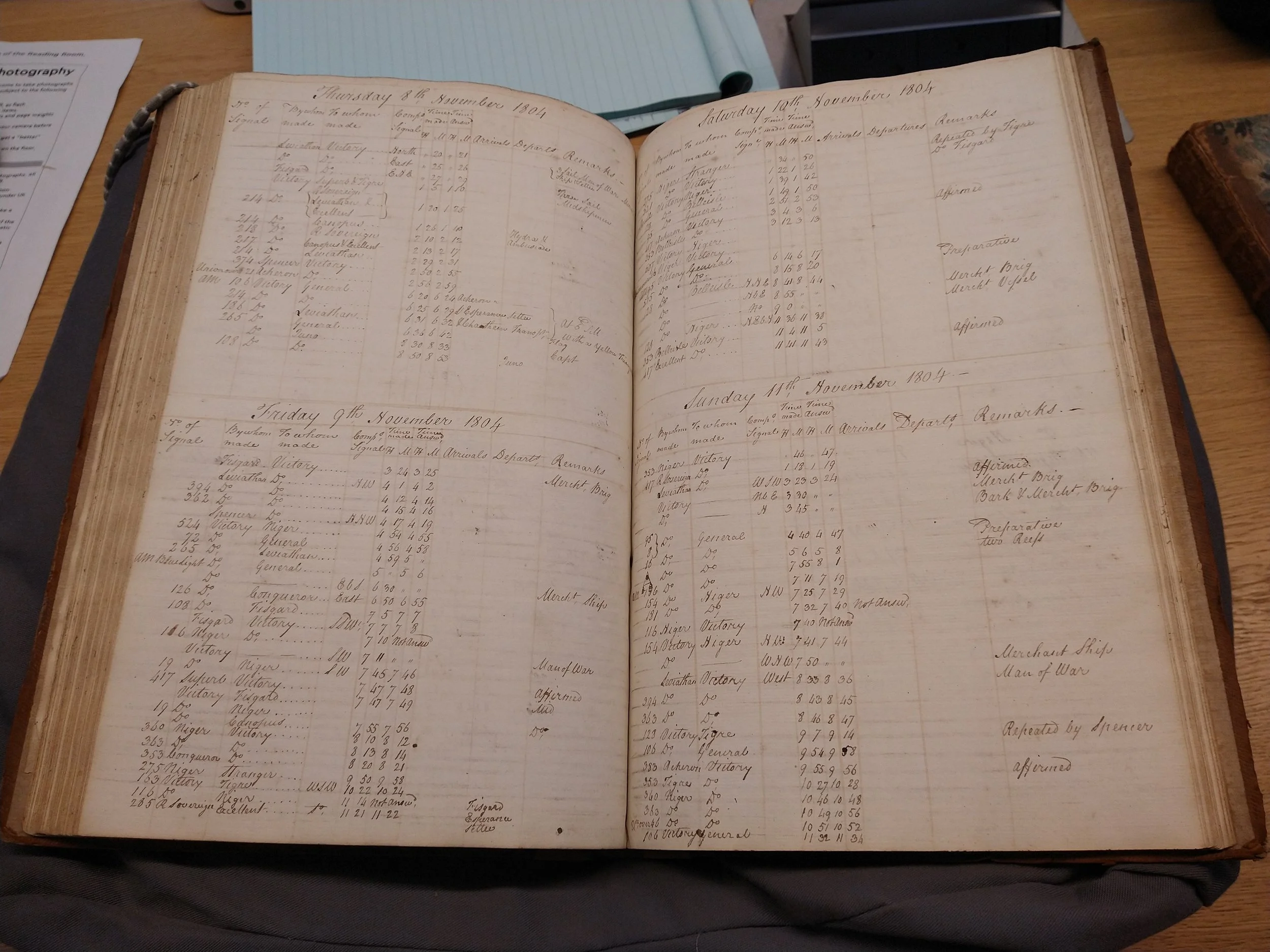
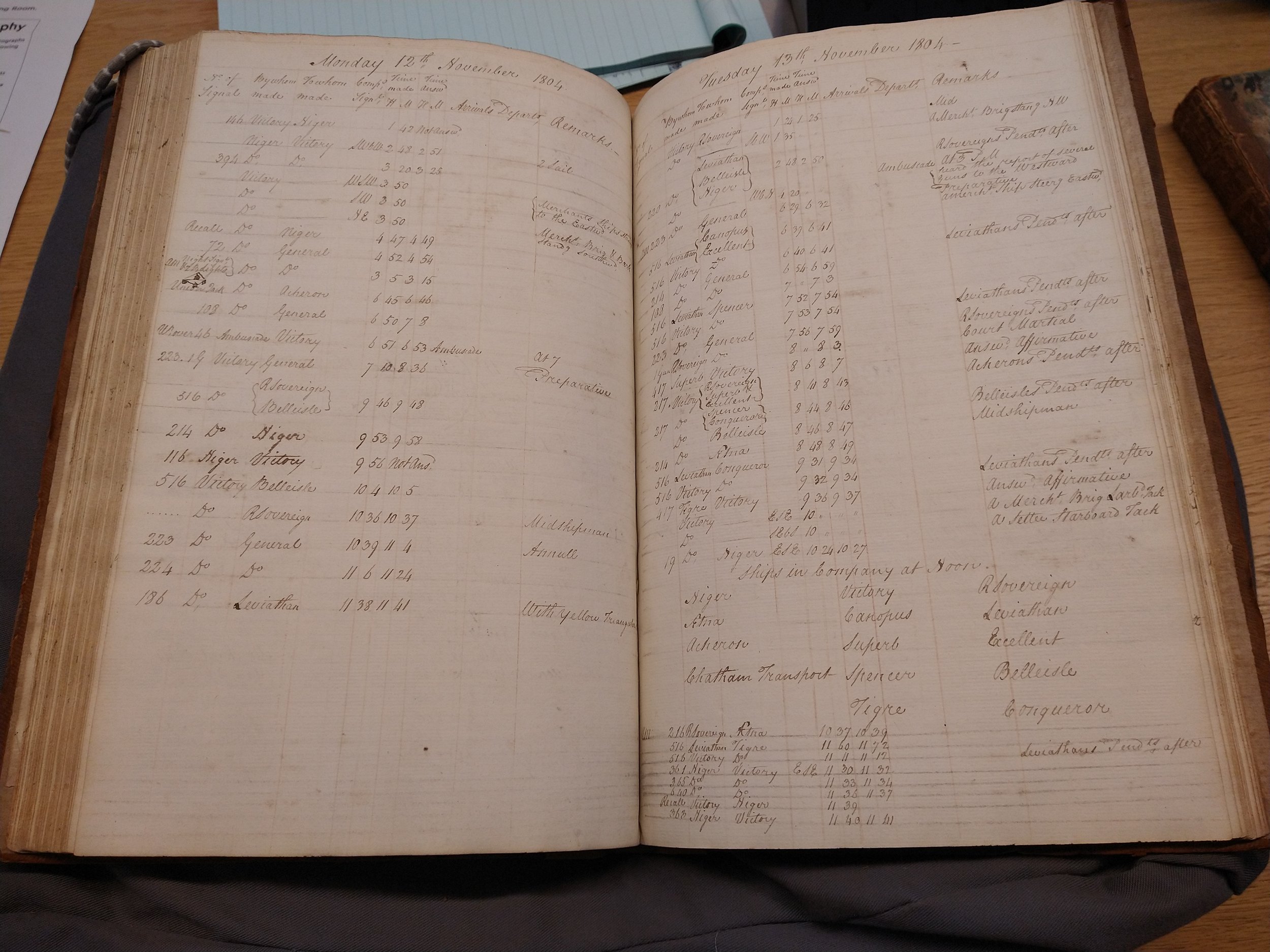
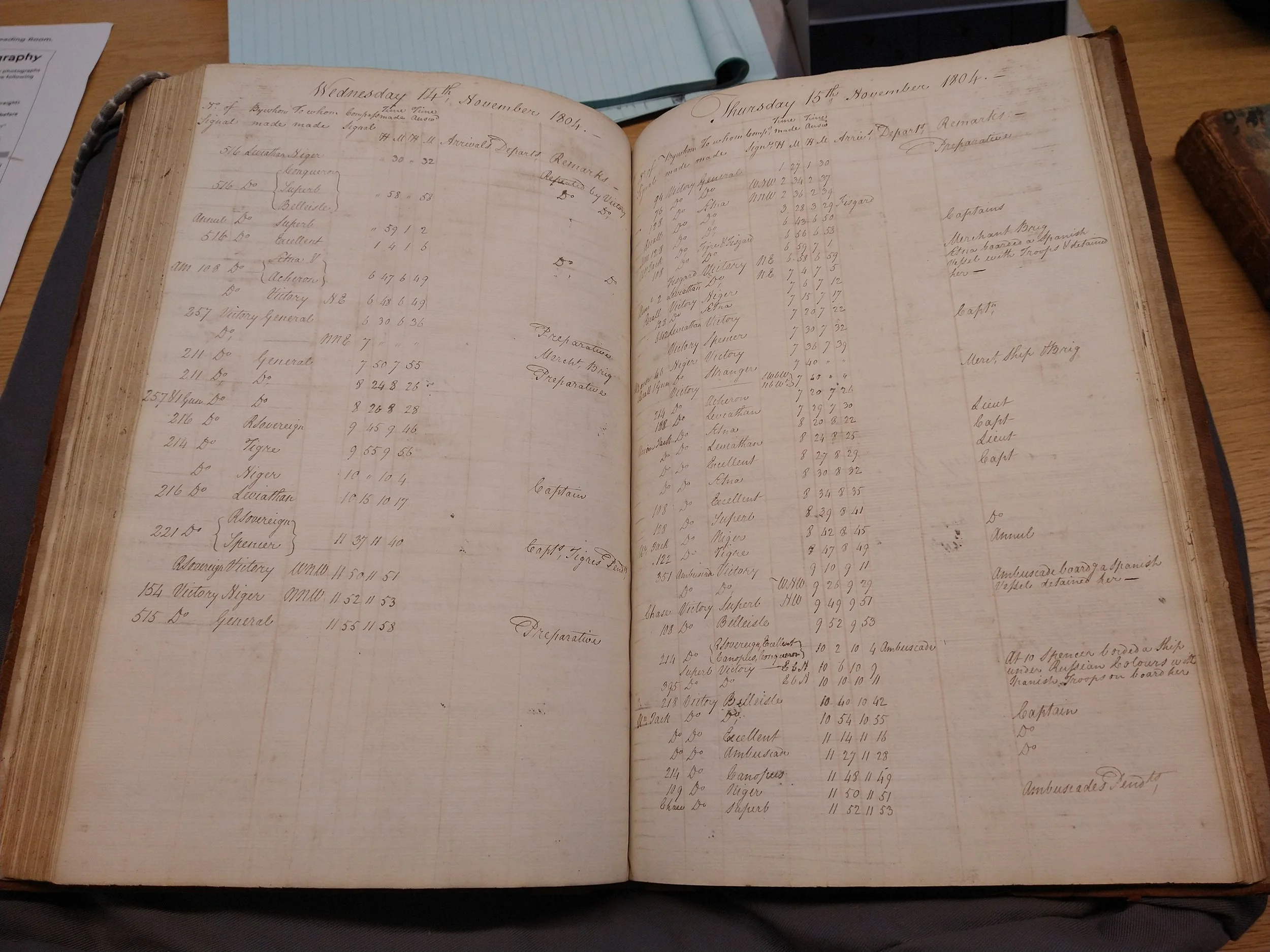
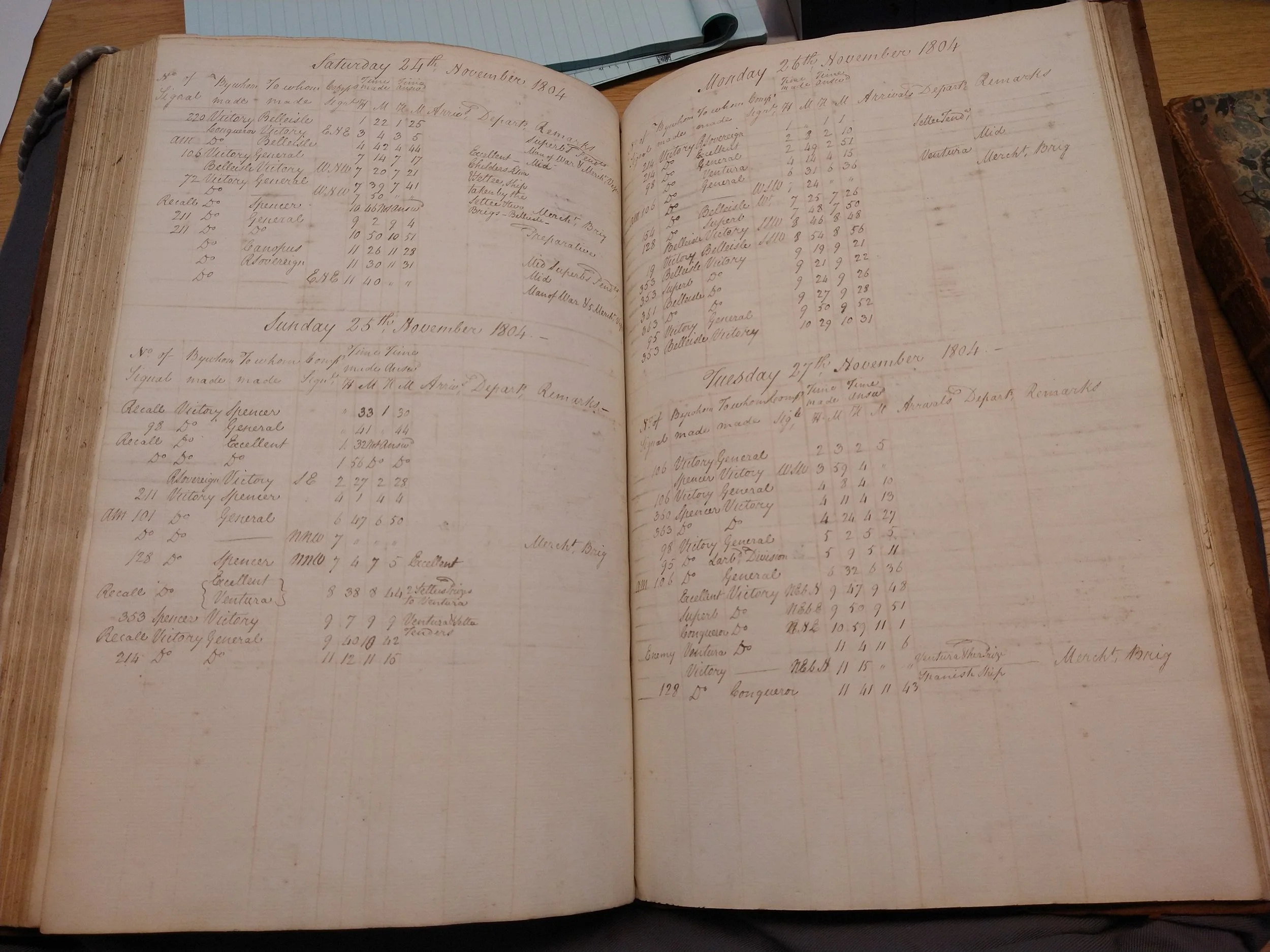
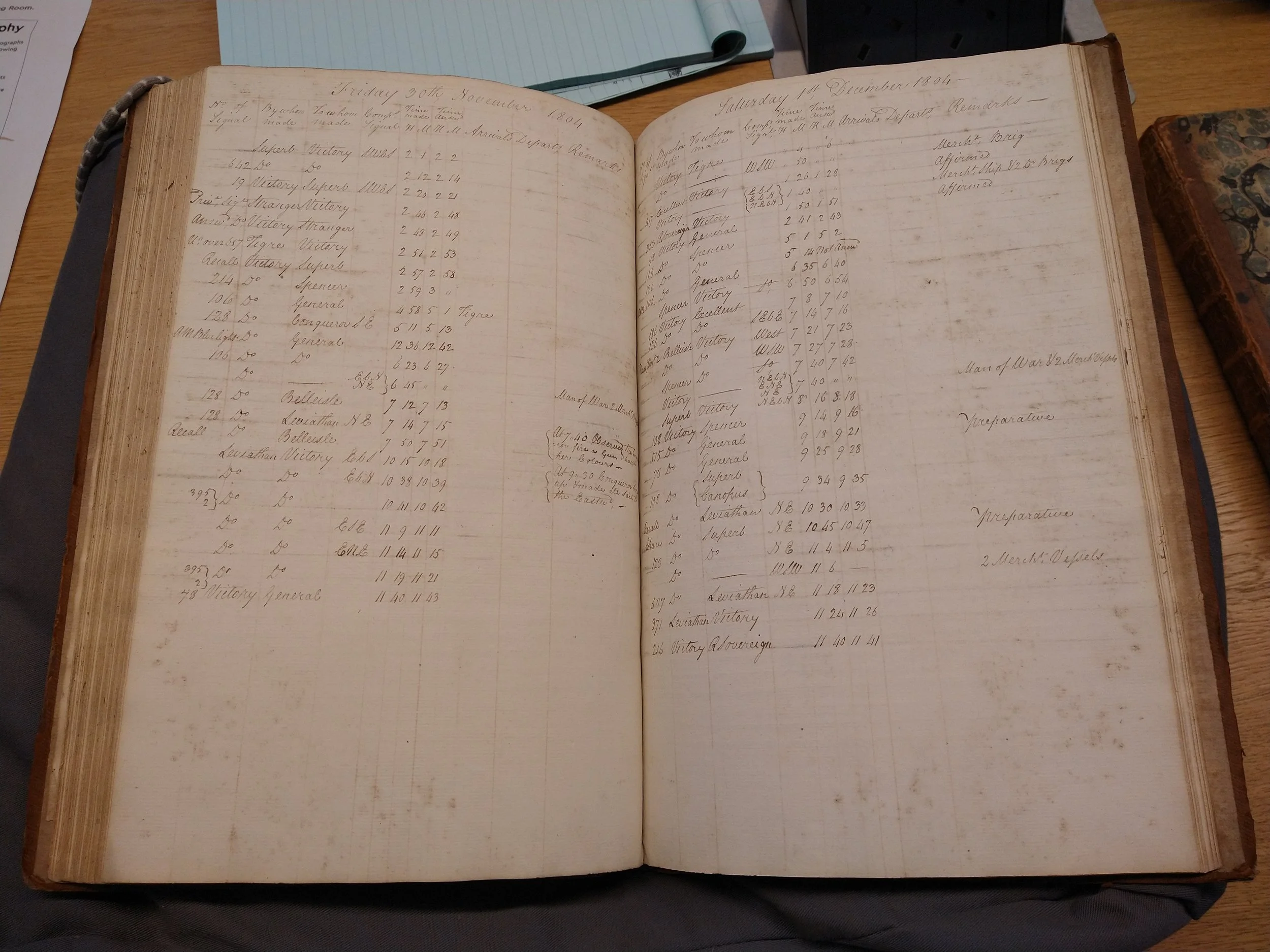
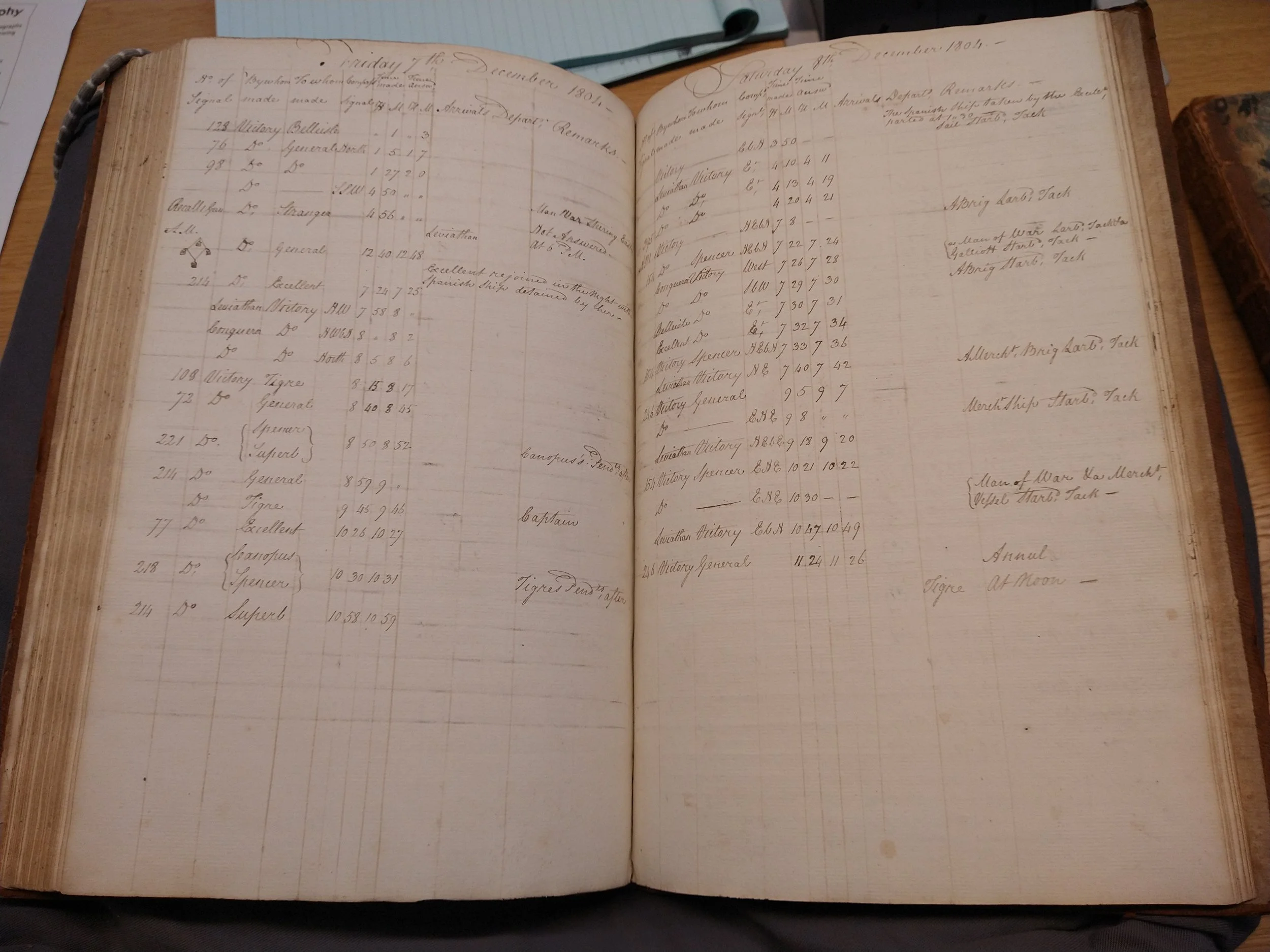
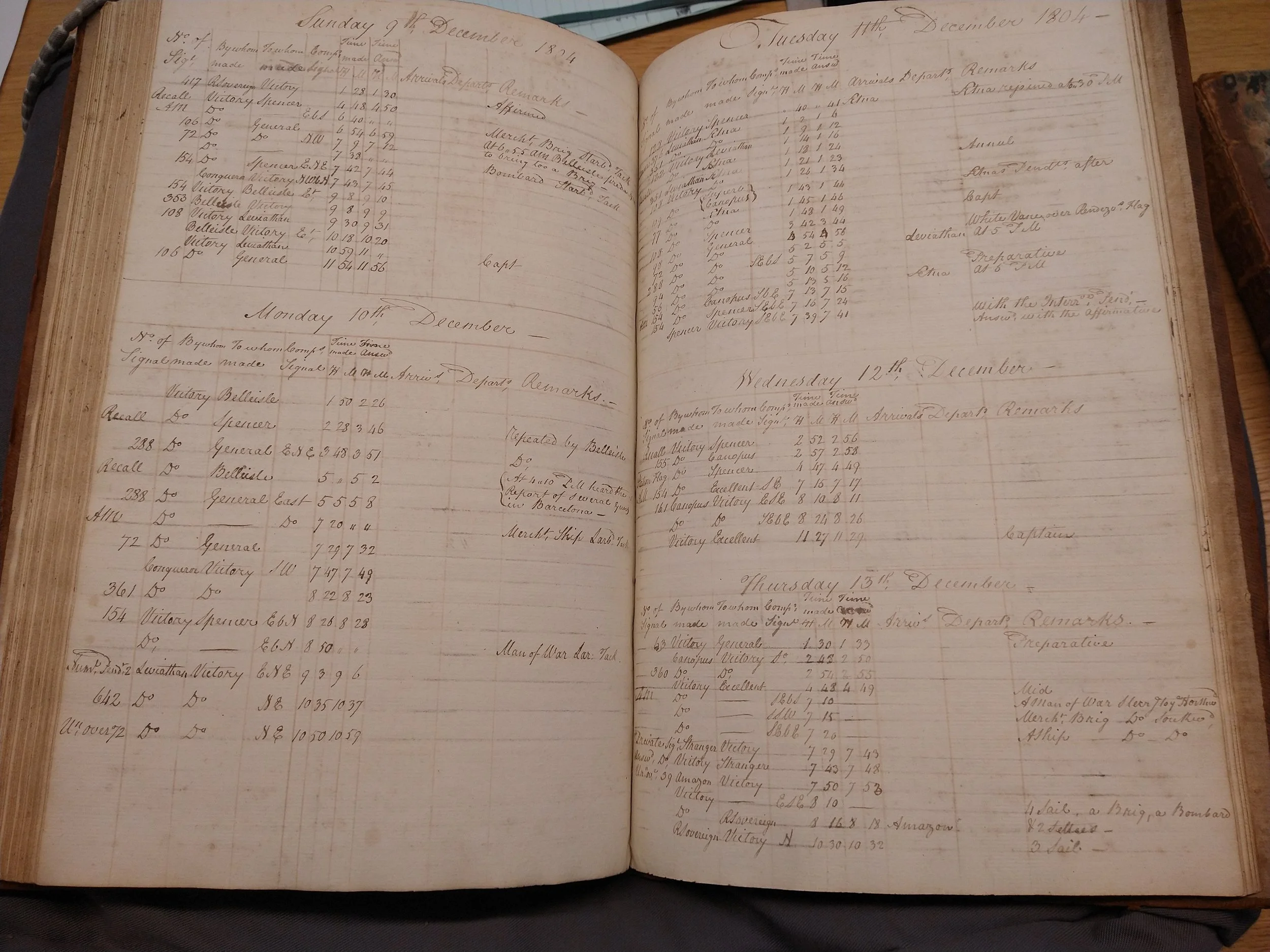
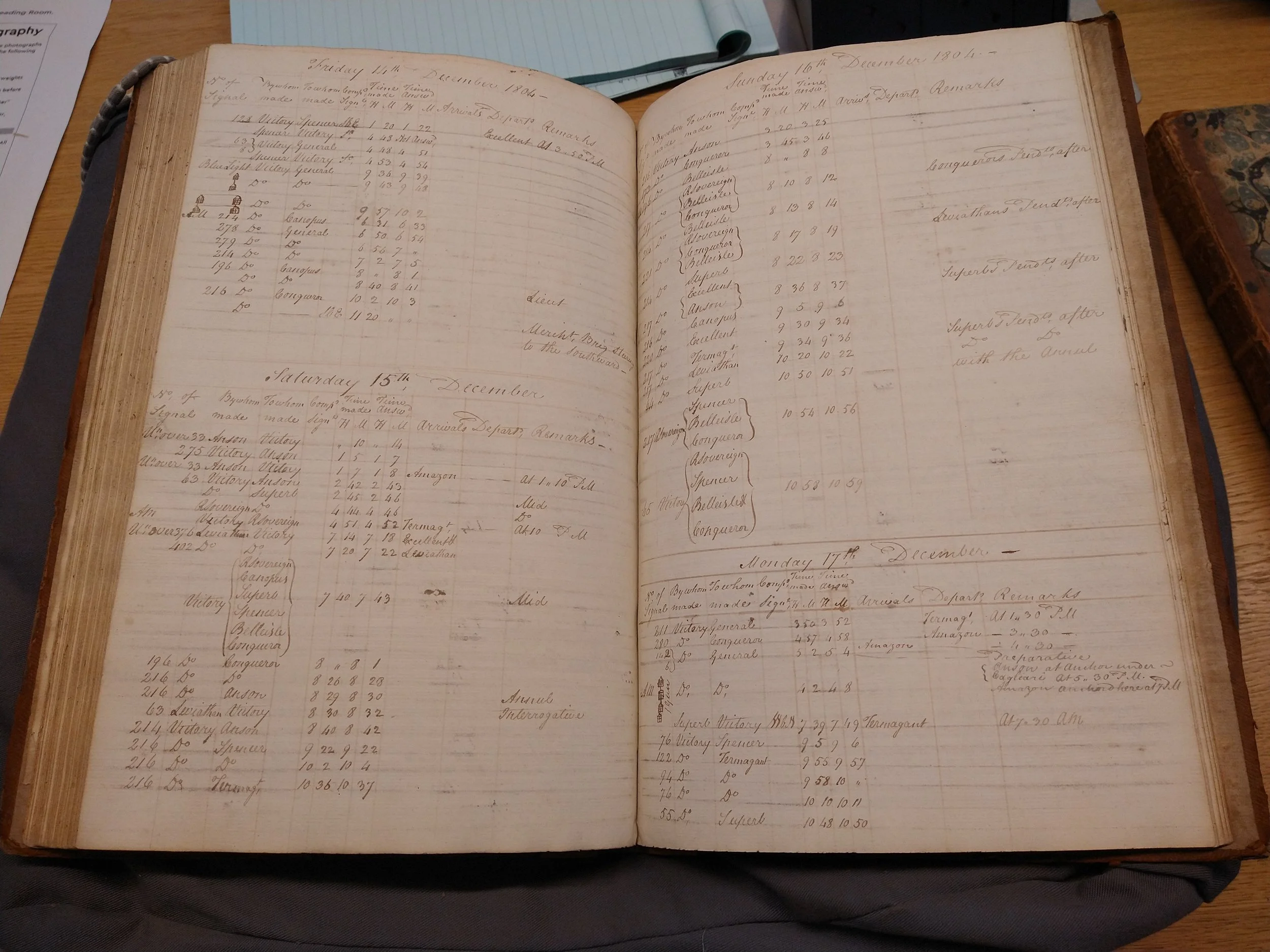
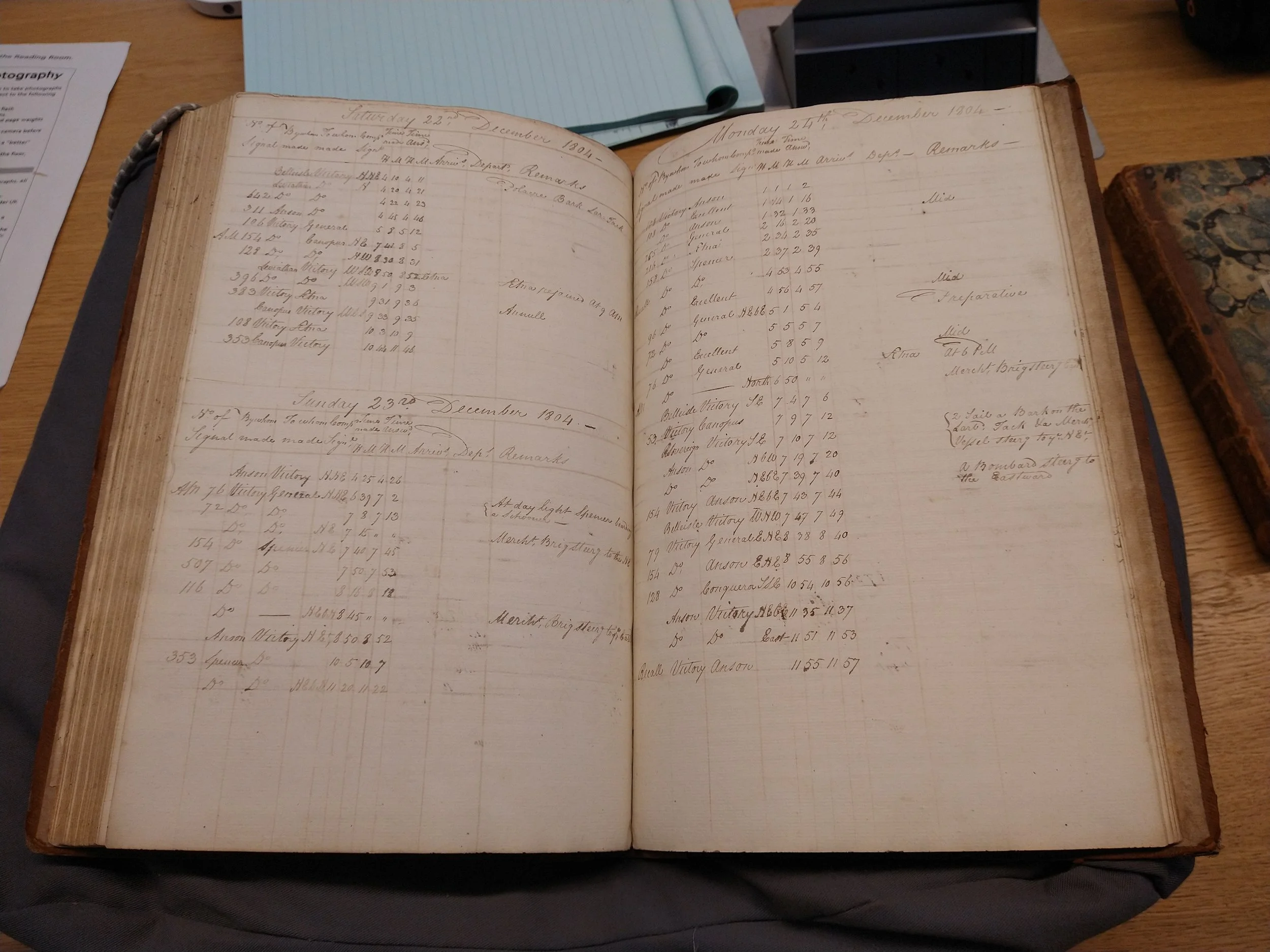
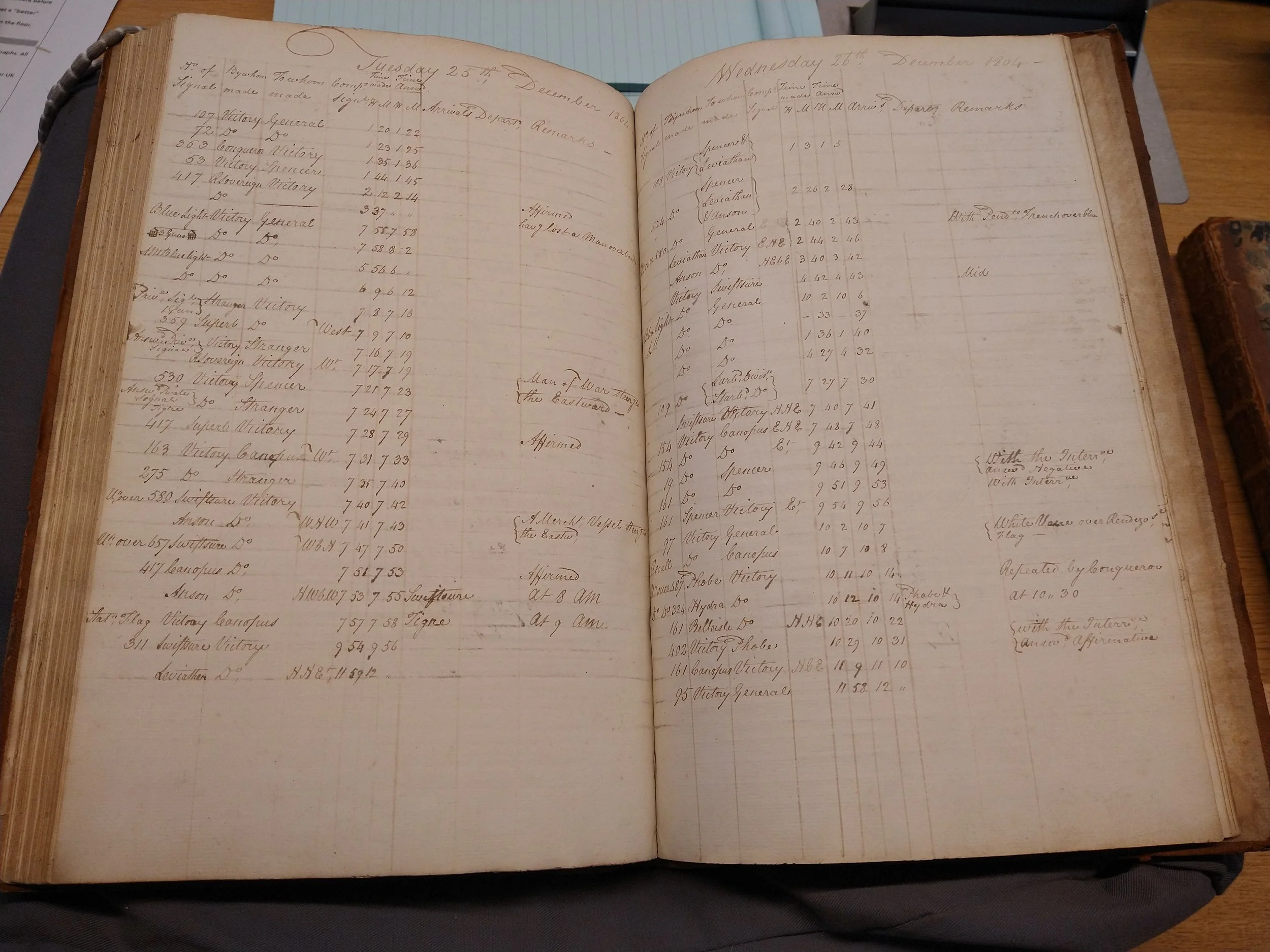
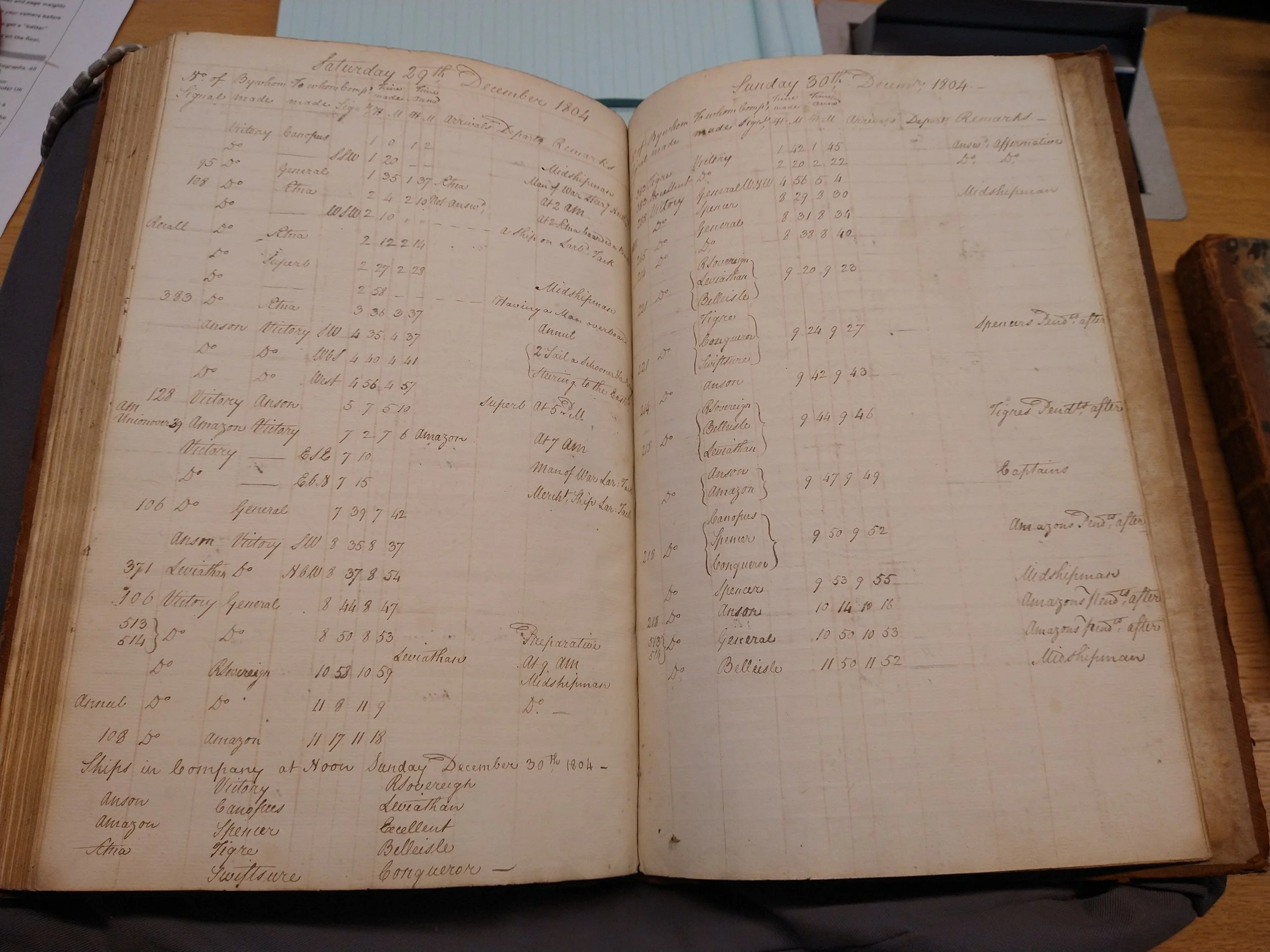
The photographs above show an original signal log book from HMS Victory, covering the period 22 May to 30 December 1804. At this time, Victory was serving as the flagship of Vice Admiral Lord Nelson, placing her at the centre of fleet operations and communication.
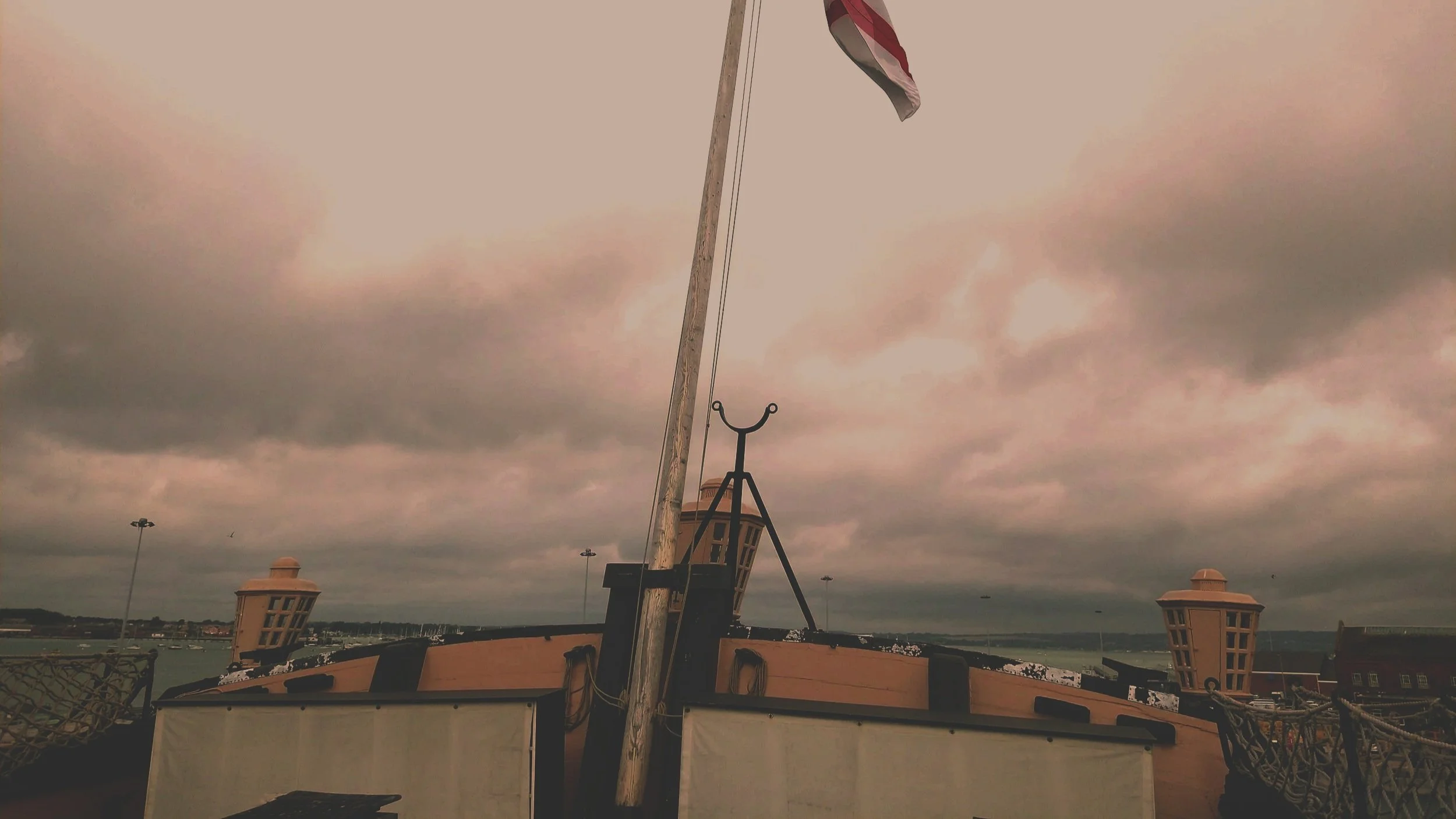
As flagship, Victory acted as the fleet’s nerve centre. Every order, movement, and acknowledgement passed through her masts in the form of signal flags. Before wireless communication, flags were the only way an admiral could command multiple ships at sea, and absolute clarity was essential.
This log records those moments of communication: when signals were made, repeated, and answered. Though often brief and functional, each entry represents a decision translated into action—sometimes across miles of open water. Periods of heavy signalling hint at manoeuvres or changes in fleet disposition, while quieter entries suggest routine cruising or watchful observation.
What makes this log particularly compelling is its direct connection to Nelson’s command. While written by officers and signalmen, it reflects the practical execution of his leadership day by day. These pages show how intent moved from the admiral’s cabin to the fleet through coloured bunting and disciplined procedure.
Surviving signal logs are rare working documents. This one offers a tangible insight into how a Royal Navy fleet was controlled in practice, reminding us that great naval history is not only shaped by famous battles, but by the constant, careful communication that made them possible.